


Swedish Painted Blanket Chest
A Swedish painted blanket chest brings practical storage and traditional folk art into a room with its distinctive colour and character.
Swedish Painted Blanket Chest
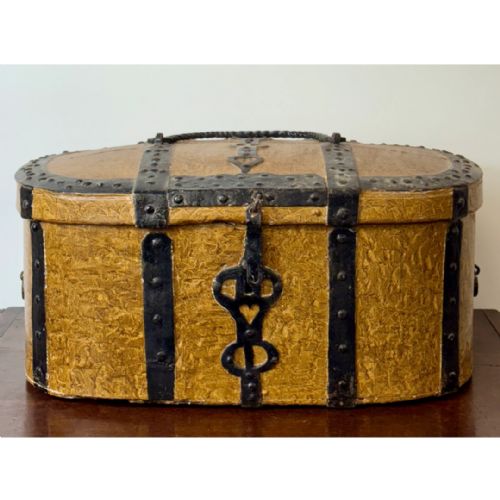
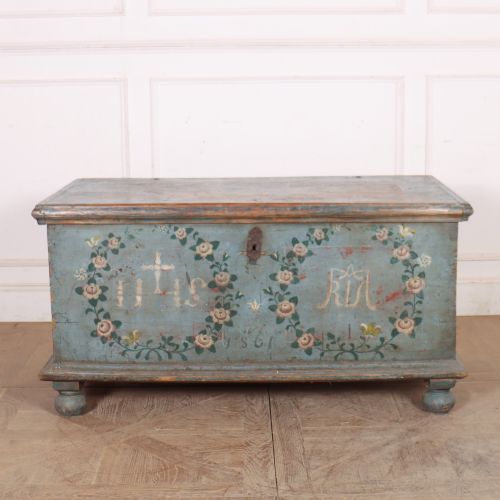
A Swedish painted blanket chest functions as a sturdy container for household textiles while displaying the decorative traditions of Scandinavian country life. These items span the eighteenth and nineteenth centuries, taking forms such as dome top coffers, marriage chests, and storage boxes.
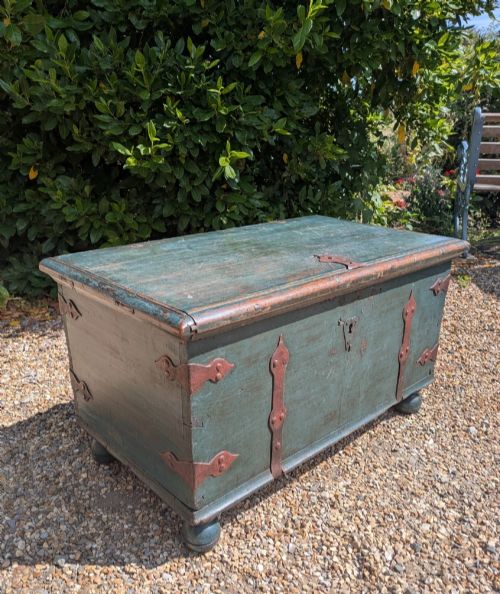
The version most commonly met on this page is a nineteenth-century pine chest finished with hand-painted decoration and fitted with iron hardware. Surviving examples reflect the practical needs of rural homes alongside local decorative customs.
How they were made
Carpenters constructed these boxes primarily using solid pine, building robust carcases suited to holding heavy blankets and household goods. Wood surfaces were then prepared to receive pigment paint, which applied colour and decorative motifs across the front and lid.
Blacksmiths supplied the hardware, shaping wrought iron and brass into strapwork, hinges, and strong locks that secured the lid. This combination of timber joinery and forged metal created durable storage pieces built for daily domestic use.
Some nineteenth-century chests feature hidden labyrinth patterns painted inside the lid to gently befuddle any curious mice.
What varies in quality
The standard of a swedish painted blanket chest rests upon the skill evident in its painted surface and the crispness of its joinery. Pieces decorated with elaborate folk art or specific marriage motifs display greater artistic ambition than plain utilitarian boxes.
The integrity of the original pigment and the subtlety of the hand-forged iron strapwork further distinguish finer examples. Retaining authentic surfaces from the eighteenth or nineteenth century marks out the more accomplished survivals.
The Swedish Painted Blanket Chest Glossary
- Coffer
- A heavy wooden chest traditionally used for storing valuables or household goods. These pieces often feature sturdy timber construction and secure iron fastenings.
- Marriage chest
- A specialised box commissioned or given to celebrate a wedding, frequently inscribed or painted with specific dates and symbols. Such items hold central importance in folk art traditions.
- Strapwork
- Decorative metal bands affixed to the exterior of a chest to reinforce the joints and secure the wood. Blacksmiths hand-forged these iron pieces to combine structural strength with visual detail.
- Pigment paint
- Colouring material mixed with a binder and applied to the pine timber to create the characteristic decorative finish. This medium defines the folk art aesthetic seen across Scandinavian country pieces.
- Dome top
- A rounded lid profile designed to shed water and increase internal storage capacity. This architectural form appears frequently on nineteenth-century coffers.
Swedish Painted Blanket Chest: Frequently Asked Questions
How were these chests used?
Rural households utilised these wooden boxes to store textiles, winter blankets, and valuable personal possessions away from dust and dampness. Their sturdy construction also allowed them to serve as impromptu seating benches within the home.
In specific instances, marriage chests held the dowry linens prepared for a bride as she entered her new household. Smaller versions functioned as strong boxes or log bins placed near the hearth.
How do I date a painted chest?
Dating relies on examining the construction methods of the pine timber, the style of the hand-forged iron hardware, and the characteristics of the pigment paint. Eighteenth-century pieces typically show simpler, heavier joinery and distinct early pigment formulations.
Nineteenth-century examples often introduce dome tops, shaped bracket feet, and more elaborate folk art brushwork. Surviving painted dates or inscriptions occasionally provide a direct reference point for the year of creation.
Where should I place a blanket chest?
These chests fit well at the foot of a bed, in a hallway, or acting as a coffee table in a living room where they provide concealed storage for spare throws and cushions. Their painted finishes add warmth and traditional colour to neutral interiors.
Keep them away from direct heat sources and strong sunlight to protect the aged pine timber and preserve the historic painted surface.