


Scandinavian Painted Storage Box
These pieces are a scandinavian painted storage box, offering robust timber construction paired with traditional folk decoration for practical household utility.
Scandinavian Painted Storage Box
When searching for a scandinavian painted storage box, a buyer encounters practical receptacles originating mainly from the eighteenth and nineteenth centuries. The selection spans robust pine chests, blanket boxes, marriage coffers, and smaller desk boxes decorated in folk art or rustic farmhouse styles.
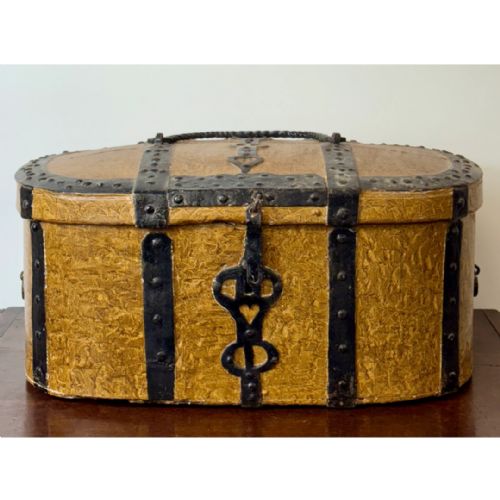
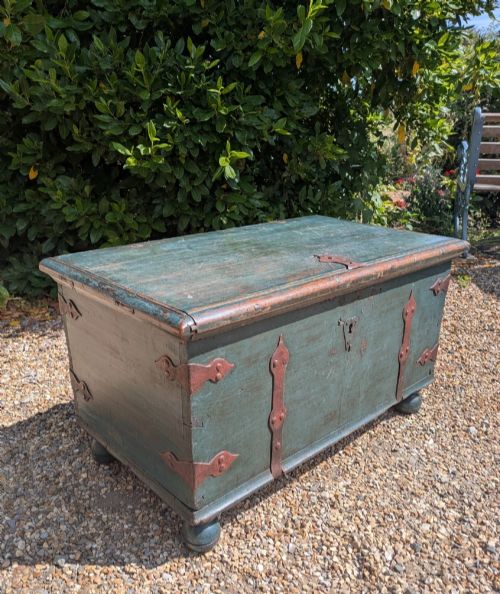
The most common form on this page is the nineteenth-century Swedish painted pine chest or coffer, often featuring dome tops or hand-painted details. Alongside standard blanket boxes, variations include log bins, strong boxes with iron strapwork, and occasional benches or seating units fitted with internal compartments.
How They Were Made
Makers constructed these pieces primarily using solid pine, occasionally incorporating oak for added resilience. Joinery relied on traditional methods suited to domestic utility, creating stable walls capable of bearing heavy household linens or provisions.
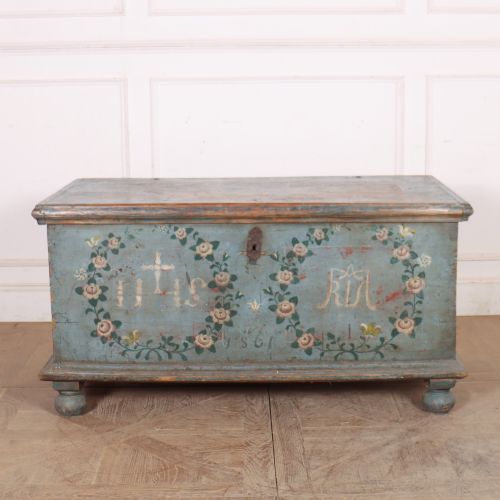
Surfaces received layers of pigment paint, sometimes finished with grained effects, pinwork decoration, or elaborate hand-painted folk motifs. Iron, wrought iron, and brass provided utilitarian hardware, forming hinges, lock plates, and hand-forged strapwork to secure the lids.
The listings feature pine as the dominant material, complemented by oak, wrought iron, and traditional pigment paints.
What Varies in Quality
The distinction between tiers rests upon the integrity of the original paint surface and the sophistication of the decorative work. Pieces retaining untouched historical pigment and intricate folk art display a higher visual coherence than those with compromised surfaces.
Construction details also divide the range, from simple pegged joints to complex dome-top framing and robust hand-forged iron strapwork. The clarity of regional decoration, such as specific marriage motifs or labyrinth patterns, elevates the individual piece.
The Scandinavian Painted Storage Box Glossary
- Cofer
- A large chest or box used historically for storing valuables, linens, or travel goods. They frequently feature heavy lids and robust timber walls.
- Strapwork
- Ornamental metal bands applied to strengthen and decorate the exterior of a chest. These iron or brass additions secure the corners and lid joints.
- Marriage chest
- A specialised box commissioned or given to celebrate a wedding. They often display dates, initials, or symbolic folk art motifs.
- Pigment paint
- Colouring agents mixed into a liquid medium to coat wood surfaces. These historical finishes determine the visual character of regional Scandinavian furniture.
- Dome top
- A rounded lid construction designed to shed water and increase internal volume. This shape requires specialised curved framing timbers.
Scandinavian Painted Storage Box: Frequently Asked Questions
What were these boxes used for?
These boxes served essential domestic functions for storing textiles, winter blankets, grain, or valuables within rural homes. Larger coffers held household linens, while smaller strong boxes protected currency and important documents.
Many examples functioned as marriage chests gifted to newlyweds, carrying initial inscriptions or commemorative dates. Specialised variants also accommodated cutlery, logs, or provisions in daily nineteenth-century life.
How do I identify original paint?
Original painted surfaces show natural wear, stable craquelure, and integration with the underlying pine substrate over decades of handling. Under close examination, older pigment layers reveal subtle variations in tone and texture absent from modern touch-ups.
Appraisers look for consistent patination across both the hardware and the surrounding paintwork. The presence of historical tool marks beneath the pigment further supports period authenticity.
Where did these pieces originate?
The pieces originate primarily from Sweden and Norway, reflecting distinct regional craftsmanship traditions across rural communities. Makers utilised local softwoods like pine alongside durable iron hardware to build sturdy household goods.
Stylistic markers such as specific folk art motifs, Gustavian influences, or traditional colour palettes point directly to Scandinavian workshops. Surviving examples document vernacular design preferences from the eighteenth and nineteenth centuries.
How do I care for painted wood?
Protect painted pine surfaces by maintaining stable room humidity and avoiding direct sunlight that can degrade historical pigments. Dust gently with a dry, soft cloth without applying chemical polishes or modern cleaning agents.
Keep wooden boxes away from heat sources to prevent timber shrinkage and subsequent paint flaking. Gentle handling preserves both the structural joinery and the fragile decorative layers.