





Pine Folk Art Trunk
A pine folk art trunk brings regional colour and hand-applied pigment into a room, offering practical storage wrapped in centuries of vernacular design.
Pine Folk Art Trunk
A pine folk art trunk spans domestic storage forms such as marriage chests, coffer boxes, strong boxes and blanket chests across the eighteenth and nineteenth centuries. These pieces originate from continental workshops, alpine regions and Scandinavian country makers rather than urban cabinet-makers.
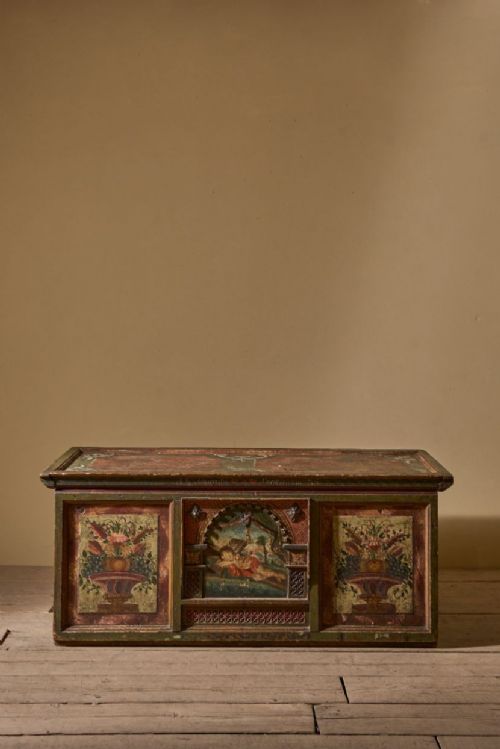
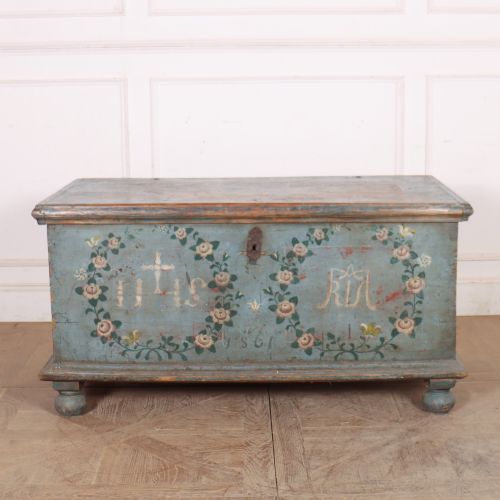
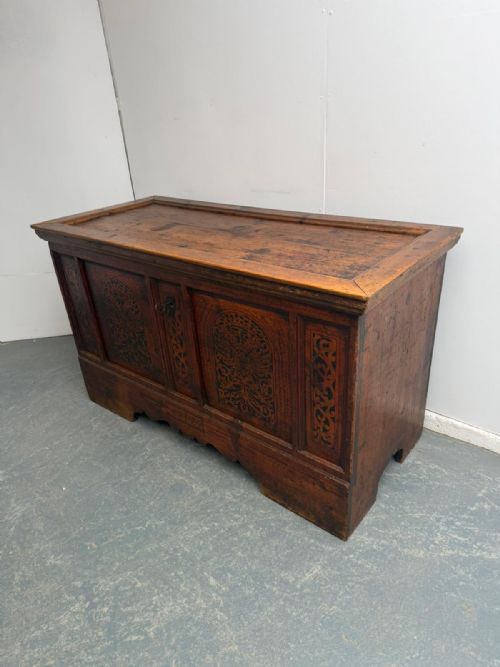
The version most commonly met on this page is the nineteenth-century Scandinavian or Hungarian painted box, often decorated with floral motifs or original pigment. Forms range from small countertop boxes to massive dome-top coffers and mule chests.
Materials and construction
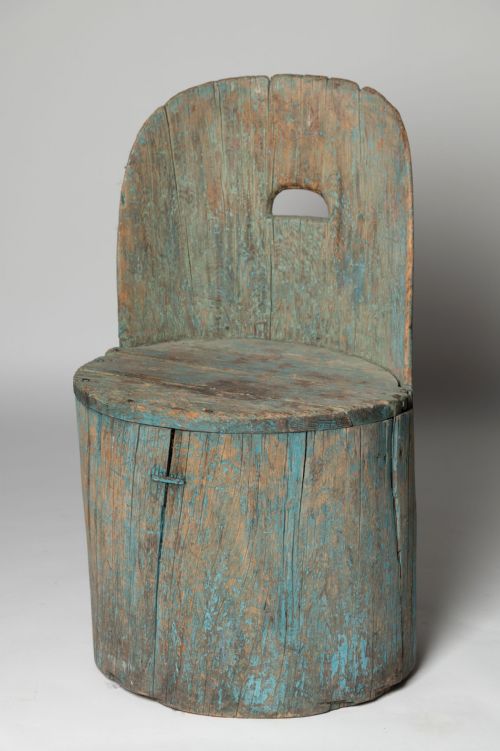
Makers relied on native pine constructed as solid plank chests, joined at the corners and occasionally formed as dug-out bodies. Surfaces received layers of oil or water-based pigment, sometimes finished with detailed floral brushwork or geometric schemes.
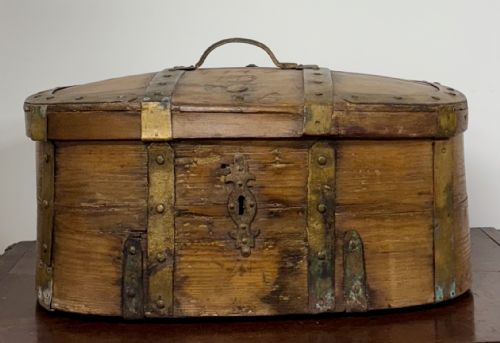
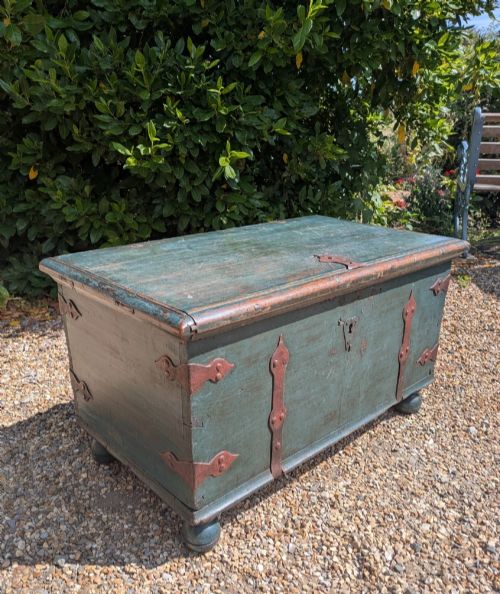
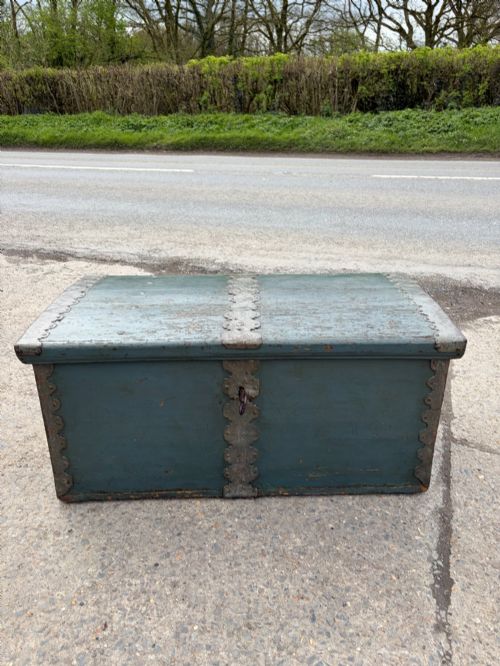
Hardware played a structural role alongside timber, utilising hand-forged iron strapwork, brass details and wrought iron hinges or locks to secure the lid and reinforce the corners.
The listings show pine trunks decorated in Scandinavian, Hungarian, alpine and Victorian folk art styles using iron hardware and pigment.
Judging quality in folk art chests
Quality rests primarily in the survival and integrity of the original surface paint rather than subsequent overpainting or stripping. Retaining the authentic early pigment with honest patination elevates a piece considerably.
Construction details also dictate standard, particularly the presence of hand-forged ironwork, dovetailed or pegged joints, and well-proportioned dome tops or shaped bases that reflect regional vernacular skill.
The Pine Folk Art Trunk Glossary
- Mule chest
- A storage chest featuring one or more drawers beneath the main internal compartment. This form bridges the gap between traditional coffers and chest of drawers.
- Coffer box
- A heavy-duty wooden box with a lid, historically used for transporting or storing valuables. They often feature robust iron hardware for security.
- Strapwork
- Ornamental bands of metal, commonly iron, applied across the exterior of a chest to reinforce the wooden joints. Hand-forged examples display individual smithing marks.
- Pigment
- Coloured powder combined with a binder to create the paint finishes seen on folk art pieces. Original pigment shows natural fading and wear consistent with age.
Pine Folk Art Trunk: Frequently Asked Questions
How were folk art trunks used historically?
These chests served primarily for storing household textiles, blankets and personal valuables in domestic settings. Marriage chests were often commissioned to hold a bride's dowry.
Larger coffers also functioned as travel luggage or secure storage on merchant vessels and rural farmsteads.
How do I care for an original painted pine chest?
Keep painted trunks away from direct sunlight and dramatic humidity changes to protect the fragile historic pigment. Dust gently with a dry cloth without using modern chemical polishes.
Maintain stable indoor temperatures to prevent the pine timber from splitting or warping over time.
What is the difference between a coffer and a trunk?
A coffer traditionally describes a heavily constructed, sturdy chest built with thick timber and reinforced for security. Trunks often reference lighter travel containers, though the terms overlap frequently in antique listings.
Both serve the same fundamental function of lidded storage but vary in heaviness and hardware.
How can I tell if the paint is original?
Original paint exhibits natural craquelure, soft edge wear, and microscopic layers matching the age of the pine underneath. Under close inspection, genuine early pigment integrates physically with the wood surface rather than sitting as a flat modern coat.
Subsequent overpainting often hides the authentic grain and lacks the gradual patination acquired over centuries of handling.