


19th Century Blanket Chest
A 19th century blanket chest brings practical storage and solid timber craftsmanship into a modern room.
19th Century Blanket Chest
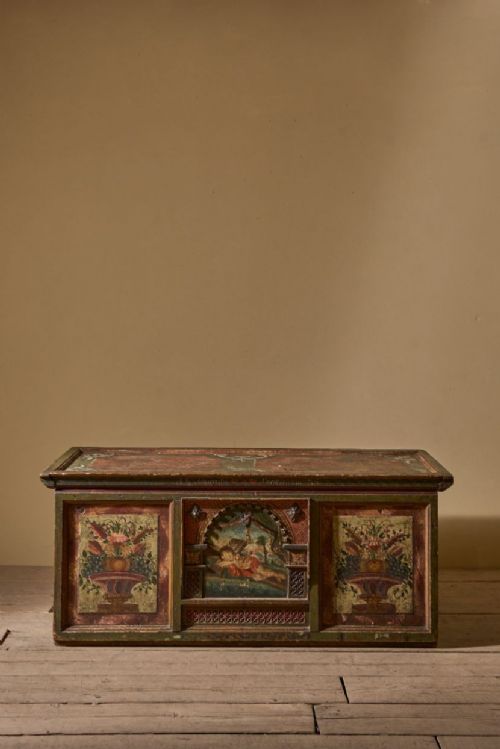
A 19th century blanket chest serves primarily as a robust storage box for household textiles, linens, and garments. These pieces range from simple country boxes to travelled trunks.
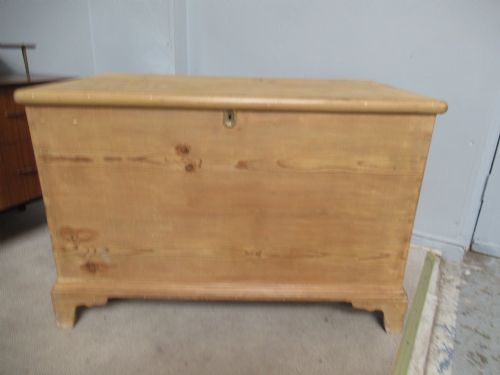
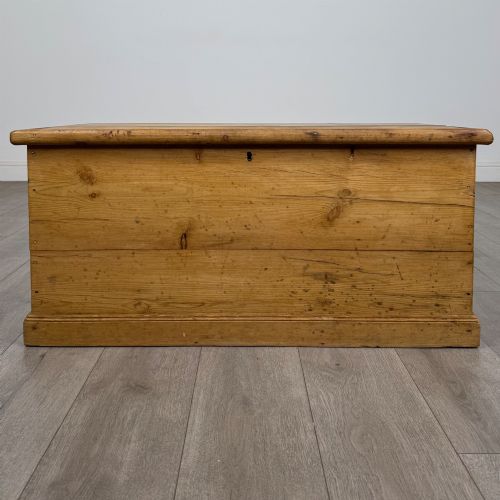
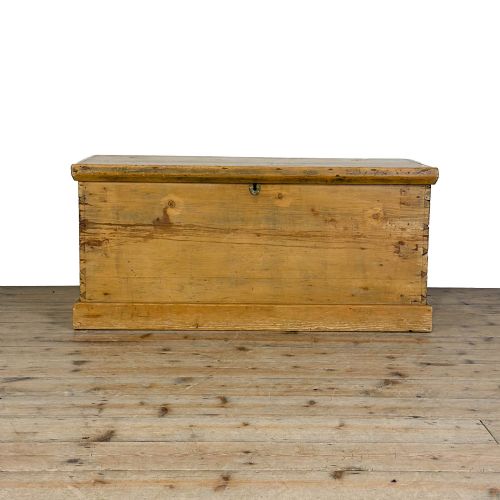
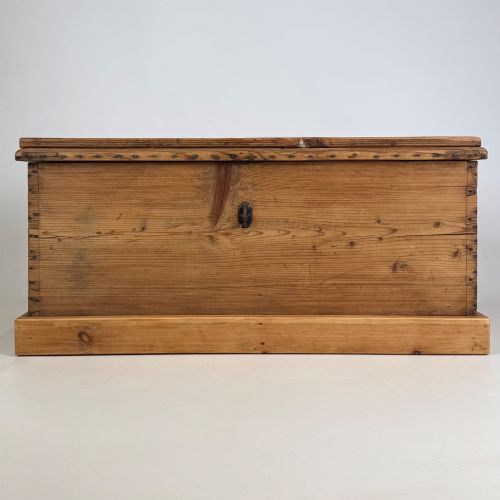
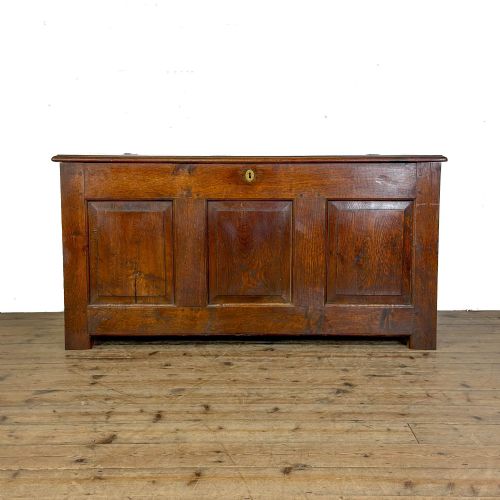
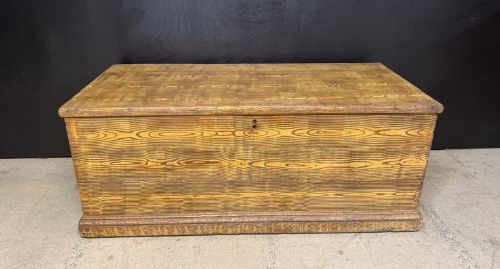
Pine examples from the Victorian period dominate the selection, often found stripped or retaining traces of original paint. These everyday utilitarian items sat in domestic bedrooms and farmhouses alike.
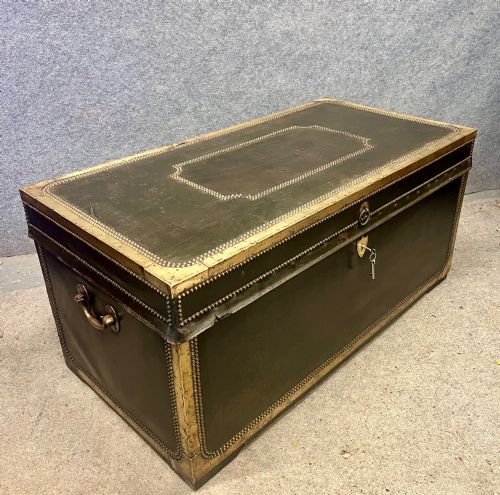
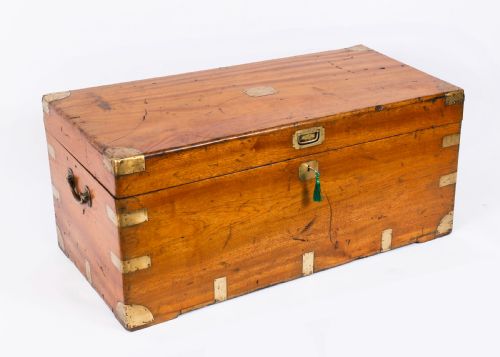
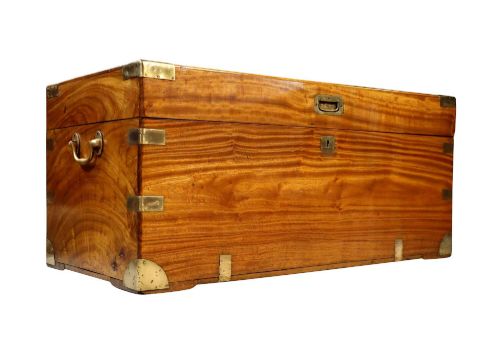
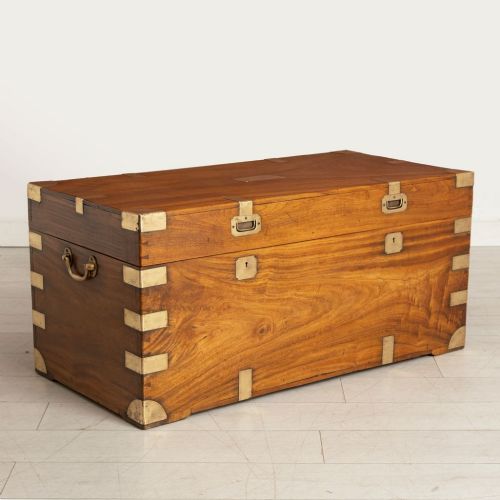
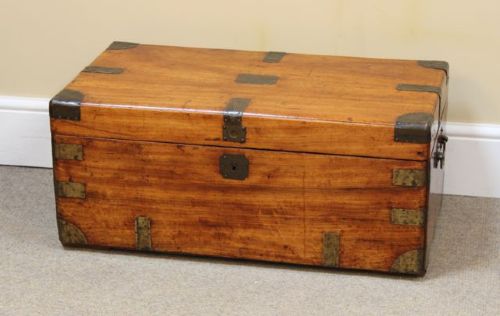
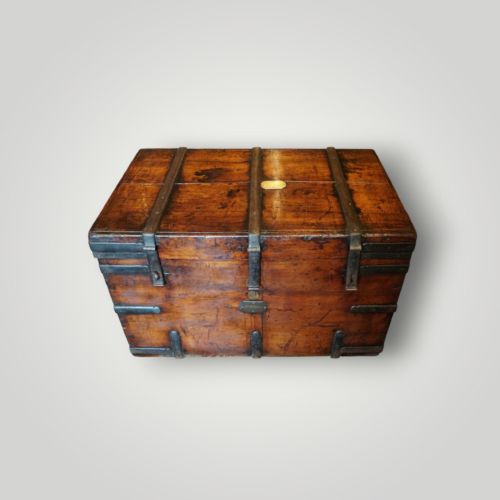
More travelled variations include camphor wood and teak campaign chests equipped with brass mountings. Traders and military officers utilised these durable boxes to transport personal belongings across empires.
Materials and Construction
Joiners built these chests using a mix of domestic and exotic timbers such as pine, oak, elm, camphor wood, and teak. Solid plank construction and dovetail joints provided the necessary strength for heavy loads.
Metal reinforcement defined many travelling pieces, utilising brass corners, iron bands, and stud work to protect edges during transit. Leather coverings and lacquer finishes also appeared on specific export and military trunks.
The inventory records regional variations like Welsh coffer bach chests alongside travelled Chinese export and Zanzibar trade trunks.
Evaluating the Build
Quality rests heavily on the integrity of the timber and the retention of original surface treatments. Cleanly cut dovetails and untouched hardware distinguish superior workshop production from utilitarian utility items.
The survival of original elements, such as working brass locks, carrying handles, and paint or lacquered finishes, elevates a piece. Altered hinges or replaced boards alter the historical standing of the chest.
Samuel Pratt
The 19th Century Blanket Chest Glossary
- Campaign chest
- A portable trunk or set of drawers built in sections with recessed handles for military transport.
- Coffer
- A heavy wooden box traditionally used for storing valuables or dry goods before dedicated closets existed.
- Mule chest
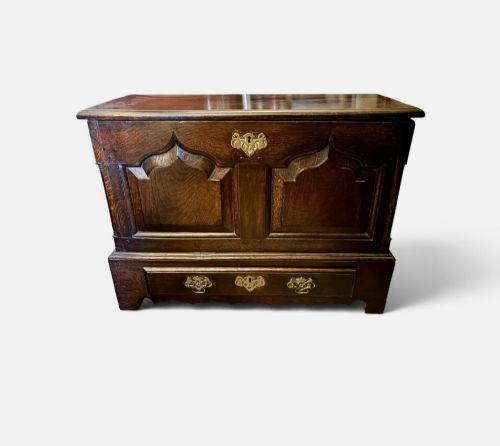
- A storage box featuring one or more drawers beneath the main lifting compartment.
- Camphor wood
- An aromatic timber frequently utilised in trade chests to deter insects from stored woollens.
- Scumble paint
- A decorative surface technique applied to imitate finer wood grains or create patterned finishes.
19th Century Blanket Chest: Frequently Asked Questions
What were 19th century blanket chests used for?
Households relied on these large timber boxes to store heavy woollen blankets, bed linens, and seasonal garments away from dust and moths.
Travellers and military personnel also utilised specialised versions to pack uniforms and personal possessions for long sea voyages.
How do I identify a campaign chest?
These travelling pieces feature flush brass handles, reinforced corners, and often divide into two stacked sections for easier loading.
They frequently utilise camphor wood, teak, or mahogany to withstand maritime climates during transit.
Are pine chests durable for everyday use?
Solid pine construction with traditional dovetail joinery provides exceptional structural stability for daily service in modern homes.
Their sturdy hinged lids allow them to function easily as coffee tables or window seats while offering concealed storage.