

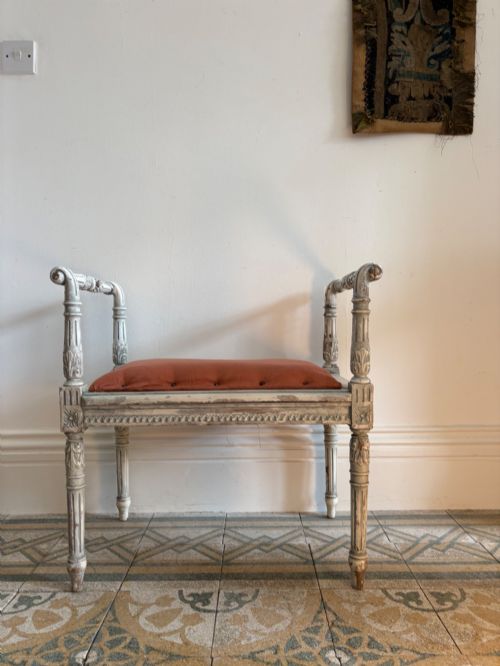
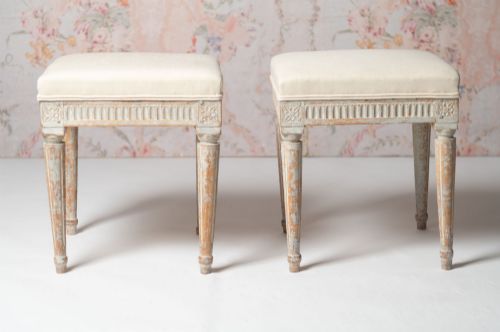
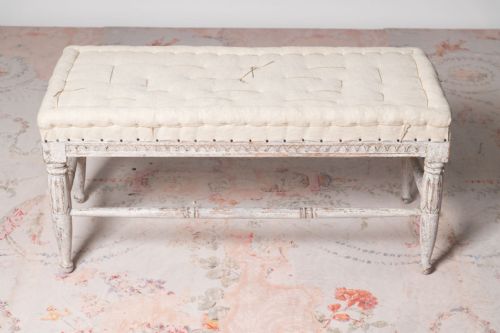
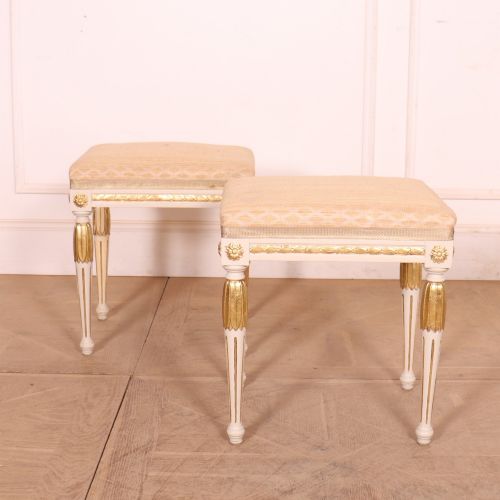

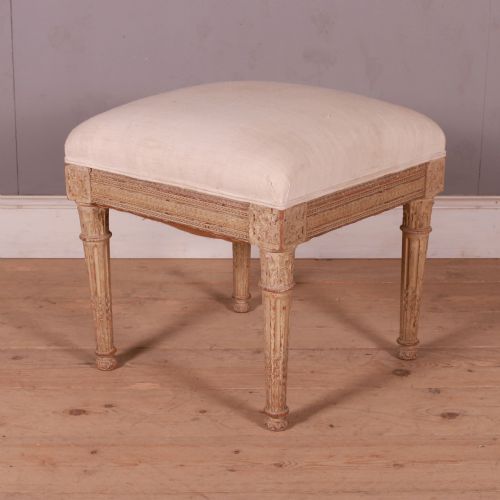


Swedish Dressing Stool
These Swedish dressing stool pieces bring restrained Nordic elegance to a bedroom, offering practical seating with a long lineage.
Swedish Dressing Stool
A Swedish dressing stool is a low seating piece designed for a vanity or dressing table, drawing on classical Scandinavian design. These pieces often anchor a bedroom scheme with their characteristic proportions and clean silhouettes.
The versions met most frequently on this page span the eighteenth, nineteenth and early twentieth centuries. They appear in forms ranging from simple painted woodwork to structured Biedermeier and Neoclassical styles.
How they were made
Makers utilised native timber such as birch, alongside solid wood finished with paint or gold leaf. Surface treatments frequently involve layered white or original paint that highlights carved wooden details.
Upholstery relies on traditional textiles including fabric, linen, cotton and silk for the seats. Construction methods join carved wooden frames to support these upholstered pads.
Swedish Dressing Stool Retail Price Guide 2026
Typical asking prices for swedish dressing stool among the pieces listed under this phrase on Sellingantiques today, from the lower quarter to the upper quarter. They describe what is for sale here now, not the wider market.
Styles span Gustavian Neoclassical, Swedish Biedermeier and Swedish Empire forms.
What varies in quality
Quality rests in the crispness of the carved wooden ornament and the integrity of the painted surface. Original paint layers with honest wear hold more character than later resprays.
The refinement of the silhouette separates standard seating from finer examples. Gustavian Neoclassical and Biedermeier pieces show greater attention to proportion and joinery.
The Swedish Dressing Stool Glossary
- Gustavian
- A Swedish neoclassical design movement inspired by French styles of Louis XVI but rendered with simpler, lighter proportions. It dominates much of Scandinavian antique seating.
- Biedermeier
- A Central European and Scandinavian style spanning the nineteenth century focusing on utility, clean lines and native wood grains. Satin birch is typical of this aesthetic.
- Gold leaf
- Beaten gold applied to wooden surfaces for decorative highlights. It brings a restrained metallic contrast to painted frames.
- Original paint
- The initial historic decorative coating applied to a wooden piece. Collectors prize surviving early paint for its authentic patina.
Swedish Dressing Stool: Frequently Asked Questions
Where do you use a dressing stool?
These low stools fit neatly in front of a dressing table or vanity mirror in a bedroom. They also serve as flexible perches in a hallway or corner.
Their compact footprint allows them to slide entirely beneath a table surface when not in use. This preserves floor space while keeping the seat accessible.
How do I identify Gustavian style?
Gustavian pieces feature straight tapered legs, fluting and subtle neoclassical carvings. The palette tends towards pale greys, creams and white paint.
Proportions are restrained and symmetrical, avoiding heavy ornamentation. This creates a calm aesthetic suited to period and modern interiors alike.
What is Biedermeier furniture?
Biedermeier design emerged in the nineteenth century, prioritising comfort and domestic virtue over ostentation. It makes a feature of blond woods like birch without heavy carving.
The aesthetic relies on clean architectural lines and polished timber surfaces. Pieces from this movement feel remarkably modern despite their age.
Are painted finishes original?
Original painted surfaces show age-appropriate softening, craquelure and wear through use. Examining the layers under magnification reveals historic pigment composition.
Later overpainting often obscures the subtle texture of the timber underneath. Spotting untouched paint requires looking for consistent wear patterns across high-contact areas.