



Neoclassical Stool Pair
A neoclassical stool pair brings balanced symmetry and classical proportion into a room, offering refined seating shaped by centuries of European design.
Neoclassical Stool Pair
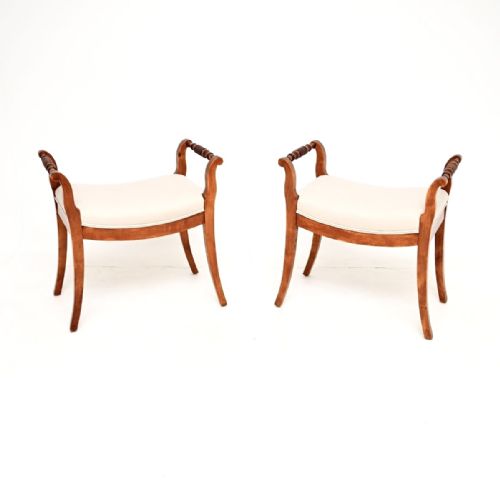
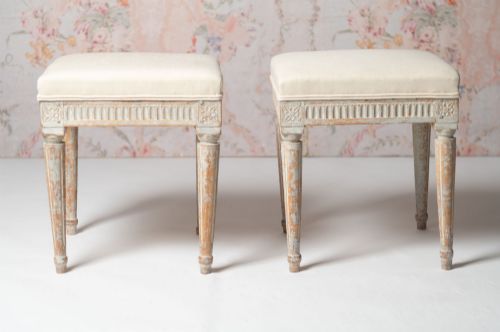
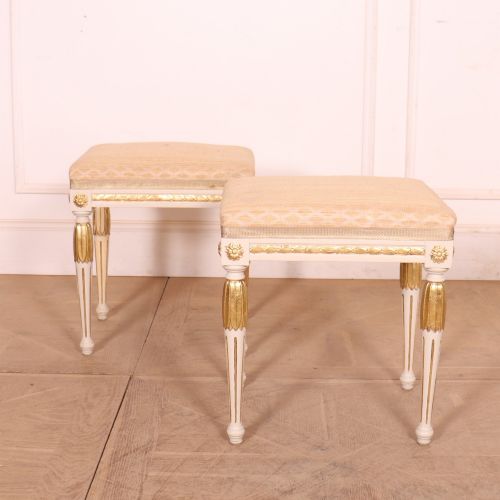
A neoclassical stool pair consists of matched twin seats shaped by eighteenth and nineteenth-century design principles. These pieces draw on classical motifs such as clean lines, carved detail, and balanced proportions.
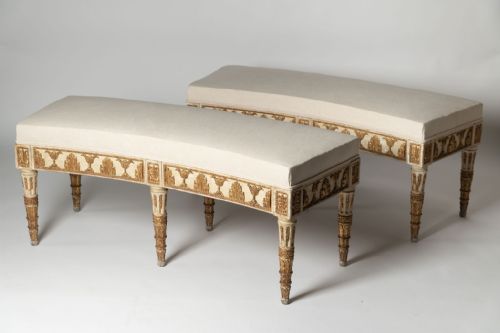
The versions most commonly met on this page originate from Sweden and Italy, spanning the eighteenth century through to the early twentieth century. Swedish Gustavian examples and Italian window seats dominate the selection.
Makers produced these forms in variations including low footstools, carved benches, and window seats upholstered in linen or decorative fabric. Each pair reflects the regional interpretation of neoclassical taste across Europe.
How they were made
Cabinetmakers shaped these frames from solid wood, employing hand carving to define the neoclassical ornament. Craftsmen then applied paint or gold leaf to finish the wooden surfaces.
Upholsterers built the seat pads using traditional stuffing methods enclosed in linen or patterned fabric. Giltwood and painted finishes received protective layers to preserve the underlying wood and gesso.
Neoclassical Stool Pair Retail Price Guide 2026
Typical asking prices for neoclassical stool pair among the pieces listed under this phrase on Sellingantiques today, from the lower quarter to the upper quarter. They describe what is for sale here now, not the wider market.
Swedish makers occasionally used hidden compartments beneath the upholstery to store small sewing tools.
What varies in quality
The crispness of the hand carving dictates the visual strength of the piece, separating finely detailed woodwork from softer, simpler execution. Original surface treatments, whether aged paint or giltwood, carry more character than later overpainting.
Proportion and structural harmony define the better examples, ensuring the matched pair maintains a balanced presence. The quality of the underlying timber frame and the sympathetic choice of upholstery fabric complete the distinction.
The Neoclassical Stool Pair Glossary
- Gustavian
- A Swedish adaptation of French neoclassical style characterised by lighter proportions and restrained ornamentation. This aesthetic emerged during the reign of Gustav III and favours pale painted finishes.
- Giltwood
- Wood coated with a thin layer of gold leaf over a prepared gesso base. This decorative technique adds a luminous quality to the carved frames.
- Window seat
- A long, narrow form of stool designed to sit within a window recess. These pieces often feature upholstered tops and decorative end supports.
- Painted wood
- Timber surfaces finished with layers of traditional paint, often layered to allow gentle wear over time. Swedish makers frequently utilised pale grey, white, or cream tones.
Neoclassical Stool Pair: Frequently Asked Questions
Where should I place a neoclassical stool pair?
These matched pieces suit placement at the foot of a bed, beneath a console table, or arranged symmetrically in a living room. Their balanced proportions allow them to function as both decorative accents and practical occasional seating.
Because they arrive as pairs, they create an immediate sense of formal order in an interior. Positioning them together or flanking a central piece highlights their symmetrical design.
How do I care for antique painted wood?
Maintain painted surfaces by dusting gently with a dry, soft cloth to prevent the accumulation of dirt. Avoid moisture and chemical cleaning agents that might lift or soften historic paint layers.
Keep these items away from direct sunlight and strong heat sources to protect the aged wood and delicate finishes. Stable indoor humidity prevents the timber beneath from expanding or contracting.
What is the difference between Gustavian and Italian neoclassical styles?
Swedish Gustavian design tends toward restrained elegance, pale painted surfaces, and simplified classical motifs. It reflects a Scandinavian interpretation of French court styles suited to lighter interiors.
Italian neoclassical and Empire pieces often feature bolder carving, richer use of giltwood, and more dramatic structural silhouettes. They draw more directly on classical Roman antiquity and heavier architectural references.
Are these stools comfortable for daily sitting?
Many examples function primarily as decorative elements or low occasional seats rather than deep lounge furniture. Their traditional upholstery provides firm support suited to shorter periods of sitting.
Using them as footstools or window seats aligns well with their original purpose and shallow depth. The padding reflects historical cushioning methods rather than modern deep-sprung comfort.