



Gustavian Painted Footstool
These gustavian painted footstool pieces bring restrained Swedish elegance to a room, offering low seating shaped by neoclassical restraint and pale painted surfaces.
Gustavian Painted Footstool
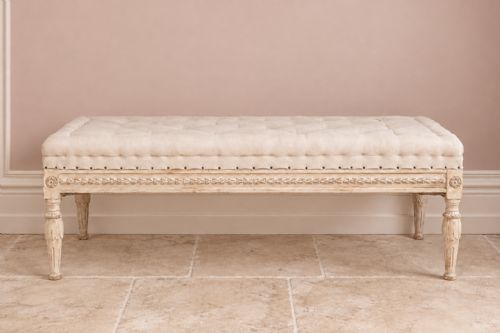
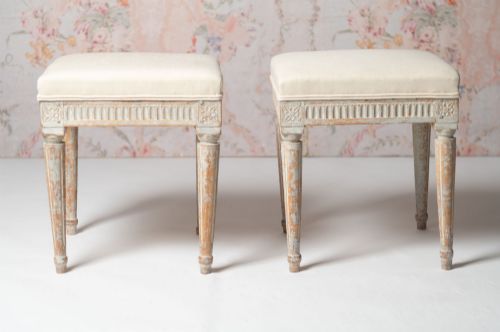
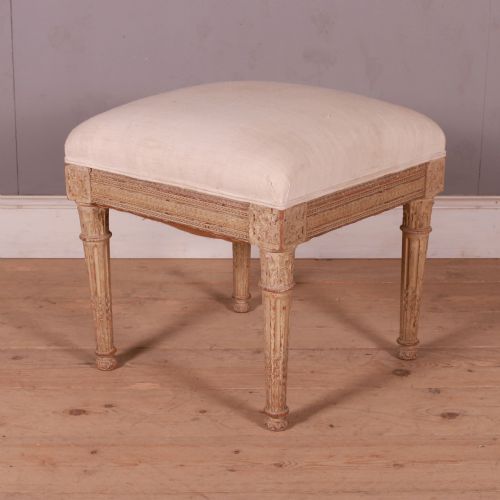
A gustavian painted footstool represents a specific strand of Scandinavian seating, appearing here as low stools, ottomans and footstools from the eighteenth and nineteenth centuries. These pieces emerge in single examples and in pairs, originating from Swedish workshops that embraced the neoclassical shift away from heavy Baroque curves.
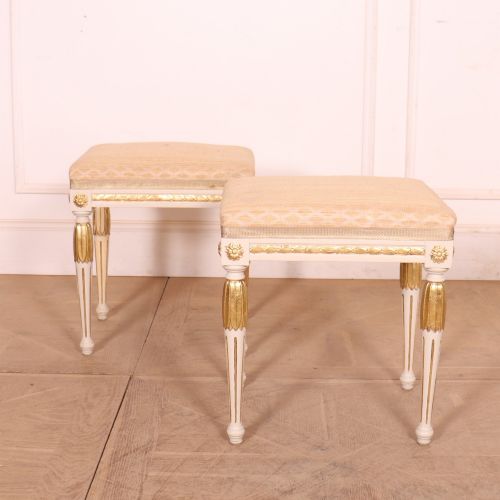
The forms found in these listings rely on clean lines and simple geometric shapes, often taking the form of low wooden stools designed for domestic comfort. Most examples visible here carry the characteristic paint finishes of the Gustavian style, reflecting the lighter palettes favoured in Swedish interiors.
Buyers seeking this phrase encounter items spanning the eighteenth century through to the late nineteenth century, including pieces dated around 1880 and 1890 alongside older examples. This range shows a steady continuation of Swedish design traditions across different decades.
How They Were Made
Wood serves as the primary structural material for these stools, shaped through carving and joinery before receiving layers of paint. Many examples incorporate parcel gilt or gold leaf details to highlight carved motifs against the painted ground.
Upholstery forms an essential part of the construction, utilising fabrics such as linen over the wooden frames. The combination of painted wood and textile top surfaces defines the physical character of the pieces recorded in the evidence.
Gustavian Painted Footstool Retail Price Guide 2026
Typical asking prices for gustavian painted footstool among the pieces listed under this phrase on Sellingantiques today, from the lower quarter to the upper quarter. They describe what is for sale here now, not the wider market.
Listings for this phrase include items from the 18th century, 19th century, 1880, and 1890, using materials such as painted wood, fabric, linen, and gold leaf.
What Varies in Quality
Quality in these pieces rests upon the crispness of the wood carving and the integrity of the painted surface. Stools displaying finer hand-carved details and well-preserved original paintwork stand apart from simpler iterations.
The presence of original paint finishes rather than later repainting alters the character of a piece significantly. Construction details, such as the matching of pairs and the stability of the wooden frames, further distinguish individual items.
The Gustavian Painted Footstool Glossary
- Gustavian
- The Swedish neoclassical style spanning the late eighteenth and nineteenth centuries, known for pale paintwork and restrained classical ornamentation. It draws inspiration from French Louis XVI design but simplifies the vocabulary for Scandinavian interiors.
- Parcel Gilt
- A technique where portions of an object are highlighted with gold leaf while the rest remains painted or finished in wood. On these stools, it typically accents carved wooden details.
- Paint
- The coloured liquid coating applied to the wooden frames, which forms a defining visual element of Scandinavian furniture. Original paint finishes are particularly valued by collectors.
- Linen
- A natural textile woven from flax fibres, frequently used for the upholstered tops of period footstools. It provides a durable and traditionally appropriate surface for seating.
Gustavian Painted Footstool: Frequently Asked Questions
How do I date a painted footstool?
Dating relies on examining the construction methods, the wood, and the layers of paint present on the frame. Pieces from the eighteenth century show different joinery techniques compared to those from the late nineteenth century, such as those dated to 1880 or 1890.
Changes in proportion and the style of the carved details also help assign an approximate period to each stool.
Are these stools sold in pairs?
The listings include both single stools and matching pairs originating from Swedish makers. Pairs are frequently recorded across the nineteenth-century examples.
Finding matching pairs allows for symmetrical placement within a room, which was a common arrangement in traditional Swedish interiors.
How do I care for painted wooden furniture?
Caring for painted wooden surfaces involves keeping them away from direct sunlight and excessive moisture to protect the historic paint layers. Gentle dusting with a dry cloth helps maintain the finish without damaging the wood beneath.
Textile tops require appropriate fabric care depending on whether the linen is antique or a later replacement.