

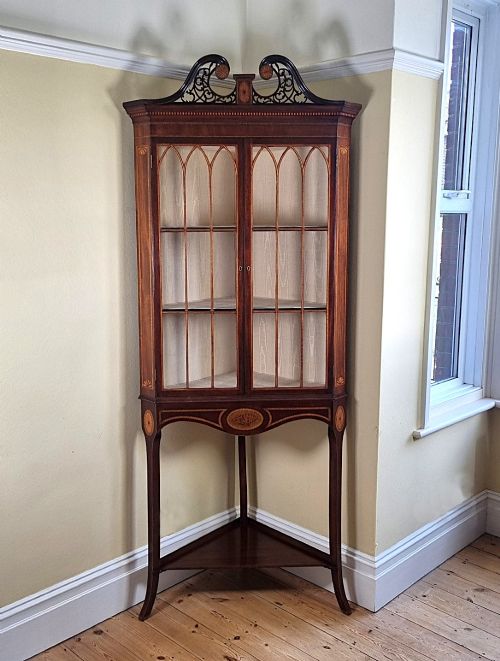
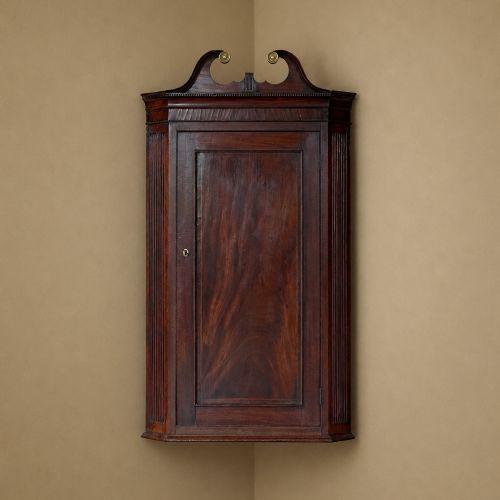
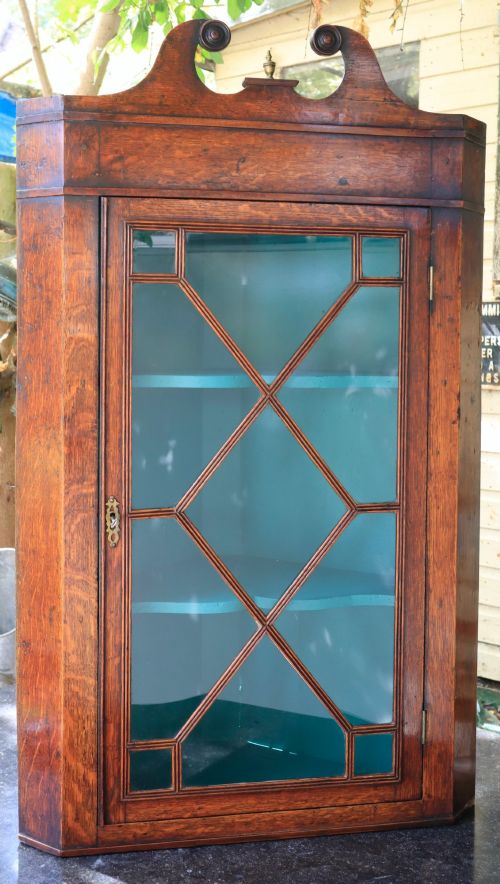
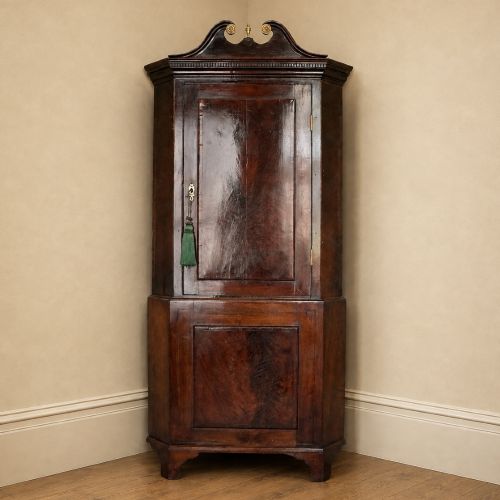


Swan Neck Corner Cupboard
A swan neck corner cupboard makes clever use of neglected space while displaying timber and proportion at eye level.
Swan Neck Corner Cupboard
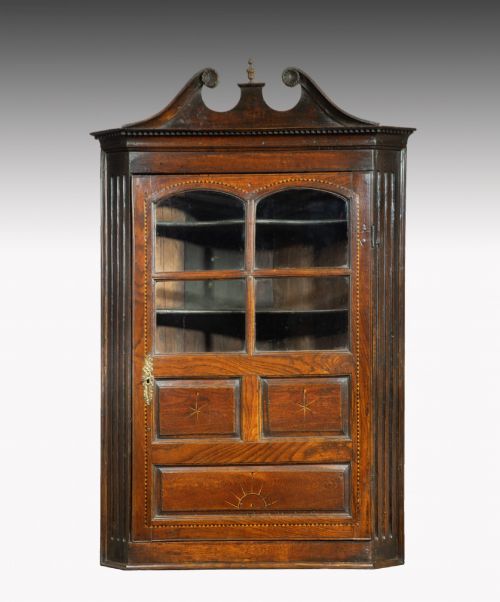
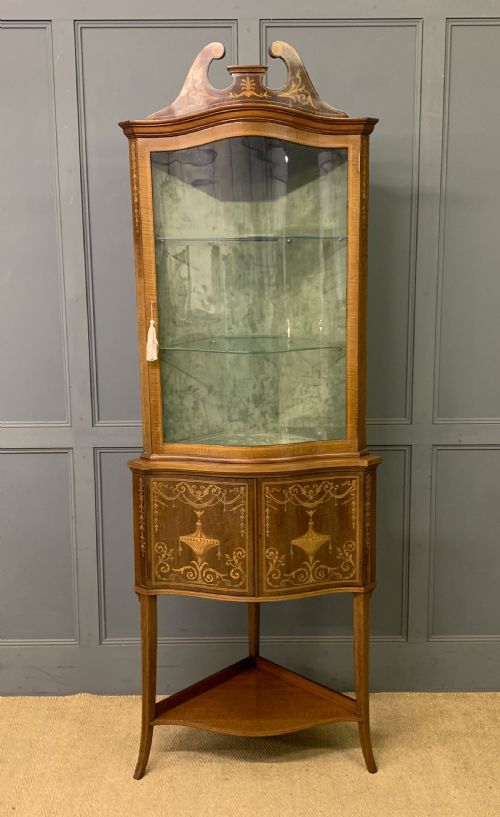
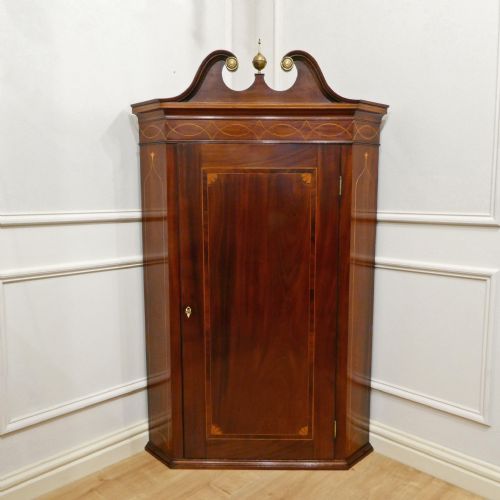
A swan neck corner cupboard is designed to fit flush into a room junction, turning a plain intersection into a focal point. When you search for a swan neck corner cupboard, you encounter timber cabinets that span the Georgian and Edwardian eras, predominantly built from mahogany with occasional examples in oak.
The dominant form on this page is the wall-hanging corner cupboard, though standing cabinets and two-piece cabinets also appear. Many pieces date from the eighteenth century, including George III periods, alongside later Edwardian and Sheraton revival interpretations from nineteen hundred onwards.
These architectural furnishings often feature glazed doors for display or solid panelled doors to conceal contents. The defining swan neck pediment crowns the top, adding a classical scroll profile that draws the eye upward.
Materials and construction methods
Mahogany serves as the primary timber, appearing in dense grains, flame mahogany figures, and solid planks of oak. Cabinet makers embellished these foundational woods with delicate stringing and contrasting details using satinwood and boxwood inlay.
Glazing bars divide cabinet glass into geometric panes, while brass hinges, escutcheons, and working locks secure the doors. Carved wooden scrolls form the swan neck pediment above the cornice, requiring precise joinery to curve smoothly.
Listings span Georgian, Edwardian, and early twentieth century periods, uniting mahogany, flame mahogany, and oak with delicate satinwood inlay.
Assessing cabinet quality
Quality rests in the choice of timber and the crispness of the secondary wood used for internal shelving and backboards. Flame mahogany veneers and fine satinwood inlay demand high craftsmanship, whereas plain oak or simpler cuts represent standard utility pieces.
The architectural details dictate distinction, from carved broken arch pediments to simple flat cornices. Original brassware, intact glazing, and well-fitted doors distinguish superior specimens from altered or heavily restored examples.
The Swan Neck Corner Cupboard Glossary
- Swan neck
- A curved architectural pediment resembling the neck of a swan, terminating in inward scrolls at the centre. This decorative crest crowns the top of finer eighteenth century cabinets.
- Corner cabinet
- A storage or display furniture piece built with an angled back to fit snugly into the corner of a room. These units maximise floor space while offering surface display capacity.
- Inlay
- A decorative technique where contrasting woods such as satinwood or boxwood are fitted into hollowed channels within the primary mahogany surface. This creates geometric lines and floral motifs.
- Glazed
- Fitted with glass panes held in place by wooden glazing bars to allow the display of porcelain or glassware. This treatment is common on hanging and standing cabinets.
- Pediment
- The triangular or decorative crown above the door frame of a cabinet. On these pieces, it frequently takes the swan neck or broken arch form.
Swan Neck Corner Cupboard: Frequently Asked Questions
Where should I hang a corner cupboard?
These cabinets suit dining rooms, hallways, or living spaces where floor area is limited but wall junctions are bare. Hanging them at eye level allows the pediment and glazing to be fully appreciated.
Ensure the wall construction can support the weight of solid mahogany and glass before mounting any hanging cabinet.
How do I date an 18th century corner cupboard?
Examine the timber species, construction of the interior shelves, and secondary woods like oak or pine used at the back. Georgian pieces often show hand-cut dovetails and older brass hardware.
Later Edwardian revivals tend to use machine-cut elements and brighter internal linings while copying earlier George III proportions.
What is the difference between hanging and standing cupboards?
Hanging corner cupboards attach directly to wall studs using internal brackets, keeping the floor completely clear. Standing models rest upon a plinth, bracket feet, or even a separate stand.
Standing versions provide greater interior volume and often include lower drawers or a separate cabinet base.
Are the swan necks usually original?
Many swan neck pediments and wooden finials survive intact from the Georgian period, though scrolls are vulnerable to knocks. Close inspection of the glue blocks and timber grain reveals whether the crest is contemporary with the carcase.
Revival pieces from the early twentieth century also feature purpose-built swan neck pediments executed in the older style.