

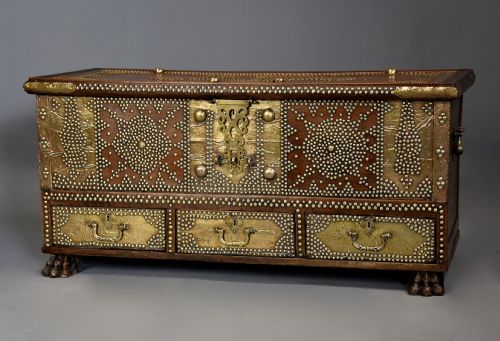
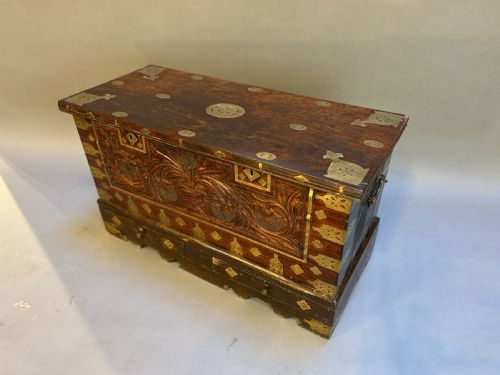


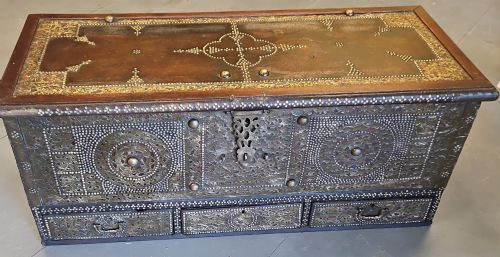


Studded Storage Box
A studded storage box is a heavy timber and hide trunk fastened with brass or iron pins, offering robust utility and travel-worn character for the modern home.
Studded Storage Box
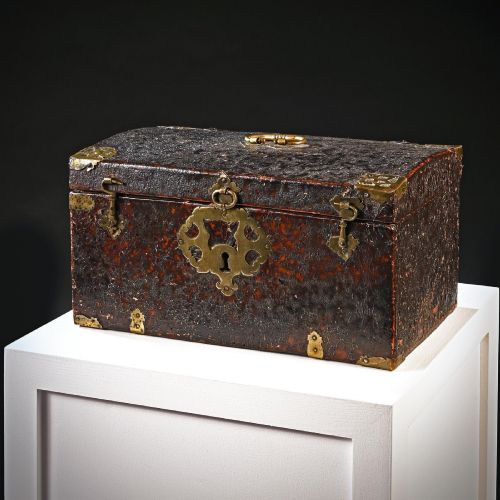
A studded storage box encompasses heavy travel trunks, blanket chests, and lidded coffers produced across the seventeenth, eighteenth, and nineteenth centuries. These pieces were built for transit or domestic utility, using dense woods and protective outer coverings to withstand long journeys by sea and coach.
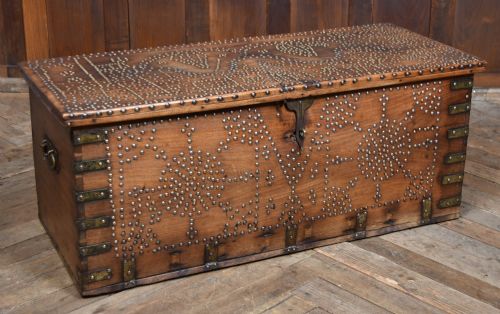
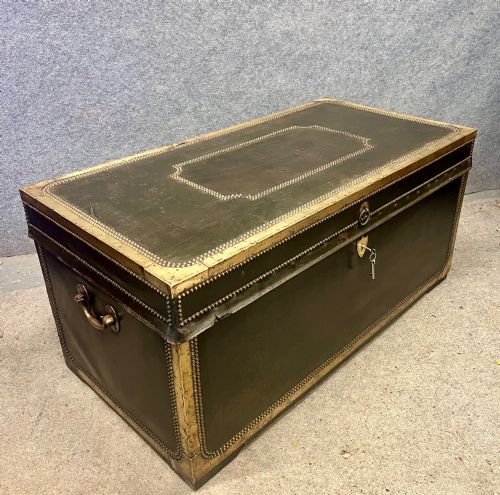
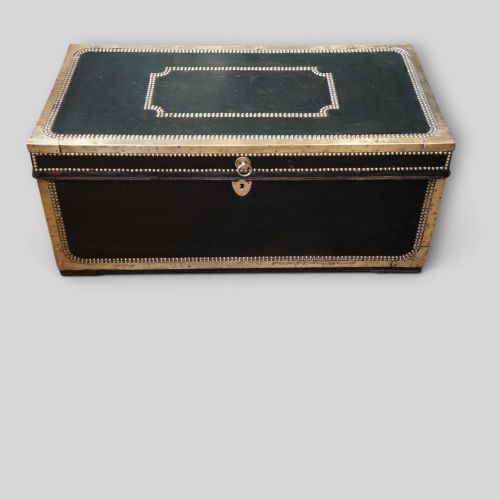
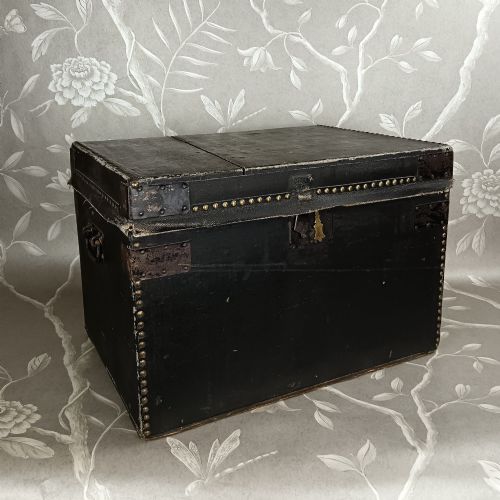
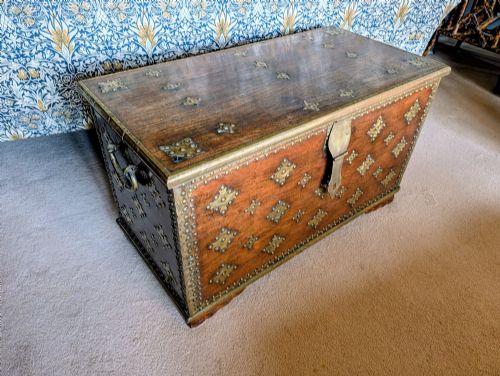
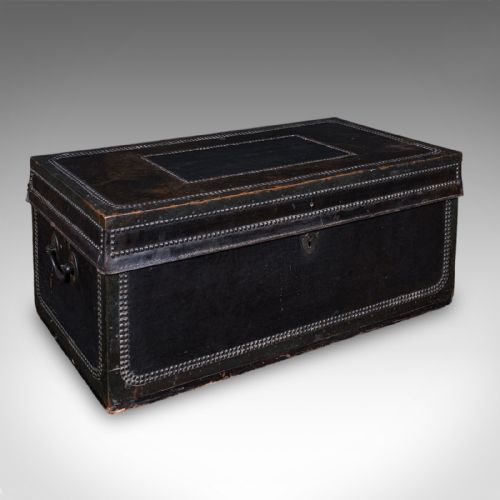
The versions most commonly met here span the Regency and Victorian periods, alongside specific regional forms such as Zanzibar traders' chests and China Trade camphorwood trunks. They frequently appear as dome-top chests, flat-topped blanket boxes, and leather-bound travel trunks.
Makers utilised resilient timbers including teak, padouk, mahogany, and camphorwood, pairing them with iron or brass bindings to reinforce corners and lids. The addition of metal studs served both a structural purpose in securing leather or hide coverings and a decorative function.
How they were made
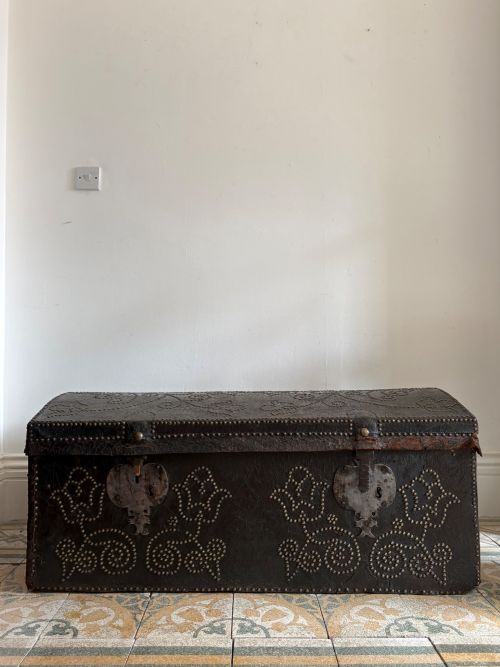
Carpenters constructed the carcases from hardwoods such as oak, teak, padouk, and camphorwood, jointing the timber to endure heavy loads and climatic shifts. These wooden frames were then wrapped in animal hide, leather, or painted canvas.
Metal bindings in iron or brass secured the edges, while thousands of individual metal pins or studs were driven in by hand to fasten the leather skin firmly to the wood. Heavy carrying handles in iron or brass were fitted to the sides for transport.
Listings feature items spanning the seventeenth to the twentieth century, incorporating hardwoods, leather, brass, and iron.
What varies in quality
Quality rests in the selection of primary timbers and the density of the metalwork, distinguishing humble utility trunks from finer merchant pieces. Pieces featuring fragrant camphorwood or dense padouk carry greater substance than simpler deal or painted pine boxes.
The execution of the brass studding work and the integrity of the original leather or hide skin define the visual appeal of an individual trunk. Complete brass bindings, original side handles, and intact domed lids elevate the standing of a box.
Samuel Pratt·Wm. Insall of Bristol·Seabrook of St.Pauls, London
The Studded Storage Box Glossary
- Zanzibar chest
- A heavy hardwood storage chest, often in teak or padouk, featuring elaborate brass studding and strapwork originating from East African trade routes.
- Campaign trunk
- A portable chest constructed in sections or designed with flush carrying handles for military officers and travellers on the move.
- Coffer
- A sturdy wooden chest with a lid, traditionally utilised for storing valuables, textiles, or documents before the widespread adoption of fitted wardrobes.
- Camphorwood
- Aromatic Asian timber valued for its insect-repellent properties, frequently used for the interiors of China Trade trunks.
- Dome top
- A rounded lid construction designed to shed rainwater during travel on the roofs of coaches or carriages.
Studded Storage Box: Frequently Asked Questions
What is a studded storage box used for today?
These boxes function well as practical living room coffee tables, blanket chests at the end of a bed, or hallway storage for bulky items.
Their robust timber construction allows them to support weight while keeping everyday clutter out of sight.
How do I care for leather on an old trunk?
Leather and hide coverings benefit from light dusting and occasional treatment with suitable conservation waxes to prevent drying out.
Avoiding direct sunlight and damp environments preserves the original skin and metal studwork.
What distinguishes a Zanzibar chest from other trunks?
Zanzibar chests are defined by dense tropical hardwoods such as teak or padouk combined with intricate brass stud patterns and strapwork.
They reflect nineteenth-century trade routes between India, the Middle East, and East Africa.
Were these boxes meant for travel?
Many examples were built specifically as travelling trunks, featuring heavy iron or brass side handles for loading onto coaches or ships.
Others served domestic purposes as static blanket boxes or strongboxes within country houses.
How can I tell the period of a trunk?
Dating relies on observing the timber species, construction joints, lock mechanisms, and the style of the brass bindings.
Seventeenth- and eighteenth-century examples often feature simple oak or pinewood frames under Spanish or Dutch leather, whereas Victorian pieces frequently employ exotic hardwoods.