


Colonial Coffee Table Trunk
These colonial coffee table trunks are hybrid pieces of storage furniture and low tables, prized for their sturdy exotic timbers and travel-worn character.
Colonial Coffee Table Trunk
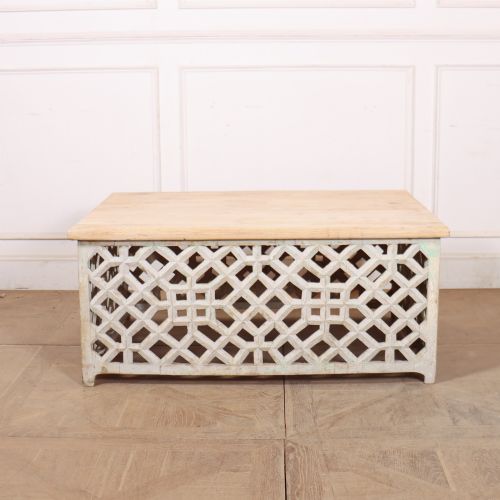
A colonial coffee table trunk serves as both a low surface and a deep storage box, bridging the gap between utilitarian travel gear and domestic furniture. When you search for a colonial coffee table trunk, you encounter adaptations ranging from robust storage chests repurposed as tables to low occasional tables featuring carved animal motifs.
The selection on this page draws primarily from nineteenth-century camphor wood and teak trunks alongside twentieth-century carved hardwood tables. Pieces span styles from Anglo-Indian and Victorian campaign to colonial Georgian, reflecting British colonial presence across various regions.
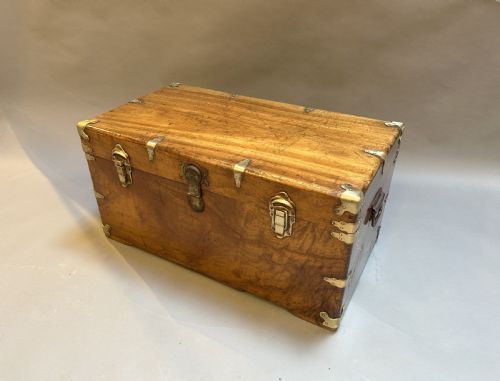
Forms include brass-bound steamer trunks, studded Zanzibar chests, and Indian elephant tables with carved heads. These items suit rooms needing surface area paired with enclosed storage space.
How they were made
Construction relies on dense, durable timbers suited to travel, predominantly camphor wood, teak, and walnut. These woods resist humidity and wear, forming the solid carcass of each trunk or table.
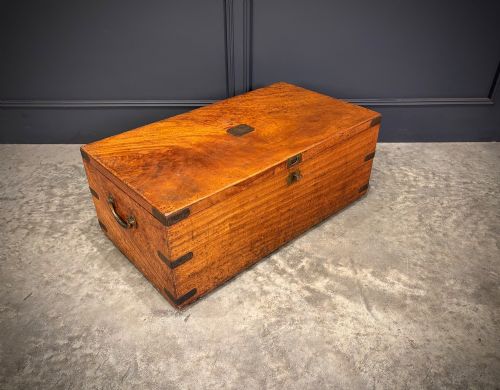
Metalwork is integral to the construction, utilising brass for bound corners, straps, and secure corner brackets. Iron studs and leather detailing also appear, reinforcing joints intended to withstand long sea and land journeys.
Periods represented span from the eighteenth century through the Victorian era up to the 1920s.
What varies in quality
Quality rests in the integrity of the timber selection and the precision of the metal mounts. Higher-grade examples feature heavy brass binding and well-fitted dovetail joints that remain stable despite climate shifts.
Carved details distinguish finer decorative pieces, such as intricately shaped elephant heads on occasional tables or precise brass stud work on Zanzibar chests. The crispness of hand-carving and the thickness of the original hardware set superior examples apart from standard utility trunks.
The Colonial Coffee Table Trunk Glossary
- Camphor Wood
- A fragrant hardwood traditionally utilised for travel trunks because its natural scent deters insects. It forms the primary body of many campaign boxes.
- Campaign
- Furniture designed to dismantle or withstand frequent transport by military officers and officials. These items typically feature recessed handles and protective brass corners.
- Anglo-Indian
- A style describing furniture made in India by local craftsmen for British residents during the colonial period. It often combines European forms with traditional Indian carving techniques.
- Zanzibar Chest
- A heavy storage trunk characterised by brass studding and strapwork, originating from East Africa and influenced by Indian craftsmanship. They were used for trade and personal belongings during sea voyages.
Colonial Coffee Table Trunk: Frequently Asked Questions
What is a colonial coffee table trunk?
A colonial coffee table trunk is a sturdy storage chest or a low carved table originating from the colonial era, adapted for modern living spaces.
These pieces combine enclosed storage capacity with a surface suitable for use as a low table in a living room.
How were these trunks originally used?
Trunks were built for military officers, merchants, and travellers to transport personal belongings across land and sea during the nineteenth century.
Many of these chests doubled as desks or travelling workspaces during long voyages before finding a permanent place in domestic interiors.
Which woods are most common?
Camphor wood, teak, and walnut appear frequently across the available inventory due to their density and resistance to tropical conditions.
Camphor wood is particularly common for steamer trunks because its distinct aroma helps protect stored textiles.
How do I identify campaign furniture?
Campaign pieces typically feature flush brass handles, reinforced metal corners, and construction designed for disassembly or frequent moving.
These functional additions protected the corners and edges during transit while keeping the outer surfaces smooth.