


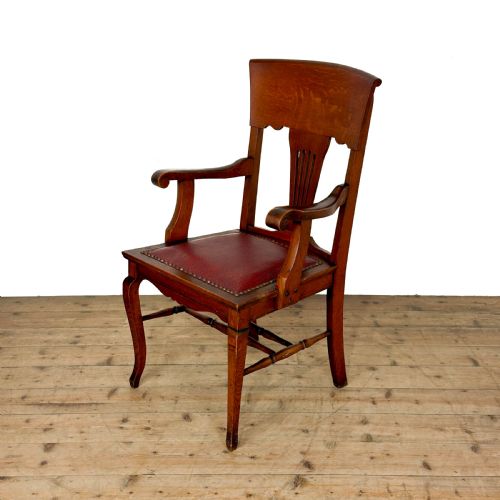

Studded Leather Oak Chair
A studded leather oak chair brings heavy timber and dark hide together, offering a sturdy seat built to last generations.
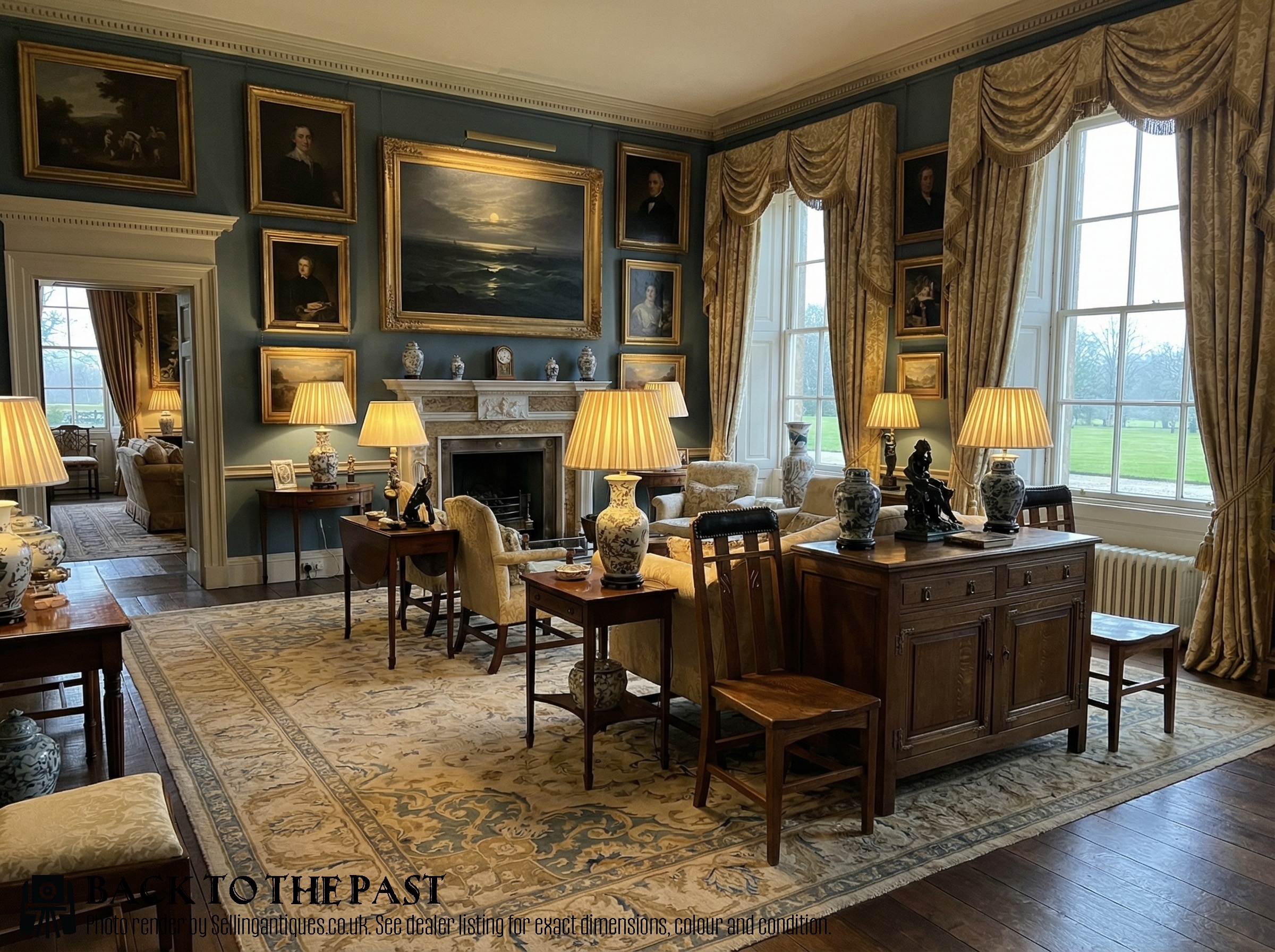
Studded Leather Oak Chair
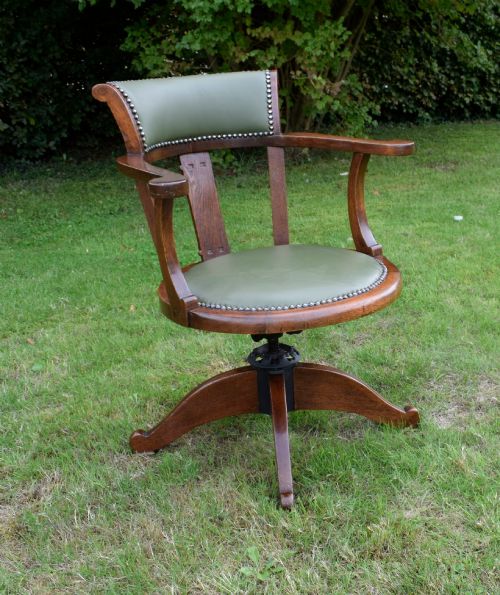
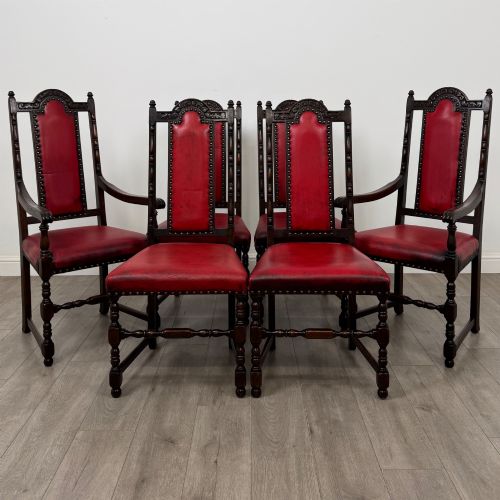
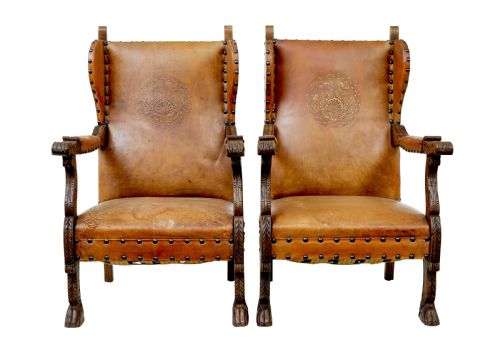
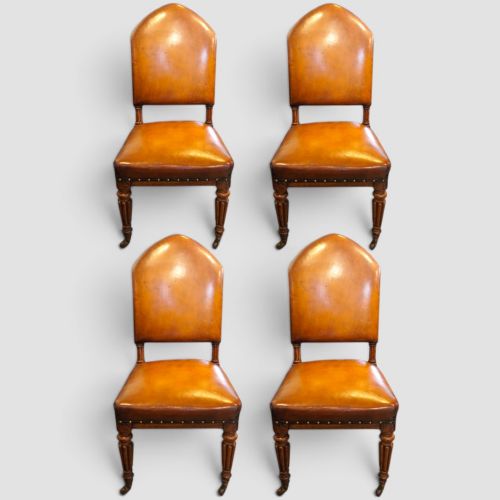
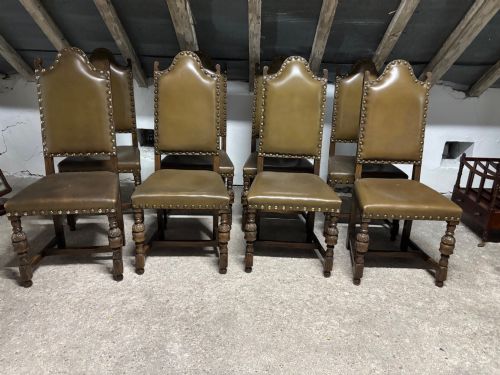
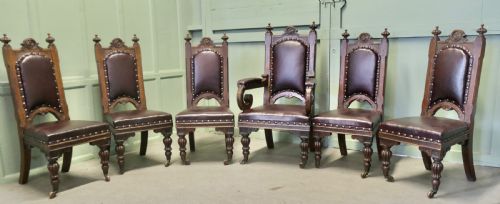
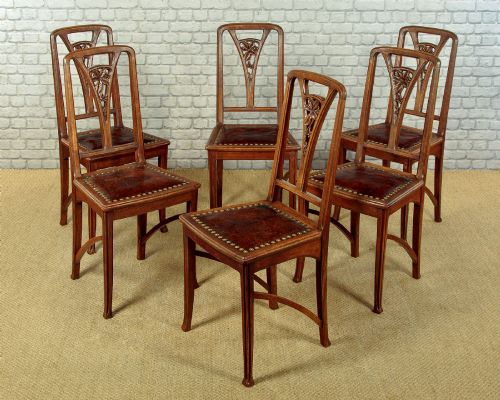
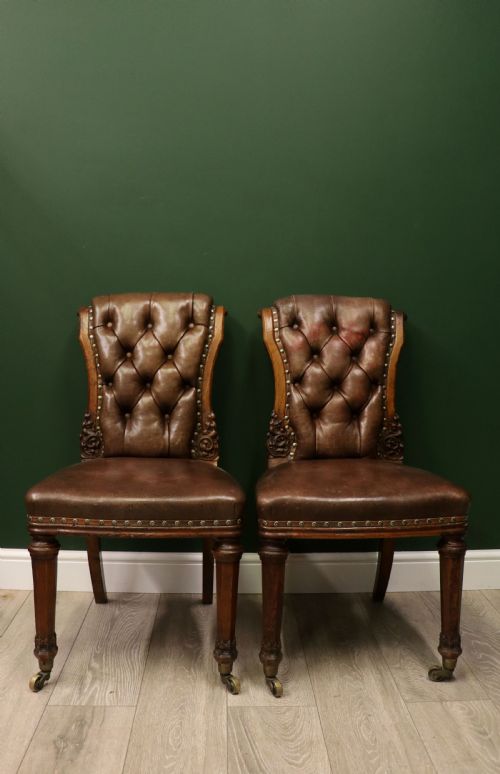
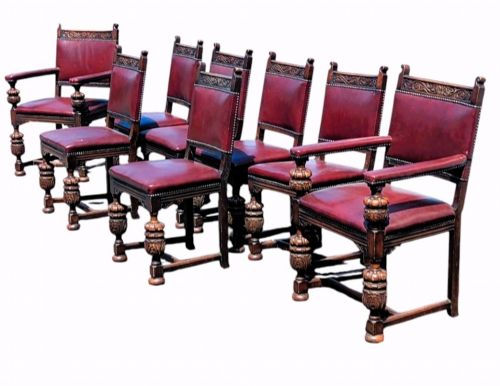
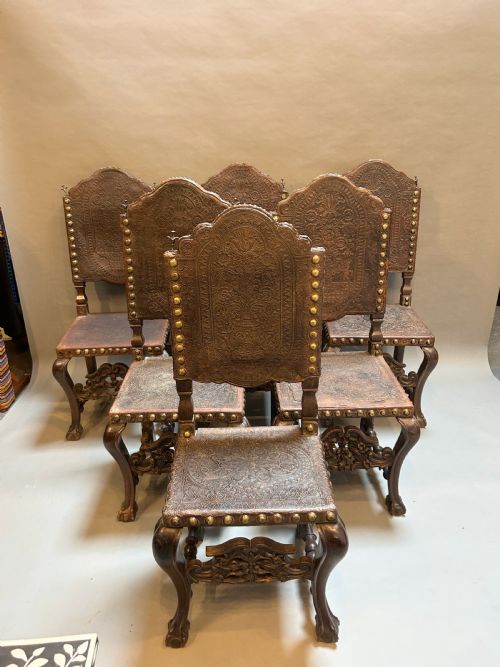
A studded leather oak chair combines solid timber frames with upholstered hide secured by metal fastenings, appearing in forms ranging from single office armchairs to large dining suites. These pieces emerge across the nineteenth and early twentieth centuries, drawing on earlier revival styles including Jacobean, Gothic, and Spanish motifs.
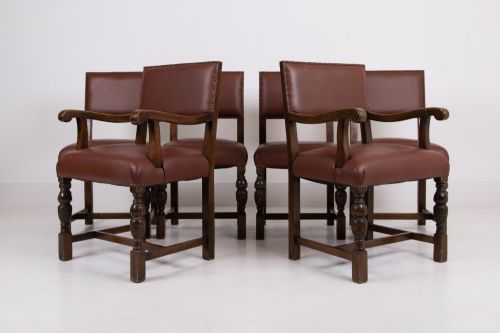
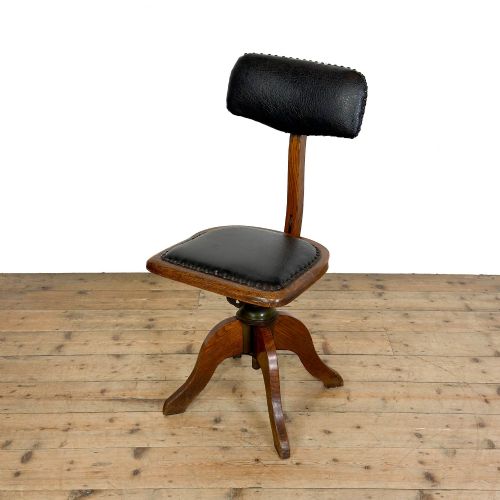
Dining chairs and sets of matching seats dominate the available forms, alongside swivel desk chairs, library chairs, and high-backed carvers. Buyers seeking a studded leather oak chair will frequently encounter Edwardian and Victorian iterations, as well as early twentieth-century interpretations influenced by the Arts and Crafts movement.
Materials and construction
Makers built the foundational frames using solid oak, occasionally incorporating secondary timbers like beech or supporting elements in cast iron and brass. Hides were stretched over padding and secured to the timber using metal studs, which functioned both as structural fixings and decorative borders.
Joinery methods relied on traditional turning, mortise and tenon joints, and carved detailing on high-back panels or splats. Swivel and desk variants integrated mechanical tilt mechanisms and metal hardware into the wooden framework.
Listings feature oak combined with brass, iron, and beech across Victorian, Edwardian, and Arts and Crafts styles.
Quality differences
The standard of carving and the weight of the timber set finer examples apart from simpler utility pieces, with deeper relief work and solid joinery marking superior workshop output. Original stamped makers' names or attributed furniture houses elevate certain chairs above anonymous commercial production.
The integrity of the oak frame and the thickness of the hide determine durability, while uniformity across a large set of dining chairs indicates careful original grouping rather than later assembly.
W Williamson & Sons·Kendrick & Jefferson·Lamb Of Manchester
The Studded Leather Oak Chair Glossary
- Carver
- An armchair designed to match a set of dining chairs, typically featuring open arms and a wider seat. These were traditionally placed at the heads of dining tables.
- Cromwellian style
- A seventeenth-century aesthetic revived in later periods, characterised by straight wooden legs, rectangular backs, and tight leather upholstery fastened with brass nails. It offers a severe, rectilinear profile.
- Splat
- The vertical central strip of wood in the middle of a chair back. In Arts and Crafts examples, these often display distinctive shapes like spear designs.
- Wingback
- An armchair featuring protective side panels attached to the arms and back. This design originally shielded sitters from draughts in large rooms.
- Box stretcher
- Horizontal wooden rails connecting the lower legs of a chair on all four sides. This framework adds lateral stability to the seating structure.
Studded Leather Oak Chair: Frequently Asked Questions
How do I date a studded leather oak chair?
Dating relies on combining the evidence of the timber grain, tool marks, and specific revival styles such as Victorian Gothic or Arts and Crafts. Mechanical elements like iron swivel mechanisms also help narrow down the manufacturing window to the late nineteenth or early twentieth century.
Matching the stylistic details against known periods prevents confusion between genuine antique pieces and later reproductions made in historical styles.
Were these chairs used for dining or offices?
The evidence shows these chairs served multiple purposes, appearing both as sets of dining room seats and as single desk, library, or swivel chairs. Heavier wingback and armchair variants were designed for fireside or lounge use.
Form follows function closely in these pieces, with office chairs featuring castors and tilt mechanisms, while dining variants maintain fixed, upright stances.
How do I care for antique leather?
Preserving antique leather requires maintaining moderate humidity and avoiding direct sunlight to prevent the hide from drying out. Gentle cleaning helps maintain the natural surface texture without stripping the original finish.
Over-conditioning can soften historical leather beyond its original state, so conservation should remain minimal and sympathetic to the age of the material.