



Striped Kilim Rug
A striped kilim rug is a flatwoven tribal textile defined by linear bands of colour, prized for graphic presence and utility.
Striped Kilim Rug
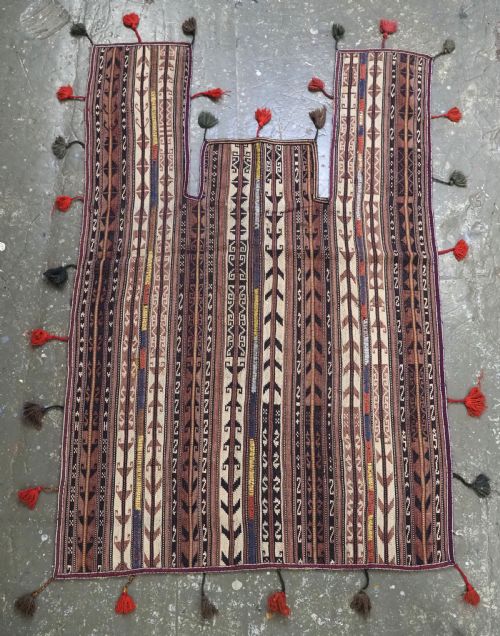
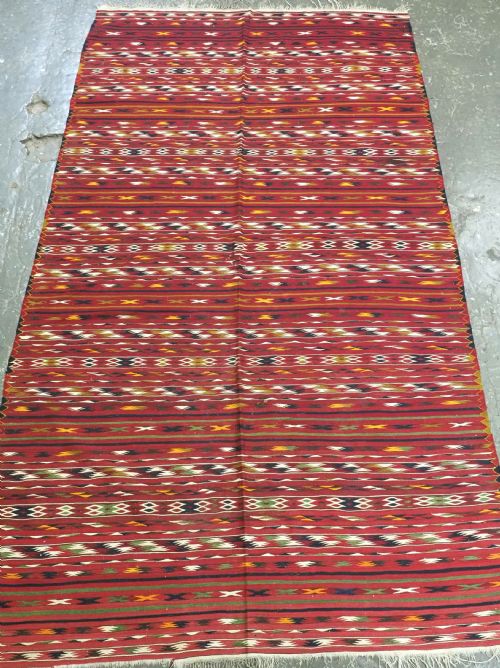
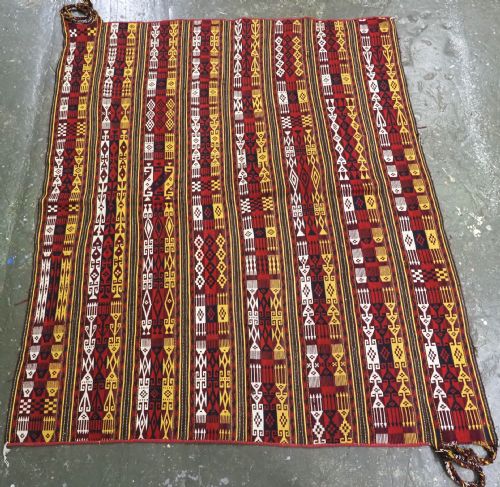
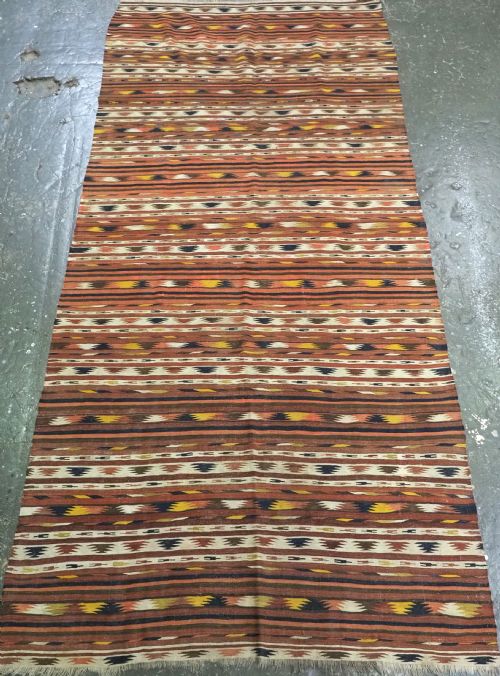
A striped kilim rug is a flatwoven textile produced by tribal and nomadic groups across Persia, Central Asia, and the Caucasus, spanning the late nineteenth and early twentieth centuries. When searching this phrase, a buyer encounters forms ranging from horse blankets and bread sofreh to wheat sacks, mafrash panels, and tent bands repurposed into floor coverings. The most common pieces met on this page are Uzbek gajeri kilims and Turkmen dali kilims featuring banded flatweave designs.
These textiles originate from specific tribal groups including the Qashqai, Shahsavan, Yomut, Tekke, and Bakhtiari. Objects such as the tacheh or dining sofreh served practical domestic functions within nomadic households before entering the antique market. The designs rely primarily on horizontal bands, chevrons, and bold graphic patterns rather than central medallions.
The materials and structures reflect the nomadic lifestyle of the weavers, utilising durable animal fibres suited to daily wear. Pieces from regions such as Shirvan, Fars, and the Chahar Mahal valley demonstrate distinct regional palettes and weaving traditions. A striped kilim rug thus represents both functional tribal gear and a historical record of nomadic flatweaving.
How they were made
The primary material found in these flatweaves is wool, frequently complemented by hand-spun wool, cotton, goat hair, camel hair, and leather. Natural dyes provide the palette, creating deep tones across the bands and fields without synthetic agents.
The construction relies on flatweaving techniques, notably slit-tapestry weave, cicim, and banded structures where pattern is created through the warp and weft alignment. Weavers utilised sturdy vertical or ground looms to produce durable panels such as tent bands, saddle bags, and storage sacks.
Nomadic weavers occasionally incorporated leather and metal fragments into utilitarian storage bags to secure fastenings against migrating livestock.
What varies in quality
Quality in these flatweaves is determined by the tightness of the weave and the precision of the banded or graphic layout. A very fine weave requires greater skill and denser packing of the weft yarns.
The integrity of the natural dyes and the preservation of the original structure distinguish finer examples from standard utilitarian pieces. Handling structural elements like camel hair or goat hair reinforcement alongside intact side cords indicates superior construction.
The Striped Kilim Rug Glossary
- Kilim
- A flatwoven textile produced without a pile, created by tightly interweaving warp and weft strands. This technique results in a thin, durable fabric with identical patterns visible on both sides.
- Sofreh
- A flatwoven spread or cloth traditionally used for dining, kneading dough, or serving bread within nomadic households. These rectangular textiles often feature strong linear or banded designs.
- Mafrash
- A large rectangular storage bag or chest panel used by nomadic tribes for bedding and household goods during migration. They are frequently constructed in flatweave or sumak techniques.
- Tacheh
- A woven wheat sack or grain bag produced by tribal groups in western Persia. These functional pieces are characterised by sturdy structures and utilitarian banded designs.
- Cicim
- A supplementary weft-float technique applied to flatwoven textiles to create raised geometric patterns across the surface. This decorative method adds texture to the otherwise flat fabric.
Striped Kilim Rug: Frequently Asked Questions
What is a striped kilim rug used for?
These flatweaves served practical domestic and nomadic functions such as storing grain, carrying bedding, covering horses, or serving meals. Today they are utilised primarily as decorative floor coverings or wall hangings.
Because they lack a pile, they lie flat and suit high-traffic areas when placed on a proper underlay. Their strong linear designs anchor contemporary and traditional interiors alike.
How do I tell regional styles apart?
Regional attribution relies on the specific palette, structural materials, and geometric vocabulary present in the weave. Caucasian pieces from Shirvan often display crisp, contrasting coloration, while Persian tribal examples from Fars or the Chahar Mahal valley utilise softer natural dyes and distinct border arrangements.
Central Asian pieces, particularly Uzbek gajeri kilims, are recognised by bold graphic bandings and specific wool textures. Comparing the structure of the flatweave helps confirm the origin.
Are these rugs made from full carpets?
Many examples on this page were not originally produced as floor rugs, having started life as utilitarian items like wheat sacks, saddle bags, or tent bands. Over time, intact panels or sets were repurposed into flat textiles suitable for domestic display.
This history explains why some pieces retain seams or structural elements from their previous lives as containers or covers. Such adaptations remain a standard part of nomadic textile heritage.
How should I care for a flatweave?
Maintenance requires gentle vacuuming without a rotating brush roll to protect the wool and flatwoven structure. Professional cleaning tailored to antique textiles preserves the natural dyes and fibres.
Keeping the textile out of direct sunlight prevents fading of the wool and natural dye components. Using a breathable rug pad underneath prevents slipping and reduces wear.