





Woven Kilim Runner
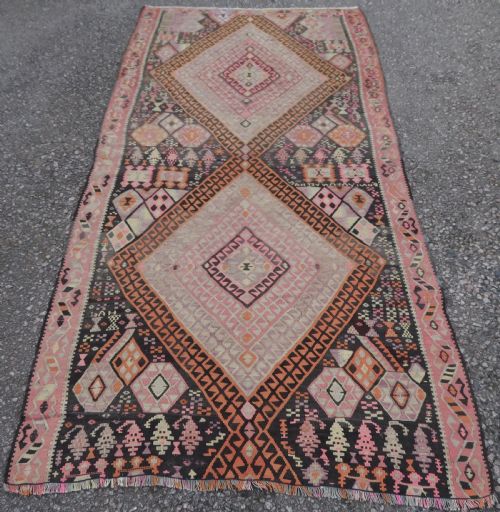
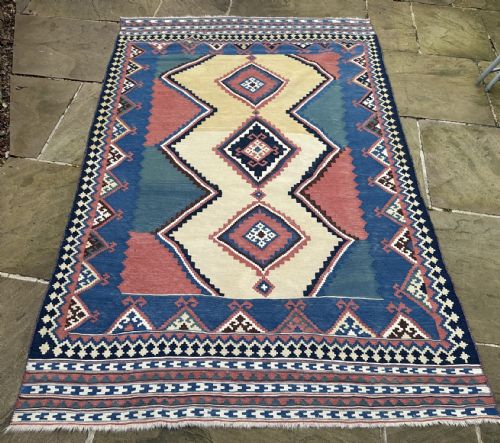
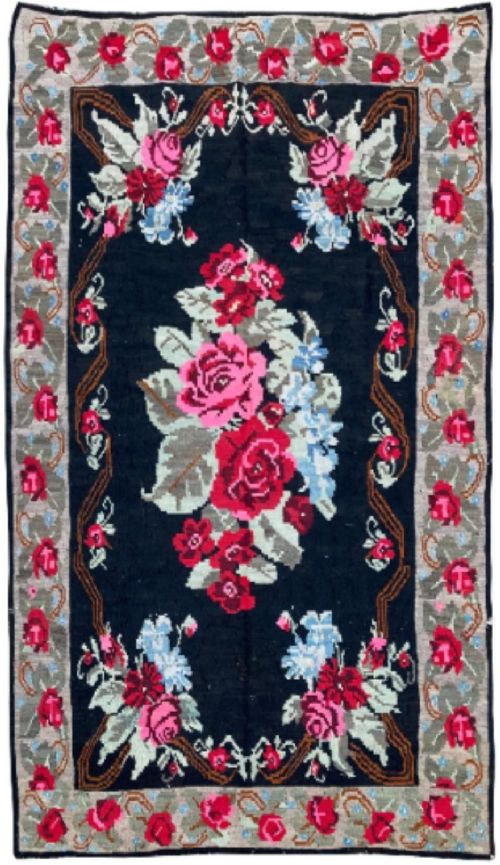
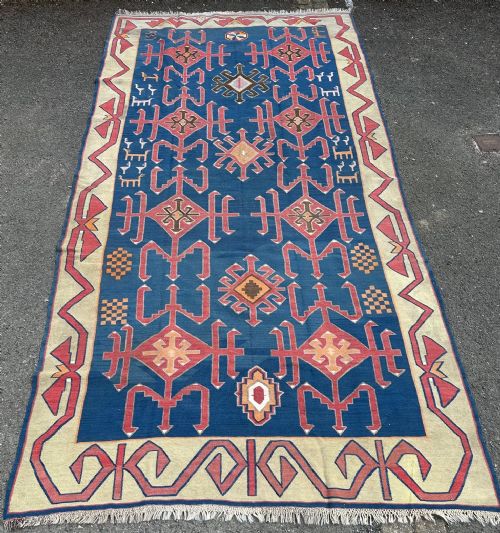
When you search for a woven kilim runner, you discover flat-woven textiles carrying tribal motifs from Persia, Turkey, and Central Asia.
Woven Kilim Runner
A woven kilim runner represents a flat-woven textile created by nomadic and tribal groups across Anatolia, the Caucasus, and Central Asia. These long, narrow formats served functional purposes in tents and homes, functioning as floor coverings or utilitarian panels.
The selection on this page spans from the late nineteenth century into the mid-twentieth century, capturing regional weaving traditions. Examples include pieces originating from Caucasian regions, Turkish towns like Malatya and Esme, and Uzbek or Baluch communities.
Makers utilised traditional techniques passed down through generations, resulting in distinctive geometric patterns and banded designs. Buyers encounter formats woven in multiple strips joined together or created as single narrow panels.
How they were made
Weavers constructed these runners using hand-spun wool and cotton foundations, occasionally incorporating camel hair for texture and durability. Artisans relied on natural dyes to colour the yarns, producing soft faded reds and varied regional palettes.
The construction relies on flat-weaving techniques rather than pile knotting, allowing weavers to create sharp geometric patterns and intricate slit-weave junctions. Many regional pieces required joining multiple narrow strips together to achieve the desired runner proportions.
Materials recorded across the inventory include hand-spun wool, cotton, camel hair, and natural dyes.
What varies in quality
Quality in these textiles rests upon the fineness of the weave and the precision of the geometric execution. Tightly packed foundation threads and crisp structural lines distinguish finer regional examples from simpler utility pieces.
The integrity of the natural dyes and the consistency of the hand-spun wool further separate standard production from exceptional textile work. Well-preserved panel joins and balanced proportions contribute to a more resolved visual outcome.
The Woven Kilim Runner Glossary
- Kilim
- A flat-woven carpet or rug produced without a pile by tightly interlacing warp and weft threads. This technique creates a smooth surface on both sides of the textile.
- Sofreh
- A type of spread or cloth used traditionally for dining or preparing bread in Persian households. These utilitarian textiles often feature distinctive tribal iconography.
- Warp
- The vertical threads stretched on a loom before weaving begins. The weft threads pass alternately over and under these foundational strands.
- Weft
- The horizontal threads passed through the warp to form the pattern and fabric of the textile. In flat-weaves, the weft completely covers the warp.
- Soumak
- A brocade-like flat-weaving technique where decorative weft threads are wrapped around the warp strands. This method provides extra thickness and durability to the finished piece.
Woven Kilim Runner: Frequently Asked Questions
How were kilim runners used originally?
Nomadic tribes and villagers utilised these long, narrow flat-weaves as floor coverings inside tents and homes. They also served practical roles as wall hangings, animal trappings, or storage covers.
Because they lack a pile, the textiles were easily rolled, transported, and laid down across living spaces. Their durable flat-woven structure withstood heavy foot traffic and daily domestic life.
Where do these tribal runners originate?
The pieces originate from diverse weaving cultures spanning Anatolia, the Caucasus, Persia, and Central Asia. Specific styles reflect the heritage of groups such as the Baluch, Yomut Turkmen, and Uzbek communities.
Each geographic region developed distinct colour palettes and geometric vocabularies. These regional traits allow collectors to trace a runner back to specific tribal traditions.
How should I care for a vintage flat-weave?
Protect your textile by placing a quality rug underlay beneath it to prevent slipping and reduce friction against the floor. Vacuum the surface gently using suction only, avoiding beater bars that can catch the flat-weave structure.
Rotate the runner periodically to ensure even wear across its length. Professional cleaning suited for antique wool textiles helps maintain the natural dyes safely.