
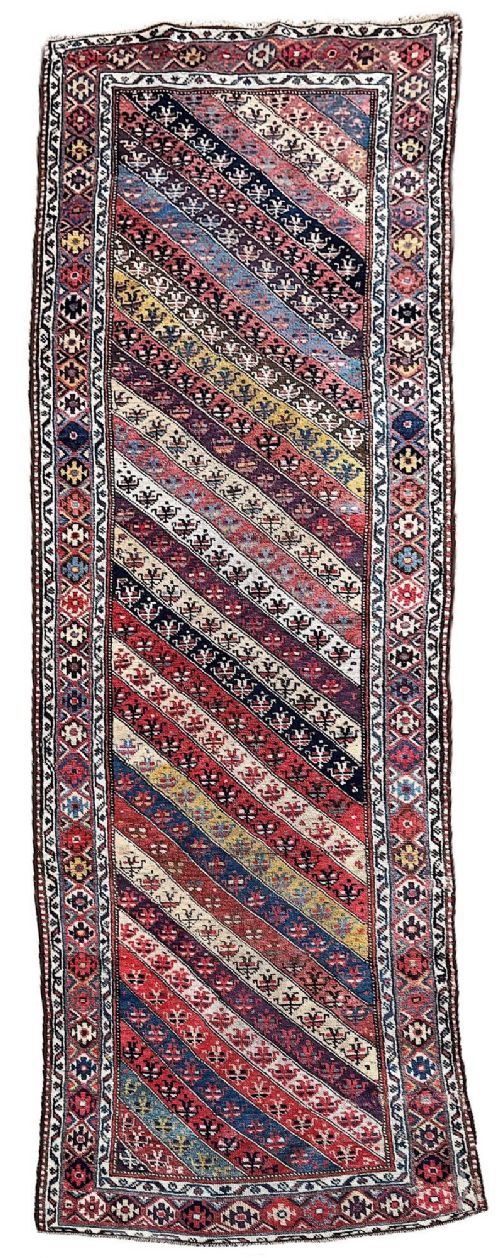
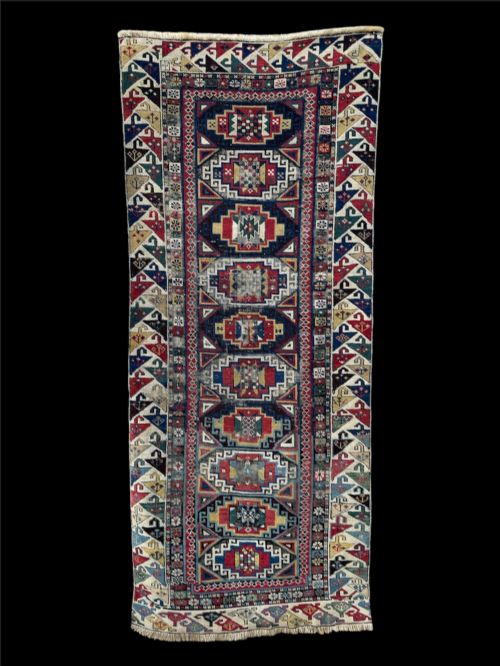


Wool Shirvan Rug
A wool shirvan rug brings the crisp, geometric discipline of the Eastern Caucasus into a room through rich, tribal weaving.
Wool Shirvan Rug
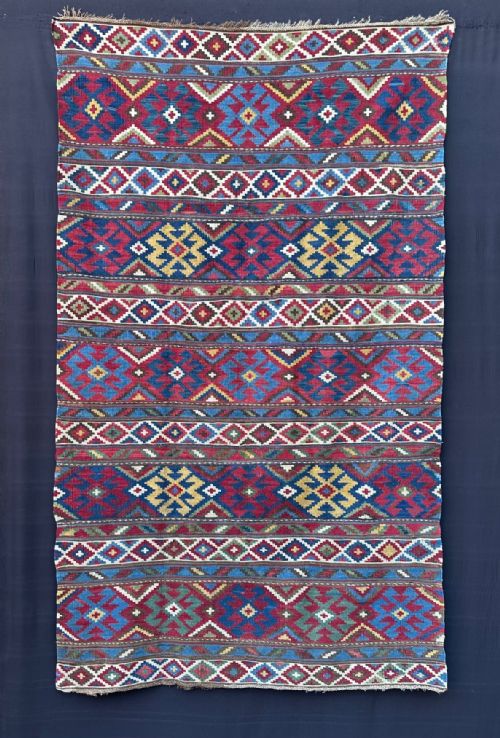
A wool shirvan rug originates from the Caucasus region during the nineteenth and early twentieth centuries, spanning periods from the eighteen-fifties through the nineteen-twenties. These floor coverings and textiles include standard area sizes, long narrow runners, flatwoven kilims, and specific formats like prayer rugs.
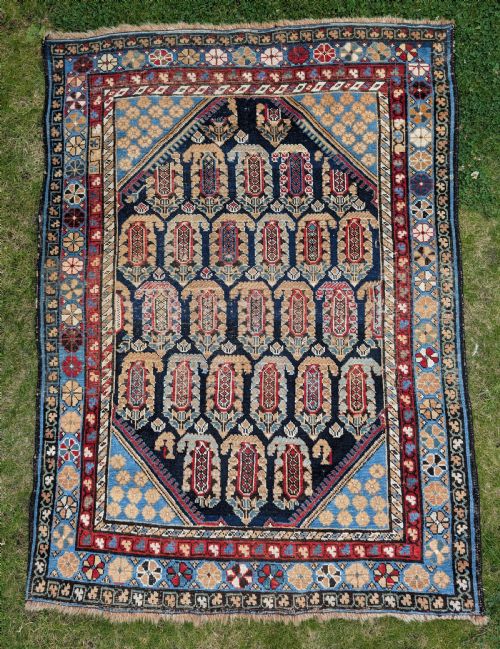
The version most commonly met on this page is an antique Caucasian tribal weaving featuring traditional geometric motifs, medallion formats, or structured floral lattices. They display distinct regional sub-types such as Marasali, Seychor, Khila, and Baku designs.
Makers in the Eastern Caucasus produced these pieces for both domestic utility and regional trade, resulting in robust utility textiles that double as graphic works of art. Their format ranges from square formats to elongated runners suited to hallways and landings.
How they were made
Weavers utilised hand-spun wool for the pile and foundation yarns, sometimes paired with cotton for structural warps and wefts. This natural wool fibre yields a resilient, dense handle that responds well to traditional washing and historic wear.
Dyers employed natural dyes to achieve deep palettes, ranging from soft faded tones and ivory grounds to striking blue, yellow, and multi-coloured banded designs. The application of these vegetable and mineral colorants creates subtle shifts in tone across the field.
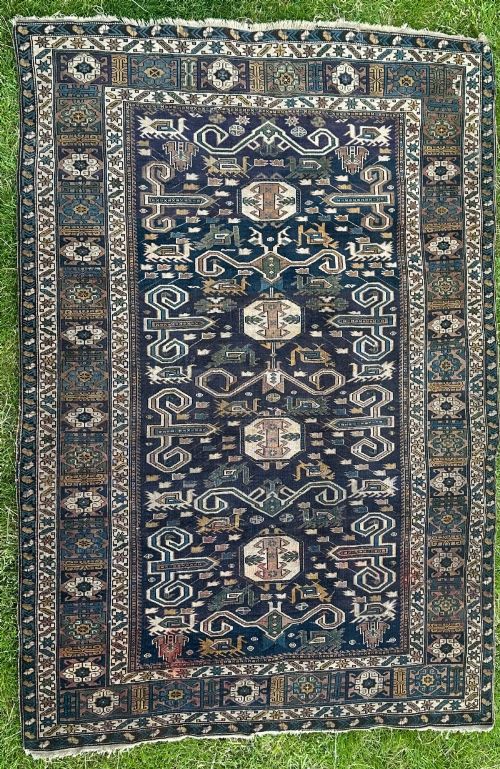
Spot the occasional oversized peacock or flaming boteh woven right into the village geometry.
What varies in quality
The clarity and crispness of the geometric drawing dictate the visual success of the piece, with sharper motifs marking out superior examples. Denser knotting contributes to a firmer handle and sharper definition in intricate borders like the Kufic style.
The preservation of the original natural dye palette and pile depth differentiates standard utility pieces from exceptional survivors. Secondary elements such as intact kilim ends and undamaged borders preserve the complete historic integrity of the textile.
The Wool Shirvan Rug Glossary
- Prayer rug
- A small format textile featuring a mihrab or arch design traditionally oriented towards Mecca during daily prayers. These often incorporate floral lattices or specific tribal motifs.
- Runner
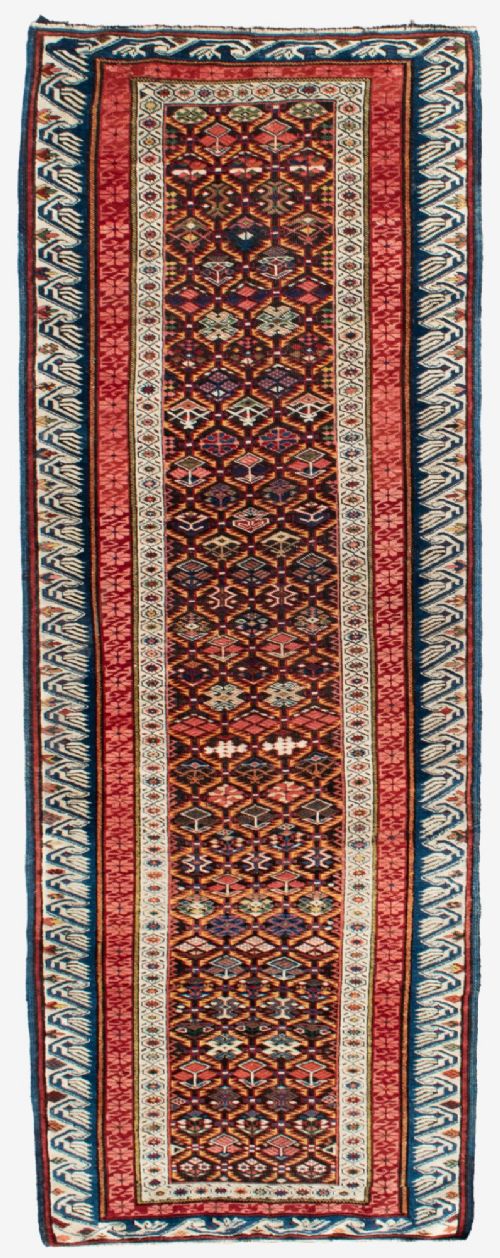
- A long, narrow carpet format designed specifically for corridors, staircases, and narrow hallways. They balance repetitive medallion structures with elongated border systems.
- Kilim
- A flatwoven textile produced without a pile by tightly interweaving warp and weft strands. Shirvan examples display sharp geometric patterns and banded designs.
- Boteh
- A stylised almond or paisley motif representing a floral shoot or cypress tree. In Shirvan weaving, these often appear in repeating rows or flaming arrangements.
- Mihrab
- The arched niche design found at one end of a prayer rug, symbolising the direction of prayer. It forms the focal point of the field composition.
Wool Shirvan Rug: Frequently Asked Questions
How do I care for a wool shirvan rug?
Vacuum gently without a rotating brush roll to protect the historic wool pile and foundation threads. Keep the textile out of direct, intense sunlight to prevent the natural dyes from fading further over time.
Rotate the rug periodically to ensure even wear patterns across high-traffic areas in your home. Consult a specialist professional cleaner experienced in antique Caucasian textiles for any washing needs.
Where were these rugs made?
These pieces were woven in the Shirvan region situated in the Eastern Caucasus, encompassing towns and villages near Baku and the Caspian Sea. Local nomadic and village weavers passed down specific tribal patterns through generations.
Each valley and workshop contributed distinct design variations, from Lesghi stars to Akstafa peacocks. This geographic specificity gives the regional rugs their recognisable graphic identity.
Are these rugs suitable for daily use?
The dense hand-spun wool construction makes these historical textiles durable enough for moderate foot traffic in domestic settings. Placing a quality underlay beneath the rug prevents slipping and cushions the historic foundation.
Placing them in lower-traffic zones, bedrooms, or studies preserves the remaining pile and structural integrity. Many collectors successfully live with these pieces by treating them as functional floor art.
How do I identify a Shirvan piece?
Look for crisp Caucasian geometry, characteristically saturated natural dye palettes, and precise border systems such as Kufic-inspired motifs. The scale is often smaller or runner-oriented compared to large Persian city carpets.
Structural details include wool foundations and characteristic flatwoven end finishes distinct to the Eastern Caucasus. Regional sub-types like Marasali or Bidjov offer further clues through specific internal arrangements.