






Striped Flatweave Carpet
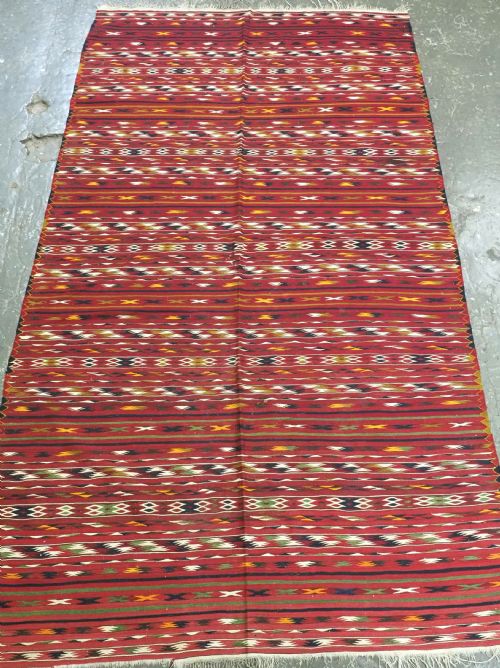
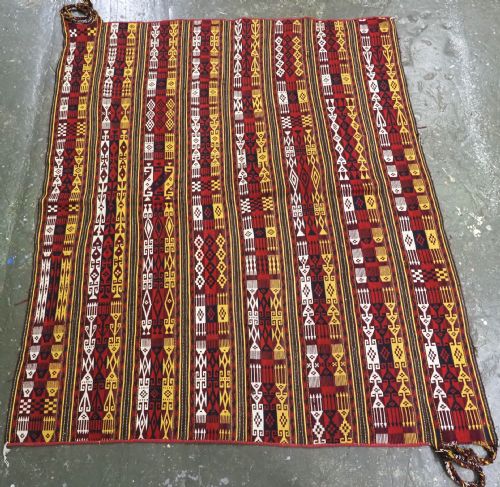
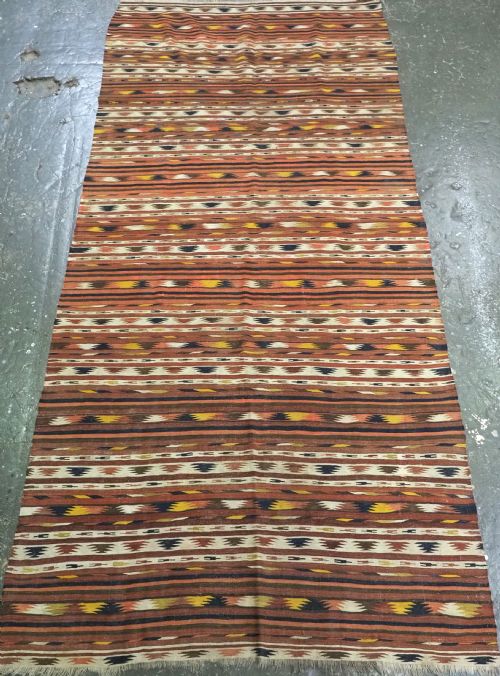
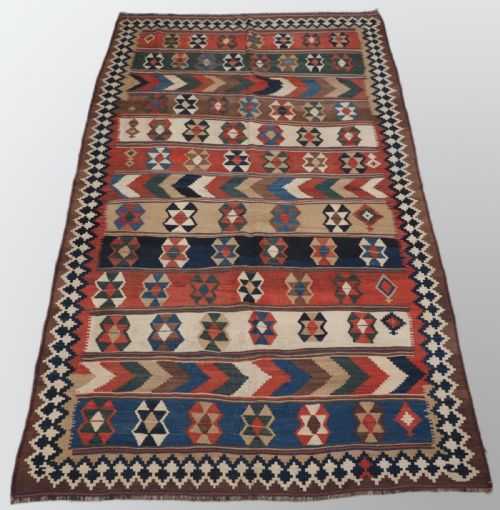
A striped flatweave carpet brings bold linear rhythm to a floor, offering crisp tribal graphics and flat textiles woven across Central Asia, the Caucasus, and Persia.
Striped Flatweave Carpet
When you search for a striped flatweave carpet, you encounter flat-faced kilims, mafresh panels, and tent bands originating from tribal workshops across Central Asia, the Caucasus, and Persia. These textiles date principally from the late nineteenth century through to the early decades of the twentieth century, reflecting traditional nomadic weaving practices.
The prevalent forms include Uzbek gajeri kilims, Turkmen dali kilims, and Caucasian panels structured with banded and linear layouts. Makers constructed these pieces as functional floor coverings, dining spreads, and storage containers before repurposing them into rugs for domestic interiors.
How they were made
Weavers utilised hand-spun wool, cotton, and camel hair, interlacing warp and weft threads without a knotted pile to create a flat, durable textile. Natural dyes provided the colour palette, yielding rich tones across geometric bands and chevron motifs.
Many examples utilise slit-weave techniques where distinct colour blocks meet, producing sharp graphic edges along the stripes. Individual panels were often woven in separate parts and joined together to form larger rugs or functional storage bags.
The documented objects span the late nineteenth century through to the nineteen-twenties, encompassing kilims, mafresh panels, and sofres.
What varies in quality
Quality rests upon the fineness of the weave and the clarity of the graphic design. Tightly beaten warps and wefts produce a denser, more resilient fabric that maintains its structural integrity over decades of use.
The sophistication of the natural dye palette and the precision of the banded layout distinguish standard utility pieces from exceptional tribal examples. Finely executed geometric patterns display a deliberate mastery of traditional weaving geometry.
The Striped Flatweave Carpet Glossary
- Kilim
- A flat-woven carpet or rug made without a pile. These textiles rely on interlocking weft threads to create geometric patterns.
- Mafrash
- A large rectangular storage bag or chest panel woven by nomadic tribes. These panels are frequently disassembled and repurposed into flat rugs.
- Gajeri
- A specific type of Uzbek flatweave characterised by bold striped or banded designs. They originate from Central Asian tribal traditions.
- Safid
- A descriptor applied to certain Central Asian tartari kilims. It denotes particular design characteristics within regional weaving traditions.
- Sofreh
- A tribal dining kilim used for spreading meals or processing flour. These textiles display utilitarian formats rooted in Persian nomadic life.
Striped Flatweave Carpet: Frequently Asked Questions
What is a flatweave carpet?
A flatweave carpet is a textile produced by interweaving warp and weft threads on a loom without creating a raised pile surface. This technique results in a thin, flexible rug that lies flat on the floor.
Such pieces include kilims, tent bands, and storage panels from nomadic cultures. They rely on coloured weft threads wrapping around structural warps to form distinct geometric patterns.
Where do striped kilims come from?
These textiles originate from nomadic and tribal groups across Central Asia, the Caucasus, and Persia. Specific regions include Uzbekistan, Turkmenistan, Shirvan, and Luristan.
Weavers in these areas produced banded and striped designs for domestic utility, utilising local materials such as hand-spun wool and camel hair.
How do I care for a flatweave rug?
Care for a flatweave rug by regular gentle vacuuming without a rotating brush head. Lift the rug periodically to clean beneath and prevent grit accumulation in the flat fibres.
Protect the textile from direct, prolonged sunlight to preserve natural dye colours. Professional cleaning suited to antique wool textiles should be employed when deep washing is required.
How old are antique tribal kilims?
Antique tribal kilims on this page predominantly date from the late nineteenth century to the early twentieth century. Examples span from the second half of the nineteenth century up to the nineteen-twenties.
DATING relies on stylistic markers, structural analysis, and material evidence such as hand-spun wool and natural dye use.