


Striped Accent Chair
These striped accent chair pieces bring period character and patterned upholstery together across centuries of seating design.
Striped Accent Chair
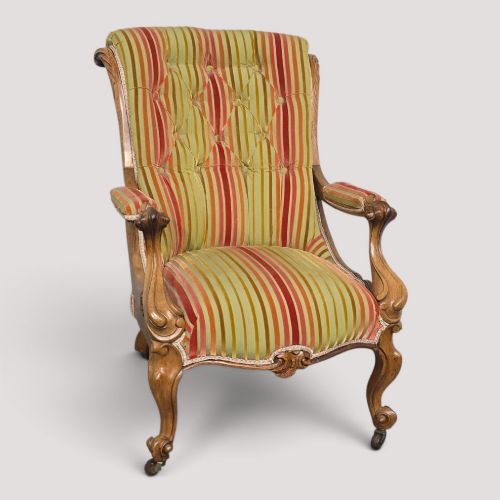
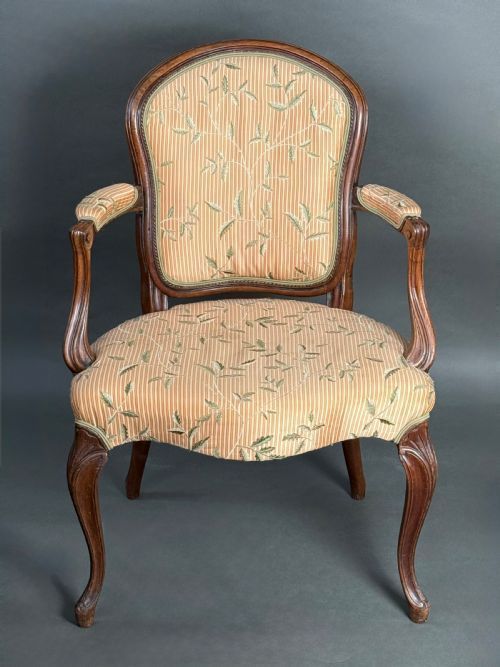
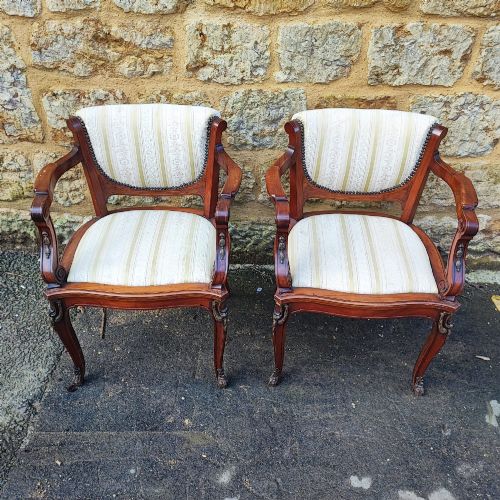
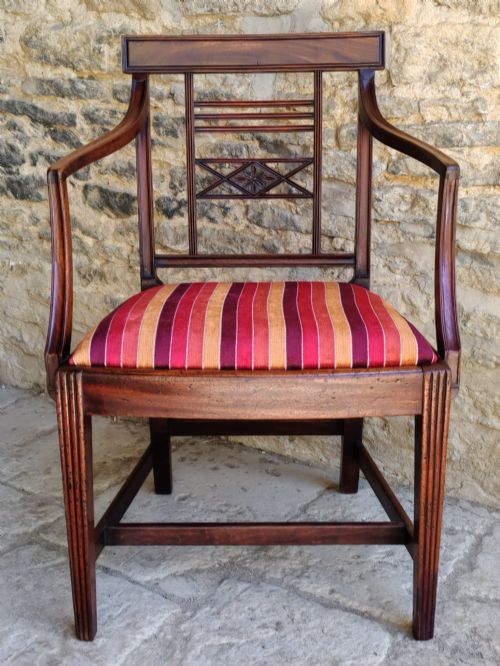
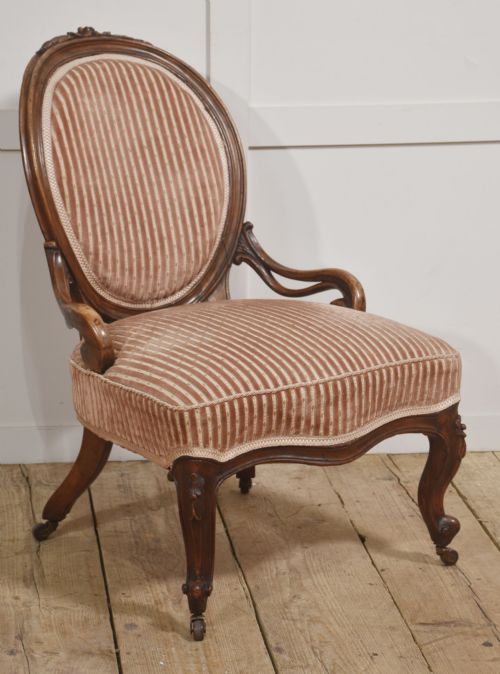
A striped accent chair encompasses diverse historical seating forms, ranging from grand library armchairs to delicate bedroom chairs, salon chairs, and slipper chairs. When exploring this selection, buyers encounter pieces spanning the 18th century through to the early 20th century, including Victorian, Edwardian, and Regency periods alongside French styles.
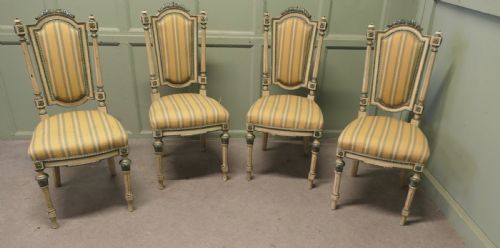
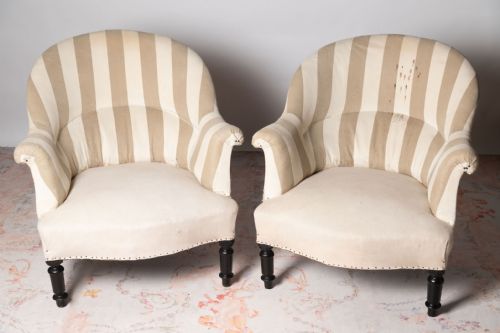
The assortment relies heavily on wooden frames paired with textile upholstery, drawing from Victorian, Edwardian, and earlier historical eras. Pieces appear in various formats, from solitary reading chairs and carvers to matched pairs and sets originating from English, French, and Italian workshops.
Materials and Construction
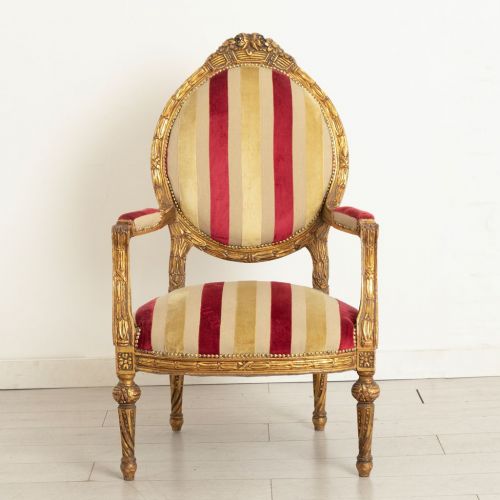
Makers constructed the supportive frameworks using dense hardwoods such as mahogany, walnut, rosewood, satinwood, and oak, occasionally applying paint, gilding, or black lacquer finishes. Metal elements like brass appear discretely in structural hardware or castors.
Upholstery relies on traditional textiles, velvet, and silks, including specific designer fabrics like Colefax and Fowler silk. Frames feature hand-carved details, shaped open arms, oval backs, and balloon backs executed by period joiners and cabinet makers.
The listings feature wooden frames in mahogany, walnut, rosewood, and oak paired with diverse textile upholstery across multiple historical periods.
Distinctions in Execution
Quality reveals itself in the crispness and depth of the wood carving, the integrity of the underlying frame construction, and the proportion of the silhouette. Superior examples demonstrate refined proportions and meticulous joinery that endure across generations of use.
The selection of upholstery fabric and the precision of its application distinguish standard utilitarian seating from pieces created for formal salons or libraries. Original finishes, stamped maker marks, and sophisticated carved showwood frames further elevate an individual piece.
The Striped Accent Chair Glossary
- Carver
- An armchair, often designed for the head of a dining table, featuring arms that match the style of the accompanying side chairs.
- Bergere
- An enclosed upholstered armchair with wooden framing visible around the sides and back, originating in France.
- Fauteuil
- An open-arm armchair with an exposed wooden frame, typically upholstered on the seat and back.
- Slipper Chair
- A low-seated upholstered chair traditionally used in bedrooms for dressing.
- Showwood
- Furniture cabinetry where the polished or carved wooden frame is deliberately left exposed rather than fully covered in fabric.
Striped Accent Chair: Frequently Asked Questions
What is a striped accent chair?
A striped accent chair is a decorative seating piece upholstered in striped fabric, encompassing historical forms like Victorian library chairs, Edwardian bedroom chairs, and French salon seats.
These pieces combine functional seating with distinct patterned textiles to serve as visual focal points within a room.
How do I date a period chair?
Dating relies on examining the timber species, joinery techniques, carved stylistic motifs, and the overarching form associated with specific eras such as the Regency, Victorian, or Edwardian periods.
Comparing structural details against documented pieces from the same era helps establish a reliable timeframe for manufacture.
Where were these chairs used historically?
Historically, these chairs served specialised functions in different domestic spaces, including reading in libraries, lounging in boudoirs, or receiving guests in formal salons.
Smaller side chairs and slipper chairs were typically placed in bedrooms, while grander armchairs occupied reception rooms.
Can I mix different periods in my room?
Combining different periods is a traditional approach to interior styling, allowing pieces like an 18th-century walnut chair to sit alongside later Edwardian seating.
Matching the scale and wood tones helps create a cohesive arrangement when blending diverse historical styles.