




Small Armchair
A small antique armchair offers compact comfort and historic character, spanning centuries of woodworking traditions from modest country seats to formal library chairs.
Small Armchair
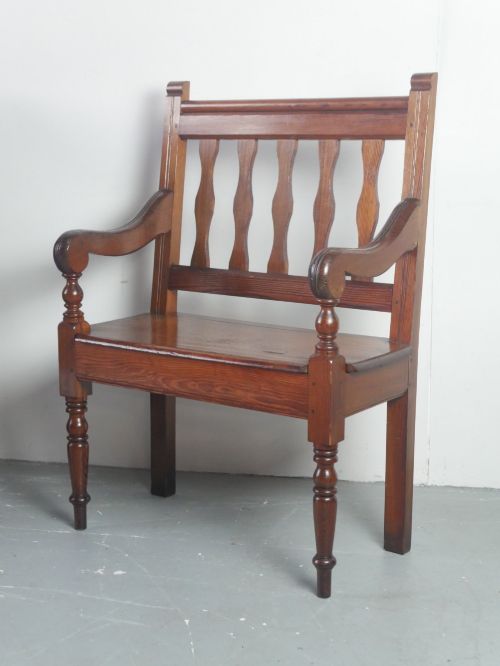
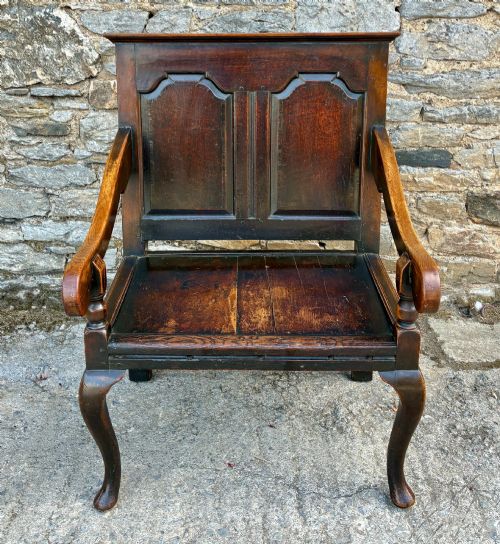
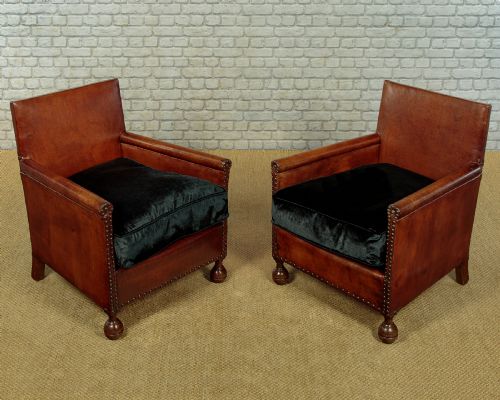
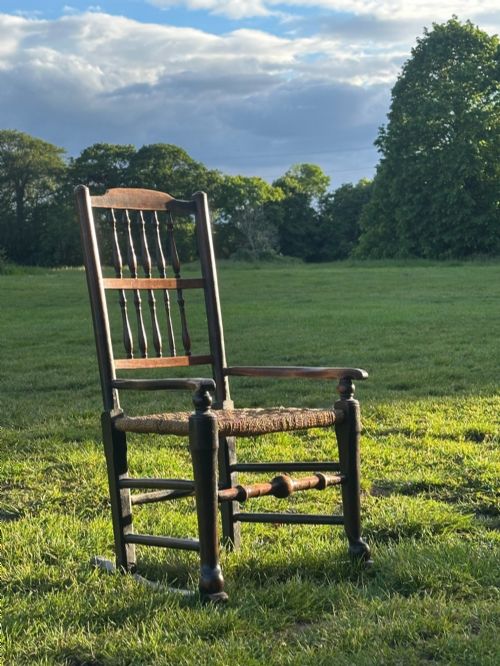
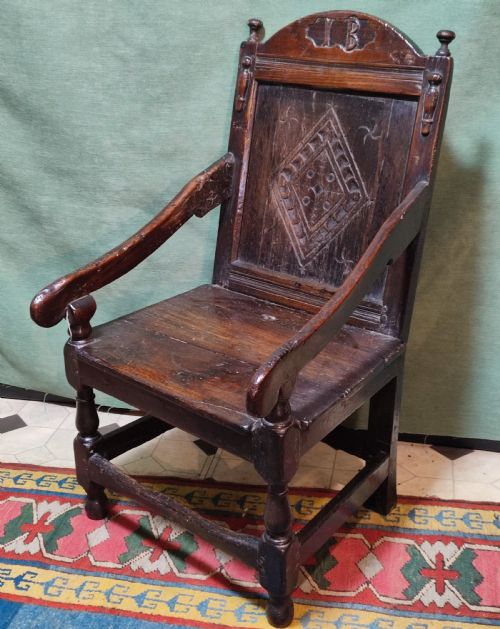
A small antique armchair is a scaled-down seat designed for smaller spaces, bedrooms, or children, appearing across the seventeenth, eighteenth, nineteenth, and twentieth centuries. These pieces emerge in diverse forms including wainscot chairs, Windsor chairs, rocking chairs, and upholstered library or salon chairs.
You are most likely to meet nineteenth-century and Edwardian examples on this page, alongside earlier oak and elm country iterations and later twentieth-century club and lounge chairs. They utilise various timbers like oak, mahogany, elm, and walnut, often paired with leather, velvet, or fabric upholstery.
The selection ranges from country house seating and nursing chairs to campaign folding seats and refined Regency library designs. Each variant demonstrates the domestic scale and seating requirements of its specific period.
How they were made
Cabinet makers and country joiners utilised solid hardwoods such as oak, mahogany, ash, and elm for frames, employing traditional jointing methods like mortise and tenon. Turned components, crinoline stretchers, and steam-bent elements frequently structure the wooden frameworks of Windsor and stick-back variants.
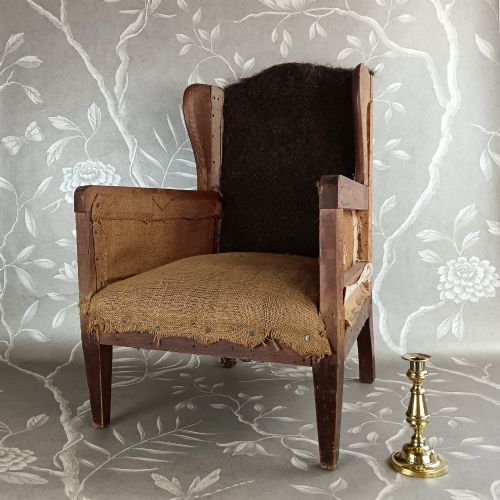
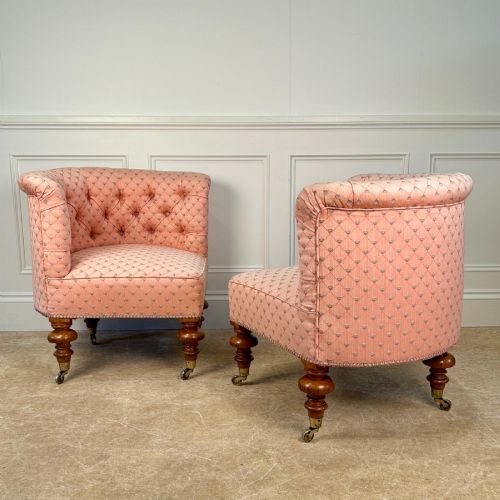
Upholstered versions combine internal webbing or spring systems with stuffing materials, finished in textiles, leather, velvet, or printed cotton. Decorative details involve hand carving, brass fittings, castors by makers like Cope and Collinson, inlay, and painted surfaces.
Listings feature periods spanning from the 17th century through the Victorian era up to the 1920s, constructed in oak, mahogany, elm, walnut, brass, and fabric.
What varies in quality
Quality rests in the integrity of the timber framing, the precision of joinery, and the retention of original surface finishes or authentic upholstery materials. Pieces retaining maker stamps, such as Howard and Sons or CVS, distinguish themselves through documented provenance.
Proportion and structural balance define superior examples, where scaled-down dimensions maintain ergonomic harmony rather than looking awkward. The crispness of hand-carved details and the survival of period castors or stretchers elevate the standing of an individual chair.
Whytock and Reid·Howard and Sons·Cope and Collinson
The Small Armchair Glossary
- Wainscot chair
- A heavy wooden armchair of seventeenth-century origin, constructed primarily from oak with panelled backs and turned supports. This form represents some of the earliest seating encountered.
- Windsor chair
- A wooden seating form featuring a solid saddle-sculpted seat into which legs and back spindles are wedged directly. They often incorporate bentwood bow backs and stretchers.
- Library chair
- A substantial yet compact armchair designed for reading rooms, frequently upholstered in leather and built for sustained comfort. Regency and Victorian versions are common.
- Crinoline stretcher
- A curved metal or wooden brace linking the legs of a chair to provide rigidity. It gets its name from its resemblance to the nineteenth-century fashion petticoat.
Small Armchair: Frequently Asked Questions
How are small antique armchairs different from standard armchairs?
These chairs are built with reduced dimensions, historically intended for bedchambers, smaller rooms, nursery use, or nursing infants.
Their compact proportions allow them to fit into modern alcoves and tight spaces where full-sized seating would overwhelm the room.
How do I identify the period of an oak wainscot chair?
Examination of the timber grain, tool marks, peg construction, and panel assembly reveals the age of early oak pieces. Seventeenth-century examples display dense heartwood and hand-cleaved surfaces distinct from later revival furniture.
Comparing the joinery style to documented historical examples helps confirm whether a piece is seventeenth-century or a later nineteenth-century stylistic copy.
What is the best way to live with antique upholstered chairs?
Position them away from direct sunlight and heat sources to protect historic textiles, leather, and dry wooden frames from fading or splitting. Routine dusting and careful weight distribution preserve the internal webbing and padding.
Allowing the piece to function as a reading seat or occasional chair in a low-traffic area ensures it remains stable for daily use.