
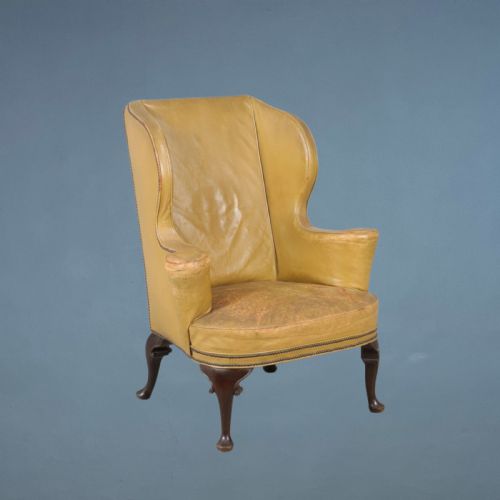
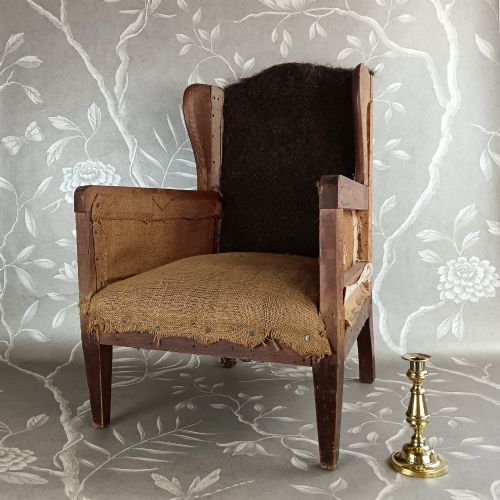
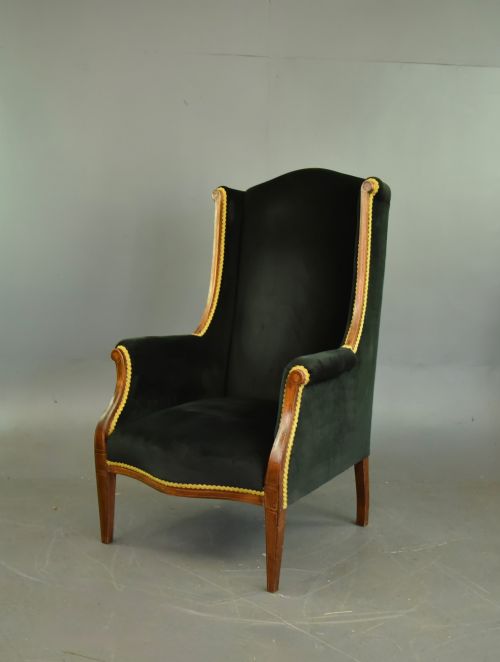
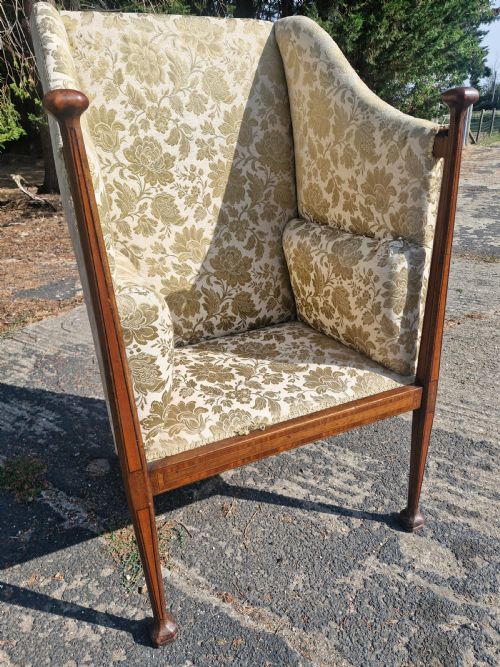



Edwardian Wingback Armchair
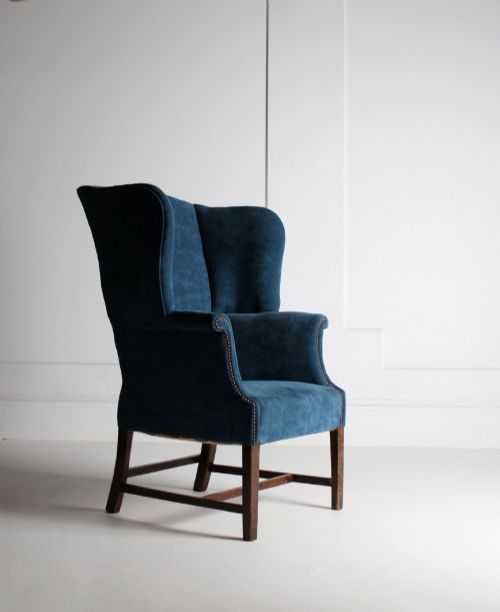
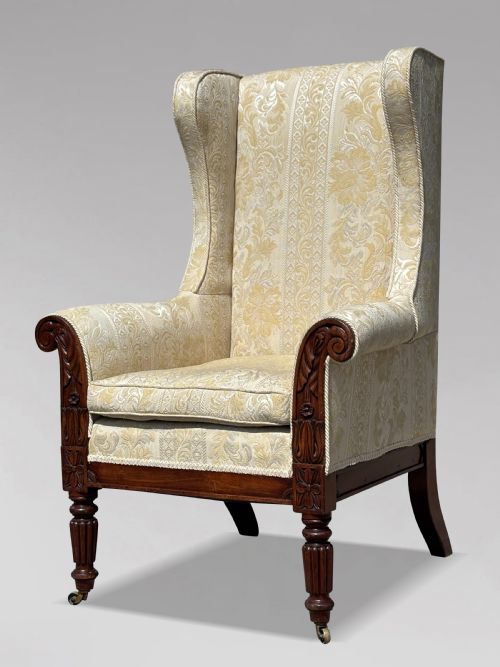
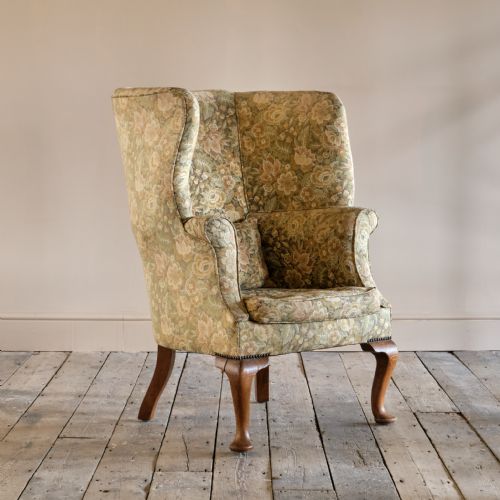
An edwardian wingback armchair brings upright comfort and classic proportions to a room.
Edwardian Wingback Armchair
When you search for an edwardian wingback armchair, you are looking at upholstered seating designed to shelter the sitter from drafts while seated near a fireplace. These pieces include standard fireside forms, barrel backs, and library chairs produced around the turn of the twentieth century.
The version you are most likely to meet on this page is an Edwardian example in mahogany or oak, often bearing revival details from earlier centuries. Alongside these, the selection spans late nineteenth-century pieces and occasional Georgian or Victorian antecedents.
Makers and workshops of the period produced both standard salon seating and specialised reclining or metamorphic designs for libraries and convalescent use. You will also find scaled-down child's armchairs and petite fireside variants within the wider group.
How They Were Made
Frames rely on timber construction, predominantly using mahogany, walnut, and oak, supplemented by hardwood supports. Inlaid specimens incorporate contrasting wood veneers into the mahogany framework.
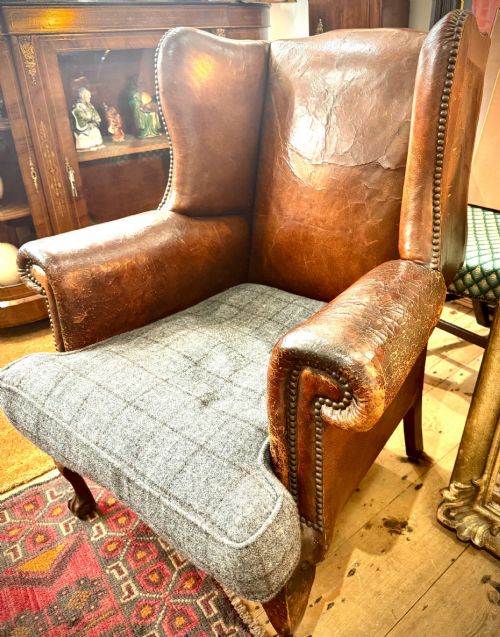
Upholstery methods combine traditional stuffing materials with deep buttoning, leather hides, velvet, and woven fabrics. Brass elements appear as castors, nails, and mechanical hinges on reclining or metamorphic library models.
Listings span the Victorian, Edwardian, and Georgian revival periods, utilising mahogany, oak, walnut, leather, velvet, and brass.
What Varies in Quality
The distinction between tiers rests upon the crispness of the frame's timber carving and the subtlety of any inlaid woodwork. Pieces produced by recognised makers display superior joinery and more refined proportions in the wings and arms.
Materials dictate the upper range, particularly thick leather hides or fine velvet upholstery paired with substantial mahogany or walnut frames. Simpler oak or softwood frames with basic fabric coverings sit at the accessible end of the scale.
Whytock and Reid·Howard and Sons·Sopwith·J Foot and Son·John Ward
The Edwardian Wingback Armchair Glossary
- Wingback
- A fireside armchair featuring protective side panels attached to the arms to deflect drafts. These wings define the silhouette of the traditional fireside seat.
- Bergère
- An upholstered armchair with an exposed wooden frame and woven cane panels on the back or sides. This French-inspired form appears frequently in Edwardian variants.
- Barrel back
- A semicircular chair design where the curved backrest flows continuously into the arms. This enclosed form offers a snug seating posture.
- Metamorphic
- Furniture designed to transform into alternative configurations, such as a reclining chair or a library seat with adjustable movement. Makers such as J Foot and Son specialised in these mechanical items.
- Inlaid
- Woodwork decorated by embedding contrasting strips or pieces of timber into the primary surface. Edwardian mahogany frames often utilise stringing or floral marquetry.
- Hide
- Untanned or tanned heavy animal skin used as durable upholstery leather. Green and brown hides are typical on library and club chairs.
Edwardian Wingback Armchair: Frequently Asked Questions
What defines an Edwardian wingback armchair?
These armchairs are defined by high upholstered backs with projecting side wings designed to trap heat around the sitter. They typically date from the early twentieth century and often incorporate mahogany or oak frames.
Many examples draw on earlier Georgian or Queen Anne revival styles, blending traditional silhouettes with the lighter proportions favoured during the Edwardian period.
Were these chairs used only by the fireside?
While primarily associated with firesides for draught protection, these armchairs served across libraries, salons, and bedrooms. Specialised variants were also built for reading or convalescent use.
Library editions often featured leather upholstery and reclining mechanisms, while bedroom versions appeared in smaller, lighter proportions.
What is a metamorphic armchair?
A metamorphic armchair includes mechanical hinges or adjustable components that allow the seat to alter its shape for reclining or resting. Makers like Foot and Son patented specialised hardware for these designs.
They provide adjustable backrests and footrests intended for convalescent or library comfort.
How do I spot mahogany inlay on a chair?
Mahogany inlay involves contrasting strips or decorative motifs fitted flush into the dark wood surface of the frame. Edwardian pieces often display delicate line inlay or classical patterns.
This decorative technique distinguishes standard frames from more ornate salon armchairs.