



Still Life Rose Painting
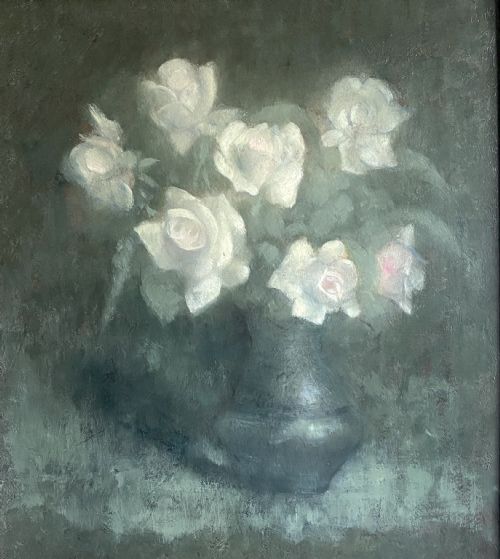
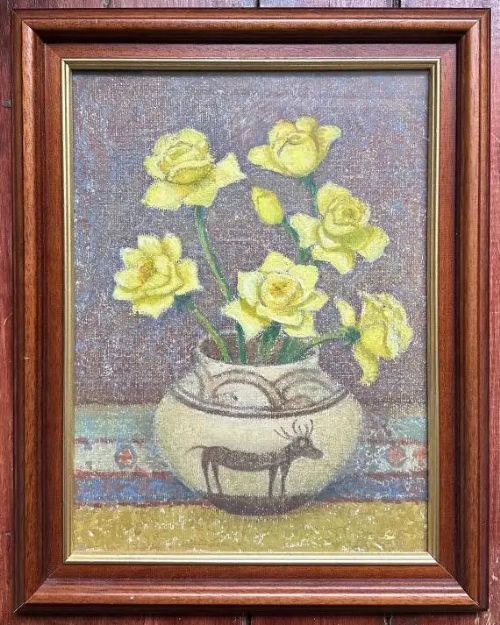
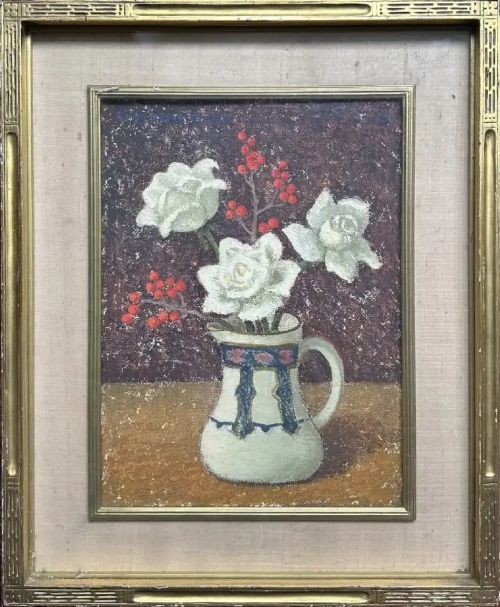
A still life rose painting captures fleeting botanical beauty onto canvas or board, offering enduring floral colour for an interior.
Still Life Rose Painting
A still life rose painting encompasses diverse historical periods ranging from Victorian compositions to mid-century modern interpretations. Buyers encounter traditional oil paintings on canvas alongside delicate watercolours and tempera studies.
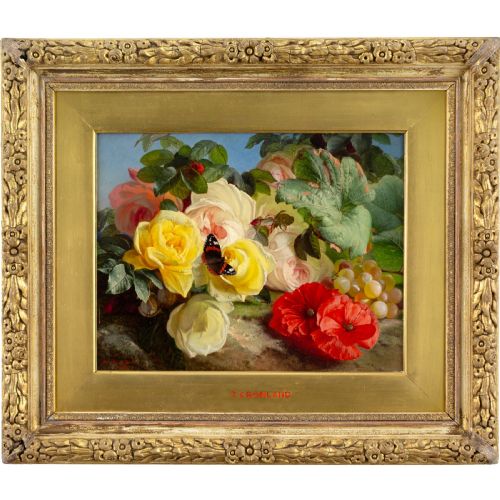
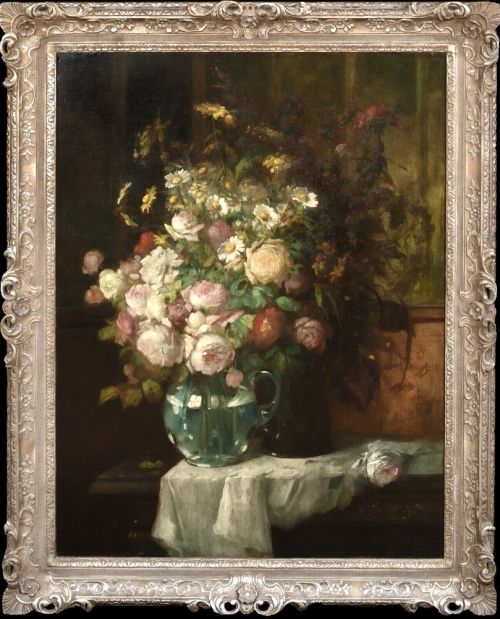
The subjects vary from single stems in glass vases to exuberant arrangements spilling from wicker baskets alongside fruit. Many pieces originate from British, Dutch, and French schools spanning the nineteenth and twentieth centuries.
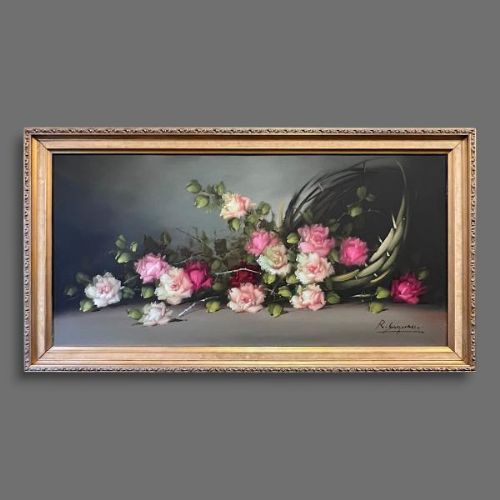
Artists capture white, yellow, pink, and red roses using realistic techniques or impressionistic brushwork. These works frequently appear housed within gilded wood frames that complement the painted subject.
Materials and technique
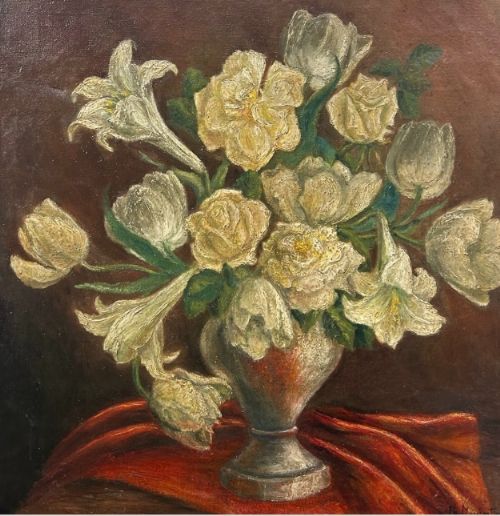
Artists applied oil paint and watercolour onto stretched canvas, wooden panels, or heavy board. Many historical works incorporate textured impasto layers to build up the tactile weight of petals and foliage.
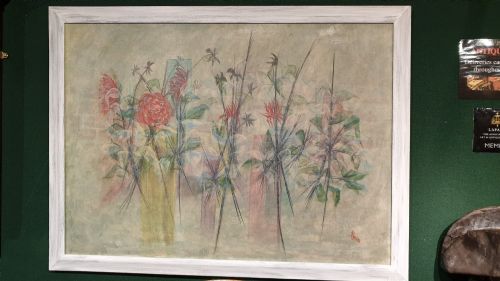
Frames often utilise carved wood enhanced with gold leaf to enclose the finished artwork. Certain mid-century examples employ tempera or gouache media applied to paper or support boards.
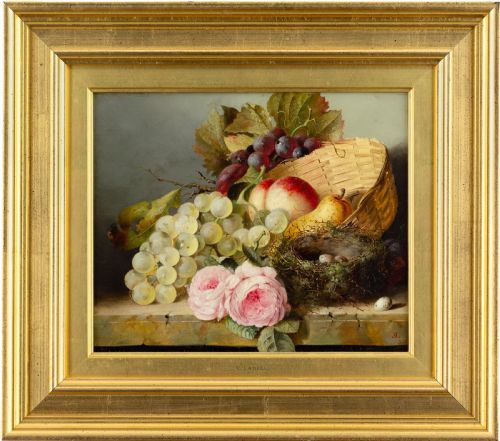
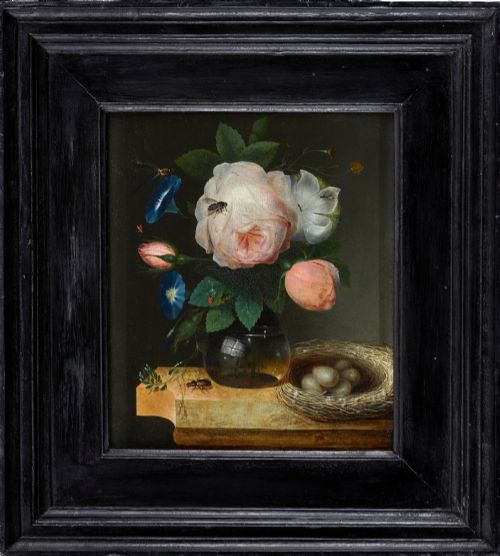
Several Victorian canvases hide small bird's nests amongst the roses.
Assessing quality
Quality rests upon the artist's ability to render light, shadow, and botanical accuracy within the petals. Stronger compositions demonstrate confident brushwork and balanced arrangement rather than static placement.
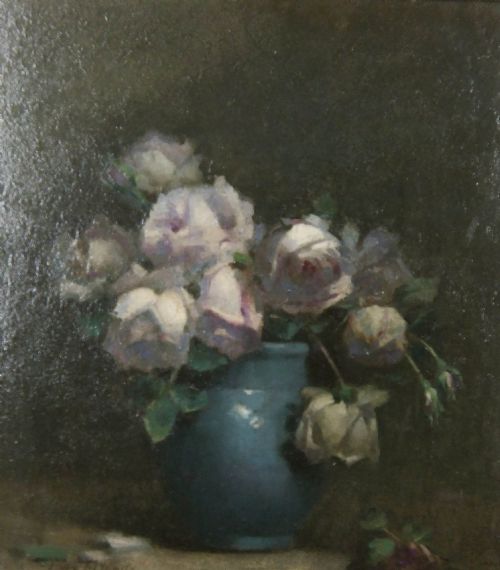
The condition of the paint surface and the originality of the accompanying frame influence the standing of a piece. Finer works display subtle tonal gradations and careful attention to secondary elements like glass vases and draped fabrics.
Theude Gronland·Edward Ladell·Gaspar Peeter Verbruggen·William Thomas Wood·Emma Fordyce MacRae·James Stuart Park·Ernest Higgins Rigg·Owen Bowen·John Fitz Marshall·Charles Archer
The Still Life Rose Painting Glossary
- Impasto
- Paint applied thickly to a canvas or board so that it stands out from the surface. This technique adds three-dimensional texture to rose petals and backgrounds.
- Oil on canvas
- Pigment mixed with drying oil applied to a woven fabric stretched across a wooden frame. This medium allows for rich colour blending and durability.
- Board
- A rigid flat surface used as an alternative to canvas for painting. Artists frequently utilised wooden panels or heavy cardboard during the nineteenth and twentieth centuries.
- Watercolour
- A paint consisting of pigment suspended in a water-based solution. Works on paper require protective glazing when framed.
- Gilded wood
- Timber coated with a thin layer of gold leaf or metallic paint. This finish creates a decorative border around the painted artwork.
Still Life Rose Painting: Frequently Asked Questions
How do I date a rose painting?
Dating relies on stylistic clues, framing methods, and the type of canvas or board used by the artist. Mid-century works often show brighter palettes and looser brushwork compared to Victorian pieces.
Examining the signature and any inscriptions on the reverse provides further historical context for the creation date.
Where should I hang a floral painting?
These works suit dining rooms, drawing rooms, or hallways where traditional or eclectic decor benefits from botanical subjects. Positioning the piece away from direct sunlight protects the pigments from fading.
Matching the frame finish to existing interior woodwork helps integrate the artwork into the space.
Are watercolours different from oil paintings?
Watercolours utilise water-soluble pigments on paper supports, resulting in a luminous and delicate finish. Oil paintings employ slow-drying oil binders on canvas or board, offering deeper colour saturation.
Watercolour pieces require glass protection, whereas traditional oil works remain open to the air.
What subjects accompany roses in these works?
Artists frequently include other seasonal blooms such as tulips, primroses, and carnations alongside fruit like peaches and grapes. Nests containing eggs and delicate butterflies also appear in traditional arrangements.
These additional elements create varied textures and compositional balance within the floral still life.