



Original Rose Oil Painting
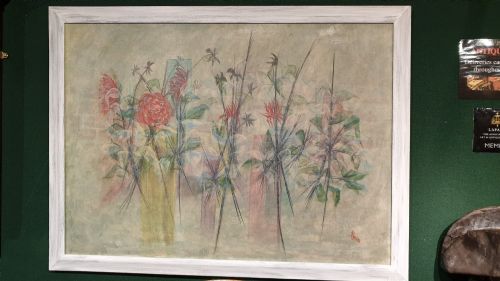
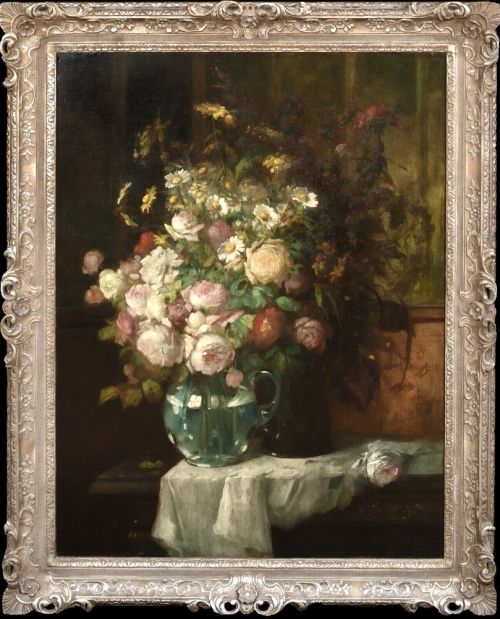
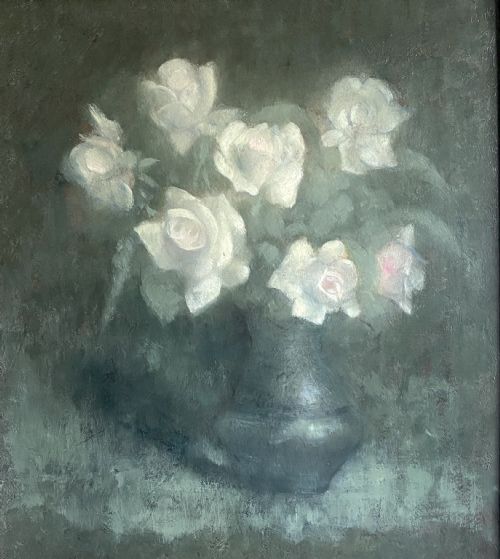
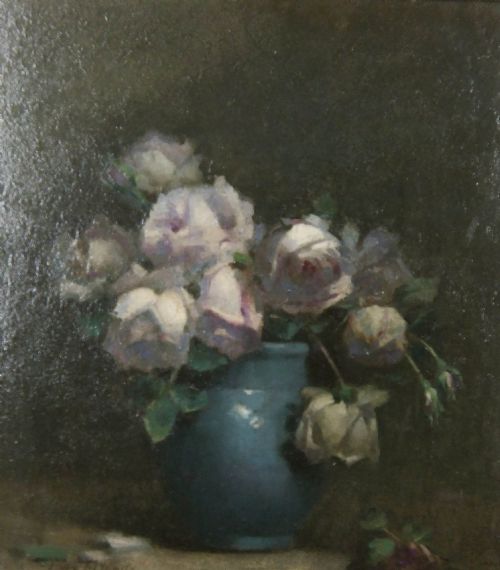
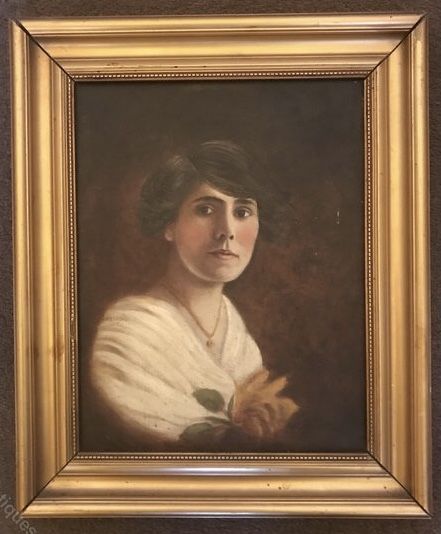
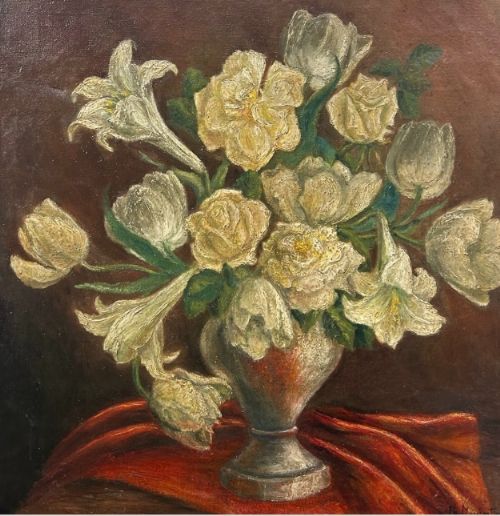
When you search for an original rose oil painting, you find works spanning the nineteenth century through the mid-twentieth century, capturing floral still lifes and portraits executed with lasting pigments on canvas, board, and panel.
Original Rose Oil Painting
An original rose oil painting brings together historical floral studies, garden scenes, and portraits featuring the flower, created across the Victorian, Edwardian, and mid-century periods. These works capture both tight botanical arrangements and looser impressionist interpretations rendered by British and European painters.
You are most likely to encounter canvas and board substrates housed in wood or gesso frames, reflecting the styles of British Impressionism, Victorian realism, and mid-century modernism. The subjects range from formal vase arrangements to casual garden gatherings of roses alongside other seasonal flowers.
Materials and methods
Painters used oil-based pigments applied to stretched canvas, wooden panels, board, or tin supports, sometimes building thick impasto layers to give petals a tactile presence. These supports were often set within carved wooden or gilded gesso frames that complemented the visual weight of the pigment.
The technique relies on the slow-drying nature of oil paint, which allowed artists to blend tones directly on the surface to capture the subtle gradients of rose petals. Ground layers of gesso prepared rigid boards and wood panels to hold the oil medium securely over decades.
The selection spans Victorian realism, Art Nouveau, and mid-century modern movements.
Evaluating execution and depth
Quality rests in the handling of light across the petals and the confidence of the brushwork, distinguishing observed studies from formulaic workshop copies. The strongest examples demonstrate an accurate command of tone that gives depth to the blooms without relying on heavy outlines.
The integration of the subject with its background also dictates merit, where lesser works treat the flower and setting as separate elements. Superior paintings show a unified tonal harmony between the blooms and the surrounding air or vessel.
Konstantin Stoitzner·William Thomas Wood·Stuart Armfield·Thomas Rose Miles·Ernest Higgins Rigg·Owen Bowen·Alfred Seifert
The Original Rose Oil Painting Glossary
- Impasto
- Paint applied thickly to a canvas or board, standing in relief to catch actual light and create texture. This technique is frequently seen in floral studies to render the raised surfaces of rose petals.
- Still life
- An artwork depicting inanimate subject matter, typically commonplace objects or natural items such as flowers in a vase. These compositions allow artists to focus entirely on colour, light, and form.
- Board
- A rigid flat surface made of wood pulp or cardboard used as a support for painting instead of stretched fabric. Many twentieth-century painters preferred this stable ground for smaller studies.
- Gesso
- A plaster-like mixture applied to wood panels or canvas to prepare a smooth, absorbent surface for oil paint. This preparation seals the support and holds the subsequent layers of pigment.
- Tempera
- A permanent fast-drying painting medium consisting of coloured pigment mixed with a water-soluble binder entity. It produces a flat, matte surface distinct from the glossy finish of oils.
Original Rose Oil Painting: Frequently Asked Questions
How do I date an older floral painting?
Dating relies on examining the substrate materials, framing style, and the pigments used, alongside any signatures or labels on the reverse. Canvas types and wooden panel preparations changed significantly between the Victorian era and the mid-century period.
Stylistic cues also help narrow the decade, as Edwardian impressionism differs markedly from mid-century modern interpretations. Comparing brush techniques with documented works by known painters provides further chronological context.
Where should I hang these artworks?
These paintings suit spaces with controlled ambient light, away from direct sunlight that can degrade historical oil pigments over time. A stable indoor climate prevents the wood panels or canvases from warping due to humidity changes.
Pairing the piece with a complementary period frame enhances its appearance on the wall. Keeping the artwork clear of heat sources ensures the substrate and paint layers remain stable.
What is the difference between canvas and board?
Canvas is a flexible woven fabric stretched over a wooden frame, offering slight give under the brush and a textured surface. Board is a rigid, flat support made of compressed material that provides a completely stable surface without flexing.
Artists often chose board for smaller, rapid studies because it required minimal preparation compared to stretching fabric. Both supports have been used for centuries, though board became increasingly common in the twentieth century.
How do I care for an antique oil painting?
Care involves keeping the surface free of dust using a soft, dry brush and avoiding chemical cleaners or moisture entirely. Professional conservators should handle any cleaning of the varnish layer or structural repairs to the canvas.
Maintaining moderate room temperatures prevents the paint film from cracking as the underlying support expands and contracts. Proper framing with breathable backing boards also protects the reverse of the canvas or panel.