
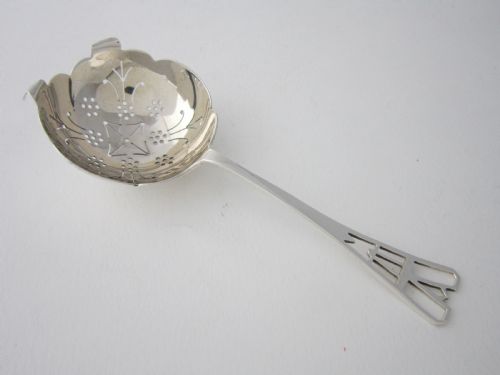


Sterling Silver Strainer
A sterling silver strainer is a functional piece of teaware or barware designed to catch loose leaves or sediment, combining practicality with bright metalwork.
Forms and Origins
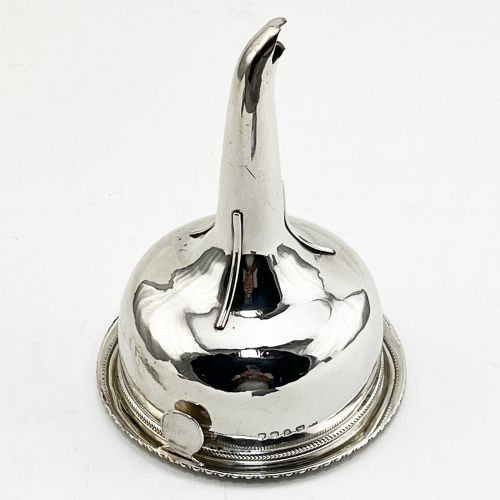
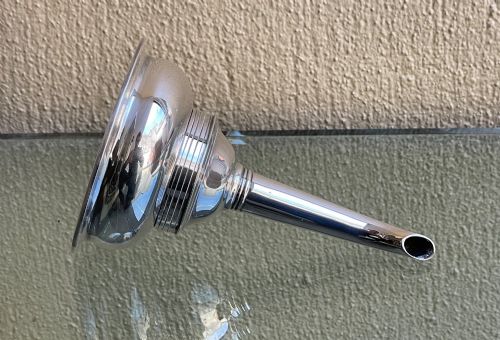
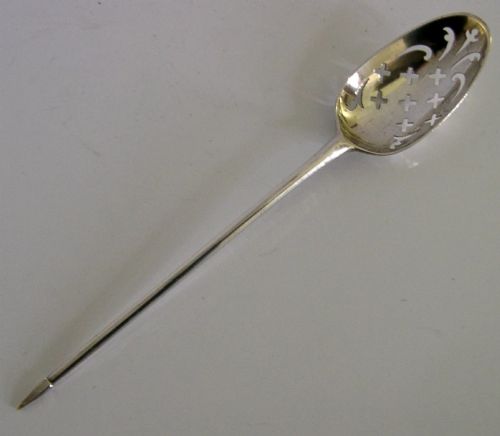
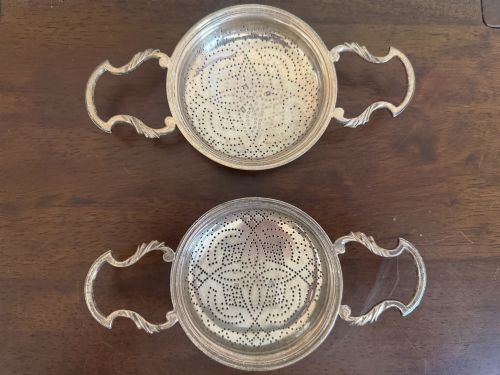
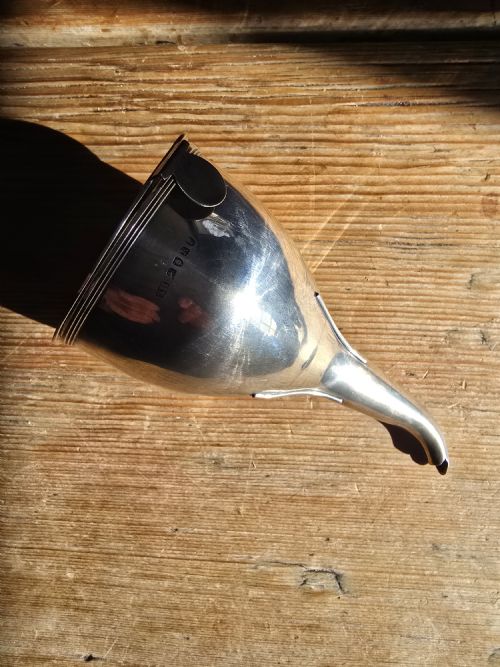
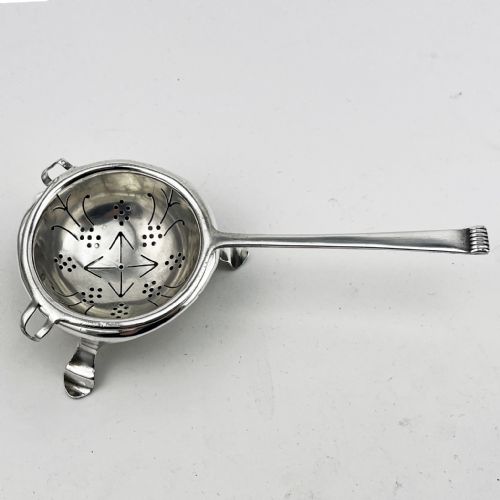
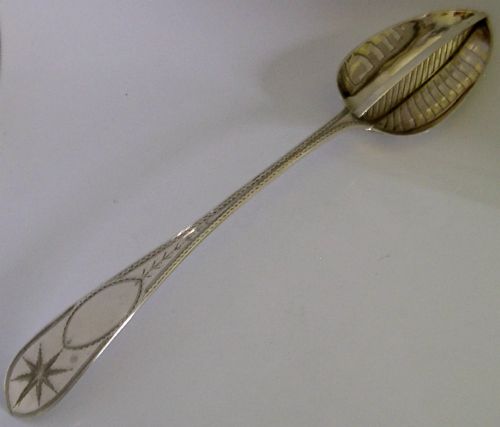
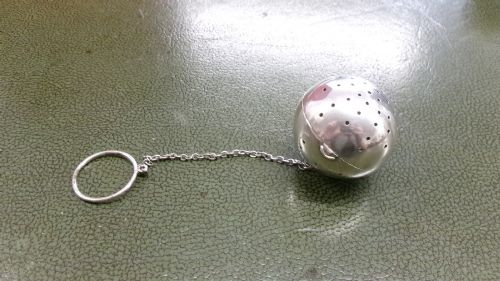
When you search for a sterling silver strainer, you encounter various forms including tea strainers, wine funnels, tea infusers, mint sauce ladles, and punch or cocktail strainers. Tea strainers frequently appear alongside matching drip bowls or stands, while larger serving items function as basting spoons.
The objects span multiple centuries, originating from Georgian periods and the 18th century through to 19th-century Victorian examples. Twentieth-century pieces bring Art Deco styling, Arts and Crafts designs, and mid-century modern iterations into the selection.
Geographic origins extend across British workshops in London, Birmingham, and Chester, alongside continental makers from Denmark, Holland, Germany, and North America including Mexico.
Materials and Technique
These items are constructed from sterling silver or solid silver, utilising metalworking techniques such as piercing, hammering, and planishing. Pierced bowls create the perforated sieve patterns necessary for liquid to pass through while retaining solids.
Makers shaped the metal by hand or machine, incorporating reeded cylindrical edges, applied handles, and cast decorative motifs such as cherubs or floral Art Nouveau details. Some pieces feature detachable sieve components or hinged mechanisms for tilting.
Retail Price Guide 2026
Typical UK retail prices for sterling silver strainer, calculated from the Sellingantiques database of over a million retail prices indexed since 2003. This retail price guide relies exclusively on Sellingantiques data; no external sources or auction records are used, so the figures do not describe the wider market.
Substance and Execution
Substance is evident in the weight and gauge of the silver, where heavier examples demonstrate substantial metal thickness and sturdiness in daily use. Lighter pieces rely on delicate piercing and refined proportions rather than sheer mass.
Execution shows in the precision of the pierced work within the bowl and the clarity of hallmarks stamped into the metal. Fine examples maintain structural integrity in handles and stands without distortion from historical cleaning or wear.
David Hennell·Bernard Muller·Comyns·R E Stone·Hukin & Heath Ltd·JB Chatterley & Sons·Angora Silver Plate Co
The Sterling Silver Strainer Glossary
- Sterling silver
- An alloy consisting of ninety-two point five percent silver and seven point five percent other metals, typically copper, used to provide durability. This standard metal composition is stamped with official assay office hallmarks.
- Drip bowl
- A small matching stand or receptacle placed beneath a tea strainer to catch residual drops after use. It keeps tabletops clean and mirrors the decorative style of the strainer.
- Wine funnel
- A specialised conical vessel used in the eighteenth and nineteenth centuries to decant wine while filtering out sediment. Examples incorporate a removable perforated strainer insert.
- Planished
- A surface texture produced by hammering the silver with a polished round-headed hammer to create small, flat, overlapping facets. This technique hardens the metal while leaving a distinctive visual finish.
- Assay mark
- An official stamp indicating the purity of the metal, the maker, and the year of testing. These marks provide definitive historical attribution for British and international pieces.
Frequently Asked Questions
What is a sterling silver strainer used for?
These tools filter loose tea leaves from cups during pouring, or strain sediment from wine, punch, and sauces. They serve both domestic tea rituals and barware preparation.
Many examples sit upon dedicated drip bowls to manage moisture between uses.
How do I date a silver strainer?
Dating relies on stamped hallmarks indicating the assay office, maker, and date letter corresponding to specific years of production. Stylistic markers such as Art Deco geometric lines or Victorian ornamentation provide further clues.
Documented maker marks establish precise operational decades for the workshop.
What is a drip bowl?
A drip bowl is a small resting vessel accompanying a tea strainer to catch lingering drops of liquid. It prevents staining on linens and surfaces.
These stands share matching silver construction and decorative motifs with the strainer.
How should I clean silver strainers?
Maintenance involves gentle washing with warm soapy water and careful drying with a soft cloth to preserve the finish. Silver polish is applied sparingly to avoid wearing down fine piercing or hallmarks.
Regular handling prevents heavy tarnish accumulation in recessed pierced areas.