


Solid Silver Tea Strainer
A solid silver tea strainer turns loose leaves into a civilised cup.
What a solid silver tea strainer is
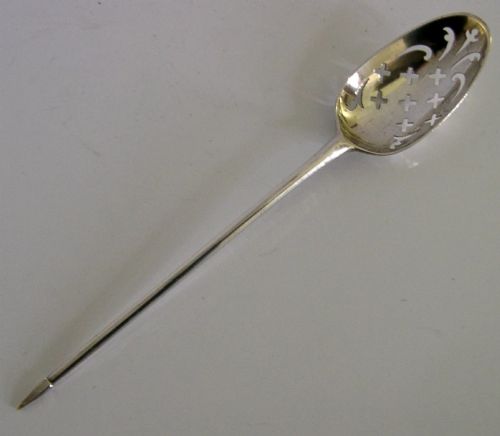
A solid silver tea strainer is a table accessory designed to catch loose leaves when pouring tea from a pot. The pieces seen here span from the nineteenth century into the mid-twentieth century, including items originating from British, European, and Asian makers.
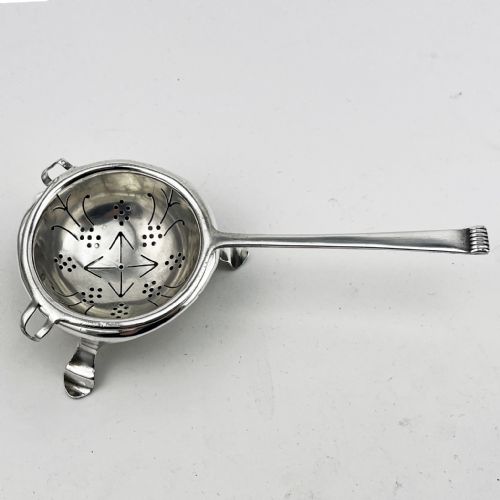
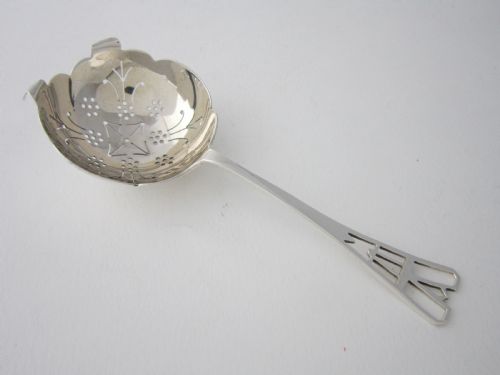
Most examples take the form of a perforated bowl with handles, sometimes accompanied by a matching drip bowl stand to catch residual liquid after use. Buyers are most likely to encounter twentieth-century British sterling silver examples alongside continental European pieces from the late Victorian and Art Deco eras.
How they were made
These items are constructed from sterling silver or continental grades of solid silver, occasionally finished with a silver gilt vermeil coating. Workshops utilised piercing, pressing, and soldering techniques to shape the delicate bowls and decorative handles.
Perforations in the bowls were hand-pierced or machine-punched into geometric, floral, or abstract patterns, allowing liquid to pass through while retaining the spent leaves.
Listings for this phrase include items produced in Britain, Norway, France, Germany, China, and the Netherlands.
What varies in quality
Quality rests in the weight of the silver used, the precision of the piercing work across the bowl, and the balance of the handles. Sturdier examples maintain their shape under daily use, whilst lighter pieces feel more delicate in the hand.
The presence of a matching drip bowl stand elevates a piece, as does crisp maker stamping and legible hallmarks that verify the origin and date of the metal.
Magnus Aase·Philippe Berthier·The Cooper Brothers Sons Ltd·Gebruder Dingeldein·Asprey
The Solid Silver Tea Strainer Glossary
- Sterling silver
- An alloy of silver containing 92.5 percent pure silver and 7.5 percent other metals, usually copper, ensuring durability for functional tableware.
- Vermeil
- Sterling silver plated with a thin layer of fine gold, providing a rich yellow finish seen on select antique sets.
- Hallmark
- An official stamp applied by an assay office to guarantee the purity of the precious metal and record the year of manufacture.
- Drip bowl
- A small matching receptacle designed to hold the strainer between uses and prevent moisture from marking table linen.
- Piercing
- The decorative technique of cutting openings through sheet silver to form patterns, essential for the filtering function of the strainer.
Frequently Asked Questions
How do I use a solid silver tea strainer?
Place the strainer across the rim of your teacup before pouring the brewed tea directly from the pot. The perforated bowl catches the loose leaves, ensuring a clear brew in the cup.
After pouring, set the strainer down on its matching drip bowl stand to catch any lingering drops of moisture.
How should I clean a silver tea strainer?
Wash the strainer gently in warm soapy water using a soft cloth, avoiding harsh abrasives that might scratch the polished surface. Dry thoroughly with a soft towel immediately afterward to prevent water spots.
Polish occasionally with a dedicated silver cloth to maintain the shine without wearing down the hallmark stamps.
What is the difference between a tea strainer and a tea infuser?
A tea strainer is held over the cup to catch leaves as the tea is poured from a separate pot. An infuser usually takes the form of a ball or egg that holds loose leaves submerged directly inside the pot during brewing.
Both items serve to control loose leaves, but strainers remain visible at the table during service.
How can I date my solid silver tea strainer?
Examine the stamped hallmarks on the rim or handle, which typically include assay office marks, maker initials, and date letters. British pieces from the twentieth century often display specific letters corresponding to the year of assay.
Stylistic cues such as Art Deco geometric piercing or Edwardian floral motifs also provide a reliable guide to the period of manufacture.