
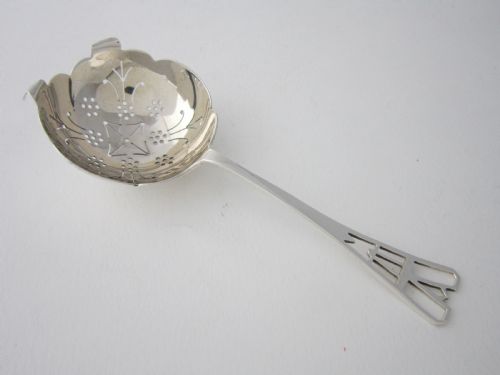


Antique Silver Tea Strainer
These antique silver tea strainer examples catch loose leaves with style, bringing tactile heritage to the modern tea table.
Understanding antique silver tea strainer pieces
An antique silver tea strainer serves to catch loose leaves as tea is poured from pot to cup. You will encounter forms ranging from George III lemon strainers to Art Deco drip bowl sets.
The selection includes English, Danish, Norwegian, German, Dutch, French and American examples. Pieces span the eighteenth century through to the 1940s, encompassing standard strainers, tea infuser balls and mote spoons.
Many items arrive paired with matching drip bowls or stands to catch lingering drops. The form shifts from Georgian simplicity to elaborate repoussé work featuring cherubs or floral motifs.
Judging quality in silver strainers
Quality rests in the crispness of the piercing and the balance of the handle against the bowl. Hand-punched apertures on eighteenth-century examples show distinct craftsmanship compared to later stamped patterns.
The presence of matching drip bowls or stands elevates a piece, as does documented maker attribution. Weight and gauge of the silver distinguish substantial workshop production from lighter items.
Retail Price Guide 2026
Typical UK retail prices for silver tea strainer, calculated from the Sellingantiques database of over a million retail prices indexed since 2003. This retail price guide relies exclusively on Sellingantiques data; no external sources or auction records are used, so the figures do not describe the wider market.
Listings feature sterling silver and solid silver items spanning the eighteenth century to the 1940s, including George III, Victorian and Art Deco styles.
David Hennell·Magnus Aase·Philippe Berthier·Asprey
The Antique Silver Tea Strainer Glossary
- Mote spoon
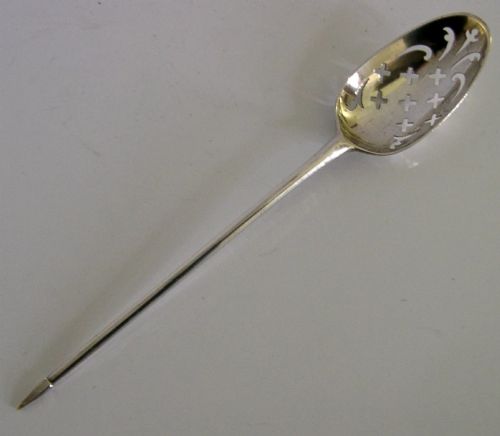
- A slender Georgian utensil with a pierced bowl used to clear stray tea leaves from the brew. The pointed tail end cleared the teapot spout.
- Lemon strainer
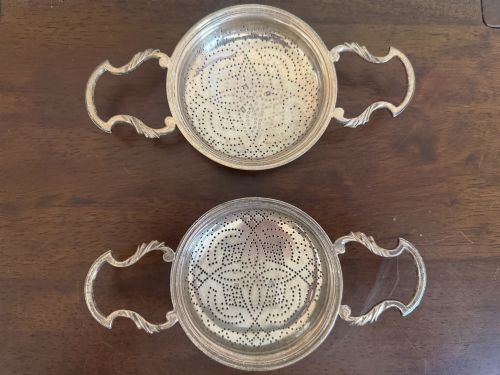
- A specialised small strainer designed to catch pips when expressing citrus juice into tea. These often appear in pairs from the eighteenth century.
- Drip bowl
- A small matching vessel designed to hold the wet strainer after use. They prevent tea staining table linens.
- Vermeil
- Silver gilt comprising a solid silver base coated with a thin layer of gold. This finish protects the silver and adds a rich tone.
- Repoussé
- A metalworking technique where the silver is hammered from the reverse side to form raised relief designs. This method appears on continental European pieces.
Frequently Asked Questions
How do I use a vintage tea strainer?
Rest the strainer across the rim of your teacup before pouring the brew directly from the teapot. The pierced bowl catches loose leaves while the liquid passes through into the cup.
Once finished, place the wet strainer onto its matching drip bowl or stand to protect surfaces from moisture.
What is the difference between a tea strainer and a tea ball?
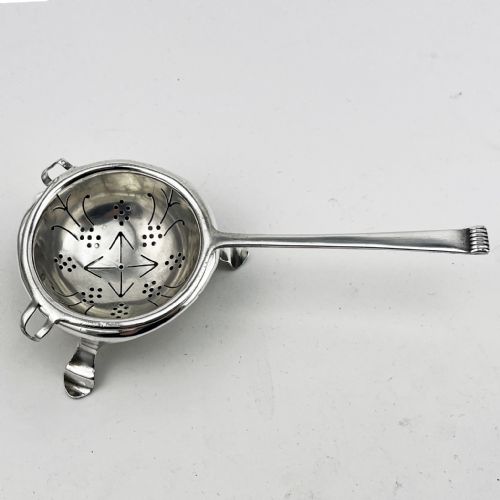
A standard tea strainer is a perforated bowl with handles that rests on the cup during pouring. Loose leaves sit inside a teapot, and the strainer catches them at the point of service.
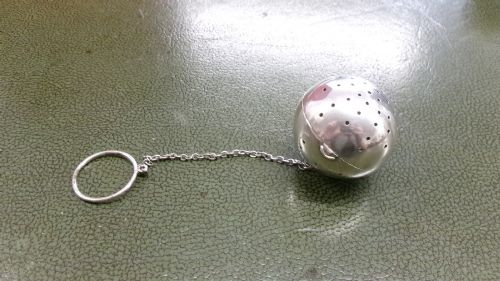
A tea infuser ball or egg holds the loose leaves directly inside the pot or cup during steeping and is removed before drinking.
How do I date an antique silver tea strainer?
English pieces typically carry full hallmarks including assay office marks, date letters and maker's marks. These stamp codes allow precise dating by year.
Continental and later items rely on style indicators such as Art Deco geometric lines or Edwardian floral motifs to establish their period.
Should I polish antique silver tea strainers?
Light polishing with a quality silver cloth maintains the shine without removing desirable patination built up over decades. Avoid harsh chemical dips that strip away the aged character of the metal.
Wash the strainer in warm soapy water after use and dry thoroughly to keep the silver in fine condition.