






Georgian Silver Strainer
A georgian silver strainer filters sediment from wine, tea or punch with historic craftsmanship.
Georgian Silver Strainer
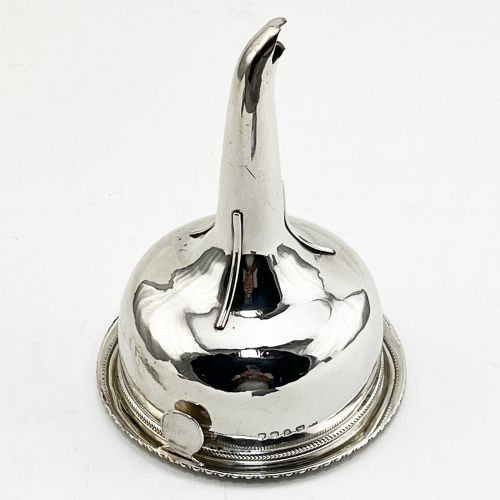
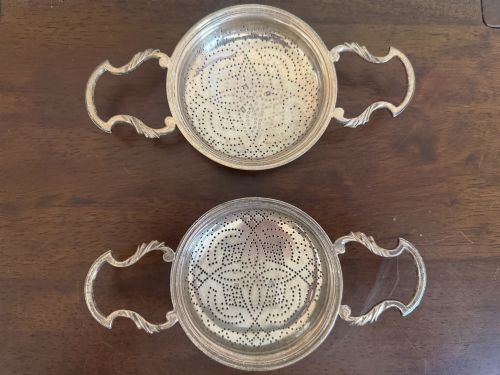
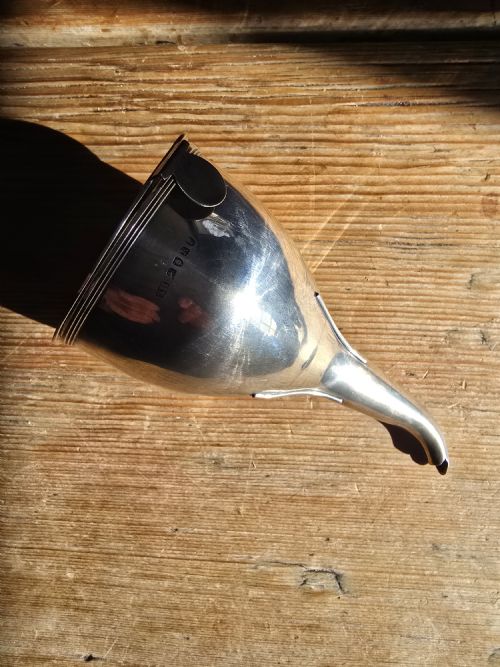
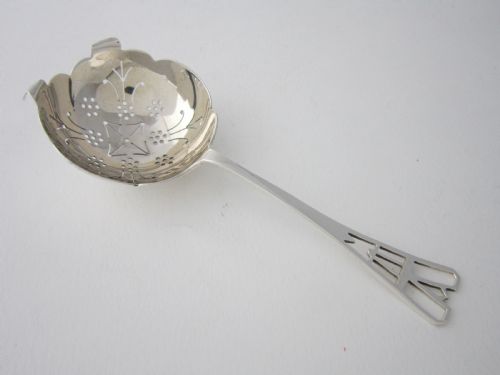
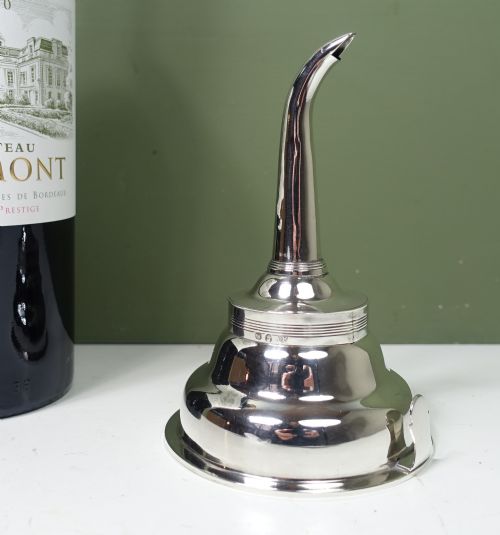
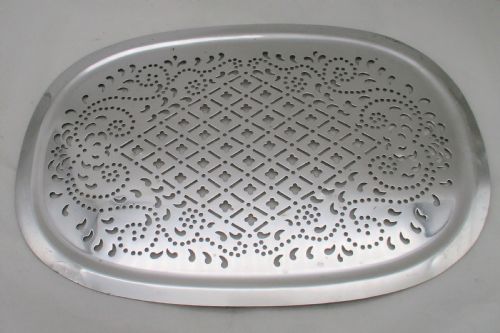
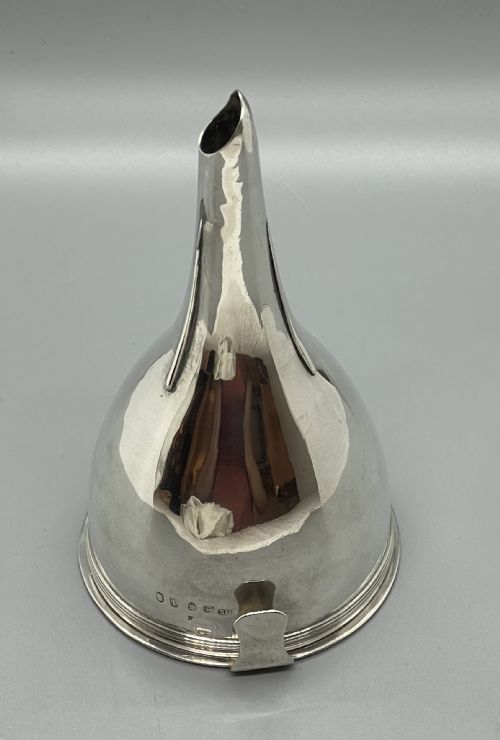
A georgian silver strainer encompasses specialised pieces designed for filtering wine, tea, punch and gravy across the eighteenth and nineteenth centuries. These items appear in various forms including wine funnels, mote spoons, lemon strainers, basting spoons and mazarine plates.
The pieces on this page span the Georgian, Regency, Victorian and later eras, reflecting the changing dining and drinking customs of British households. Wine funnels and lemon strainers dominate the selection, often accompanied by specialised spoons with pierced bowls.
Materials and Techniques
Silversmiths constructed these items primarily from sterling silver, solid silver and Britannia silver, utilising durable metals suited to daily table service. Old Sheffield plate and silver plating also appear among the listed draining plates and trays.
Makers shaped the metal through hammering, piercing and soldering, creating intricate patterns of holes and slots for liquid passage. Handles and rims often feature cast decorative elements joined to the main pierced bowl or funnel body.
Mote spoons double as miniature garden trowels if your indoor ferns need an excessively aristocratic repotting session.
What Varies in Quality
Metal gauge and weight distinguish heavier items, such as good gauge pieces and substantial basting spoons, from lighter utilitarian examples. Substantial silver thickness prevents bending and preserves the integrity of the pierced bowl.
The precision and fineness of the piercing work separate standard output from superior items. Pierced patterns executed with geometric regularity and crisp edges reflect higher workshop standards.
David Hennell·Solomon Hougham·Jeremiah Lee·Samuel Courthauld·John Albright
The Georgian Silver Strainer Glossary
- Mote spoon
- A slender spoon with a pierced bowl used in the eighteenth century for skimming tea leaves from cups. The pointed terminal often served to clear tea leaves from the pot spout.
- Wine funnel
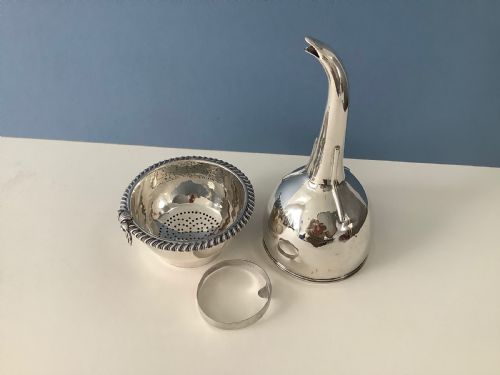
- A conical utensil used to decant wine into bottles while filtering out sediment or cork fragments. Many examples include a removable pierced strainer insert.
- Old Sheffield plate
- A composite material made by fusing a thin sheet of silver to a thicker copper base. It predates electroplating and appears on nineteenth century draining plates.
- Britannia silver
- A higher standard of silver alloy introduced in England to prevent the melting of coinage for plate. It contains a higher proportion of pure silver than sterling.
Georgian Silver Strainer: Frequently Asked Questions
How do I use a wine funnel?
Place the funnel into the neck of a decanter before pouring wine from the bottle. The removable pierced insert catches sediment and cork pieces.
Ensure the insert rests securely inside the funnel cone during the pour. Remove the insert promptly after use to clean away residual liquid.
What is a mote spoon used for?
A mote spoon filters loose tea leaves from cups during eighteenth century tea service. The pierced bowl traps floating leaves while allowing liquid to pass.
The pointed handle end clears blocked tea spouts. These small spoons precede modern tea strainers.
How can I tell a lemon strainer from a tea strainer?
Lemon strainers typically feature twin handles designed to rest across the rim of a punch bowl or glass. Tea strainers often feature a single handle for holding over a cup.
Both items utilise pierced silver bowls but serve different drinking vessels. Lemon strainers accommodate wider vessel openings.
What does old sheffield plate mean?
Old Sheffield plate involves fusing a layer of silver to a copper core through heat and pressure. This technique produced durable tableware before nineteenth century electroplating methods.
Items made this way may show subtle traces of copper where the silver layer has worn thin along edges.