



Solid Silver Strainer
A solid silver strainer solves the problem of sediment in your glass or cup with enduring metalwork.
Solid Silver Strainer
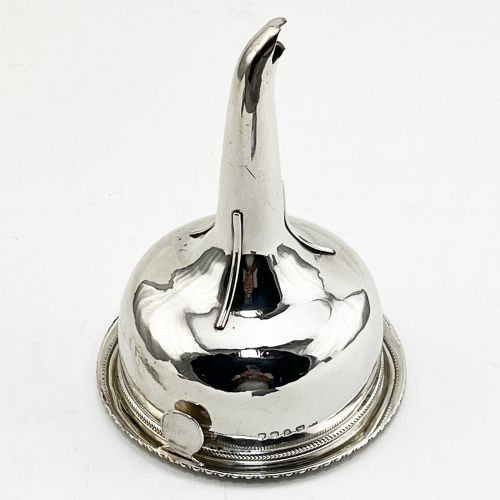
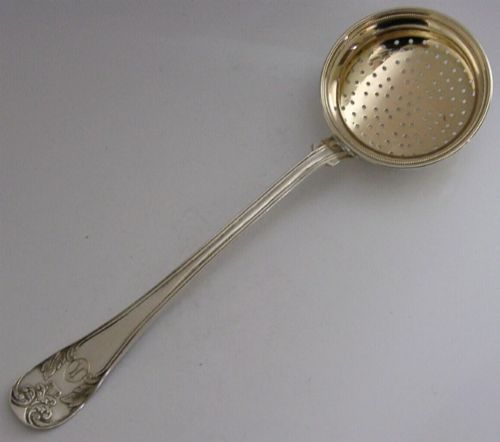
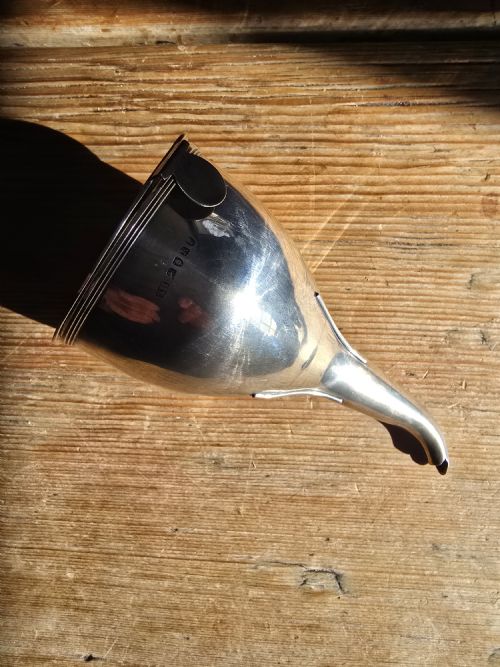
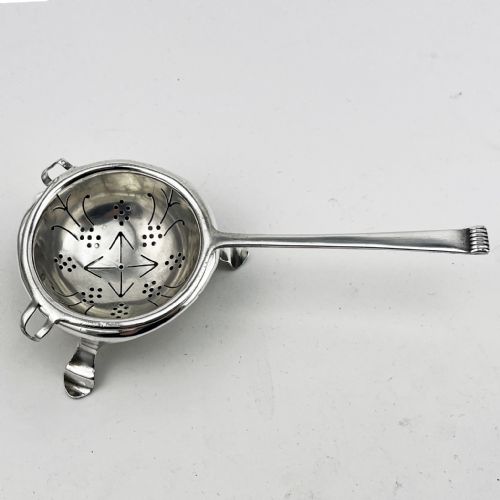
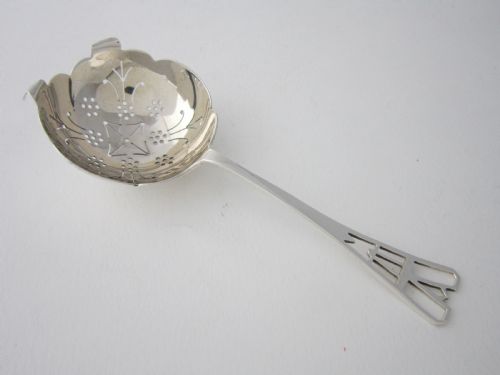
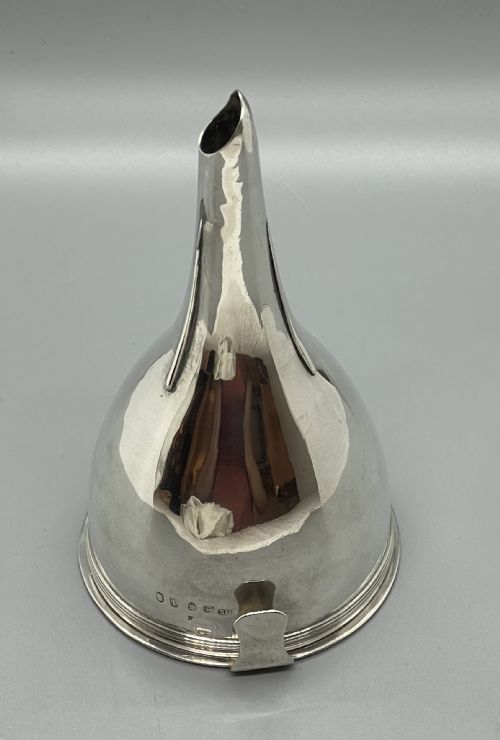
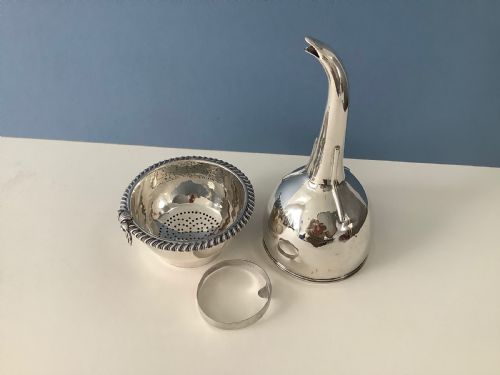
A solid silver strainer takes various forms across domestic history, appearing most frequently as tea strainers, wine funnels, and straining ladles. These pieces serve specific rituals around the dining table and the tea service, separating solids from liquids with perforated bowls.
The objects span multiple periods including Georgian, Victorian, Edwardian, and the twentieth century. Origins range from British workshops to continental European makers in Sweden, Germany, and the Netherlands.
Tea accessories dominate the selection, alongside specialised barware like wine funnels designed for decanting. Buyers encounter everything from simple resting bowls with strainers to complex three-part vessels.
Materials and Technique
Silversmiths constructed these pieces primarily from sterling silver and solid silver, occasionally applying silver gilt or vermeil for decorative effect. The metal provides both durability and a bright surface capable of holding intricate detail.
Piercing forms the core technique for creating the strainer bowls, where artisans punched or drilled precise patterns of holes and slots into the metal. Hand-chasing, engraving, and cast handle attachments complete the construction of these functional objects.
The listings on this site feature sterling silver and solid silver pieces spanning from the Georgian period through the mid-twentieth century.
Judging Quality
Gauge and weight distinguish superior examples from lighter pieces, with heavier metal providing a more substantial feel in the hand. The crispness of the pierced pattern reveals the maker's skill, where clean edges and geometric precision matter greatly.
Makers' marks and hallmarks offer concrete evidence of origin and standard, enhancing the historical interest of a piece. The integration of functional elements, such as matching drip bowls or secure multi-part joints, marks the work of premier silversmiths.
Solomon Hougham·Philippe Berthier·Magnus Aase·Cooper Brothers Sons·Gebruder Dingeldein
The Solid Silver Strainer Glossary
- Mote spoon
- A specialised Georgian spoon featuring a pierced bowl for removing tea leaves and a pointed terminal for clearing a clogged teapot spout. These small implements date back to the eighteenth century.
- Wine funnel
- A conical vessel designed to channel wine into a decanter while filtering out sediment through a removable strainer insert. Many examples feature clips to hold them securely on the neck of a decanter.
- Silver gilt
- Sterling silver that has been coated with a thin layer of gold, also known as vermeil. This technique adds warmth and protects the underlying silver from tarnishing.
- Hallmark
- A series of stamped official marks indicating the metal standard, the assay office, the maker, and the year of production. These stamps provide a secure method of dating British silver.
- Tea strainer
- A small perforated bowl equipped with resting arms to fit across the top of a teacup. Many include a matching drip bowl to catch liquid after use.
Solid Silver Strainer: Frequently Asked Questions
What is a mote spoon used for?
A mote spoon served a dual purpose in eighteenth-century tea drinking. The pierced bowl skimmed loose leaves from the brewed tea, while the pointed end cleared the spout of the teapot.
These slim implements appear alongside early tea accessories and display fine early piercing work.
How do you use a wine funnel?
A wine funnel guides older bottled wine into a decanter while a fitted strainer insert catches the sediment and cork fragments. This ensures a clear pour at the table.
Georgian examples often include a removable mesh section for easy cleaning between uses.
What is a drip bowl?
A drip bowl provides a resting place for a tea strainer after it has removed the leaves from a cup of tea. It keeps tabletops clean and dry.
Many twentieth-century sets pair the strainer and bowl together in matching designs.
How do I care for antique silver?
Antique silver requires gentle washing in warm soapy water followed by thorough drying with a soft cloth. Avoid harsh abrasive dips that strip the natural patina accumulated over centuries.
Regular handling naturally maintains the finish of pieces in daily use.