

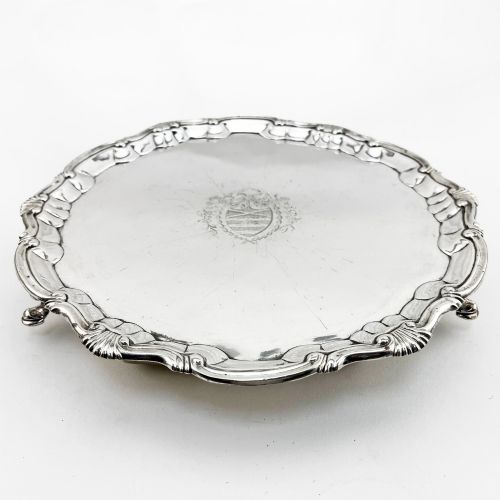

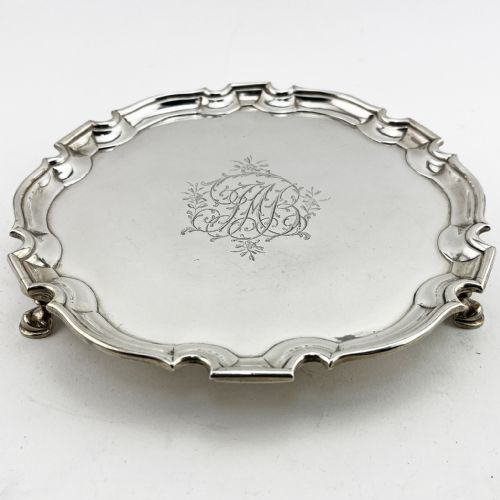
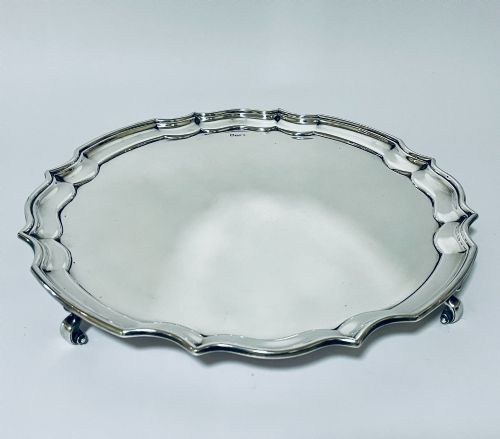


Sterling Silver Serving Tray
These sterling silver serving tray examples bring centuries of silversmithing directly to your table, offering practical elegance for entertaining or display.
Sterling Silver Serving Tray
When you search for a sterling silver serving tray, you enter a diverse field spanning formal salvers, oval platters, bread baskets, and drinks trays from the eighteenth century through to the art deco period. These items were designed to present food, wine, or tea, translating domestic utility into decorative artistry across multiple generations.
On this page, you are most likely to encounter nineteenth-century items alongside Edwardian and 1930s examples. Forms range from compact circular salvers with scroll feet to substantial handled drinks trays and oak-mounted platters.
Origins vary from provincial English assay offices like Sheffield and York to London workshops, alongside Irish and Indian colonial creations. Each piece reflects the social rituals of its specific era, from Georgian dining customs to twentieth-century cocktail service.
Materials and construction methods
The primary material is sterling silver, worked by hand or cast to achieve the substantial weight and structural integrity required for carrying glassware and tableware. Many items incorporate traditional hallmarks indicating the city of assay, the maker, and the year of production.
Complementary materials appear in specific forms, such as seasoned oak bases fitted with silver galleries or handles. Surface decoration relies on hand engraving, pierced metalwork, and applied borders in styles from rococo revival to geometric art deco.
Sterling Silver Serving Tray Retail Price Guide 2026
Typical asking prices for sterling silver serving tray among the pieces listed under this phrase on Sellingantiques today, from the lower quarter to the upper quarter. They describe what is for sale here now, not the wider market.
Distinctions in craftsmanship and design
Quality in a sterling silver serving tray rests upon the crispness of the hand engraving, the weight and gauge of the metal, and the balance of applied cast borders. Superior examples exhibit seamless construction where feet, handles, and galleries join the main body with precision.
The reputation of the maker and the clarity of the London, Sheffield, York, or Irish hallmarks further elevate a piece. Master silversmiths achieved a harmony between utility and ornamentation that lesser workshops rarely matched.
Robert Abercromby·Robert Breading·John Hunt·Harrison Bros·Martin Hall·Elkington Co·Tiffany Co·Paul Storr
The Sterling Silver Serving Tray Glossary
- Salver
- A flat tray, typically circular and raised on feet, used for serving drinks or food. They often feature intricate pie-crust or scroll borders.
- Hallmark
- A series of official marks stamped on precious metals showing the standard of purity, assay office, date letter, and maker's mark. These symbols provide the definitive history of the object.
- Pierced
- Metalwork decorated by cutting or piercing patterns through the silver sheet. This technique is frequently seen on bread baskets and Edwardian serving dishes.
- Assay Office
- The regulatory body responsible for testing the purity of precious metals and applying statutory hallmarks. Towns such as London, Sheffield, and York maintained their own offices.
Sterling Silver Serving Tray: Frequently Asked Questions
How do I clean my silver tray?
Use a specialised silver polish and a soft cloth to remove tarnish gently, avoiding harsh abrasives that scratch the metal.
Rinse the item thoroughly in warm water and dry it immediately with a lint-free cloth to preserve the finish.
Can these trays be used for serving food?
Most solid silver trays are entirely food safe and suitable for serving bread, canapés, or drinks to guests.
Ensure you wash them by hand promptly after use rather than leaving them in contact with acidic foods for extended periods.
What is the difference between a salver and a tray?
A salver is traditionally a formal, footed circular tray designed for presenting letters, glasses, or small dishes.
Trays often include handles and flat bases intended primarily for carrying larger sets of drinks or tea services.
How do I date a silver tray?
Locate the stamped hallmarks on the underside or rim of the piece to find the specific date letter and assay office symbol.
Compare these marks against standard British hallmarking tables to determine the exact year of manufacture.