


Silver Tray Handles
Silver tray handles connect the functional weight of a serving piece to the decorative language of its period.
Silver Tray Handles
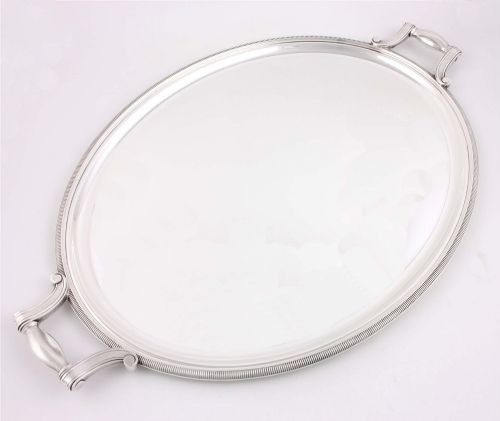
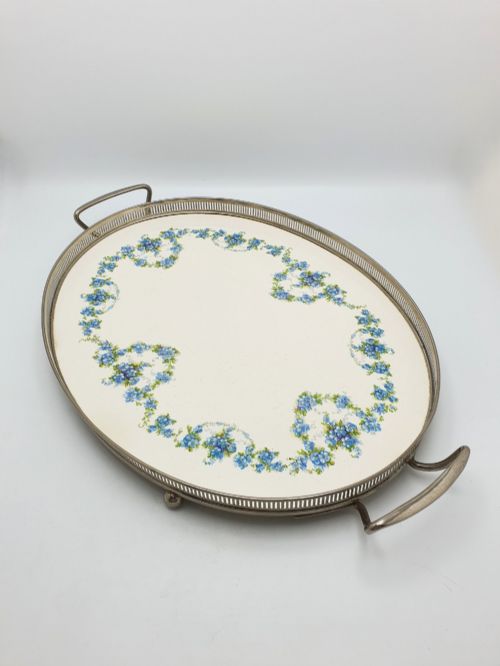
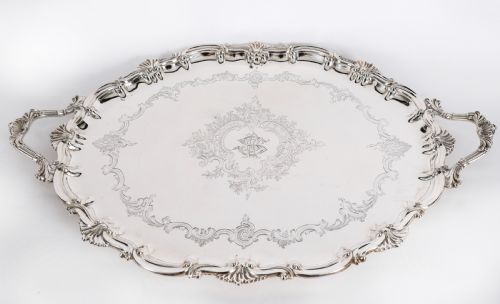
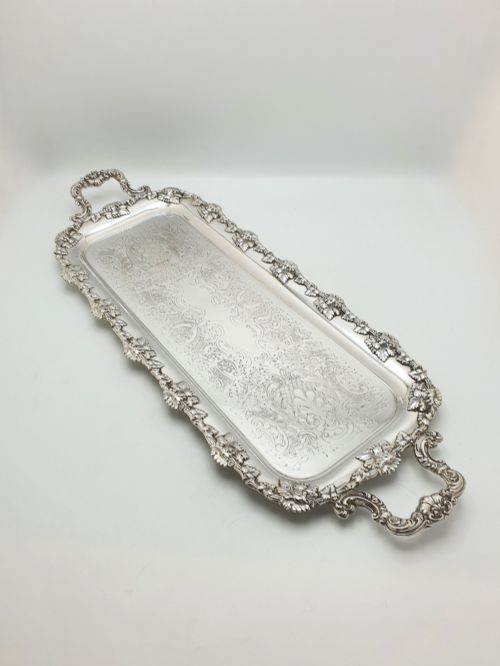
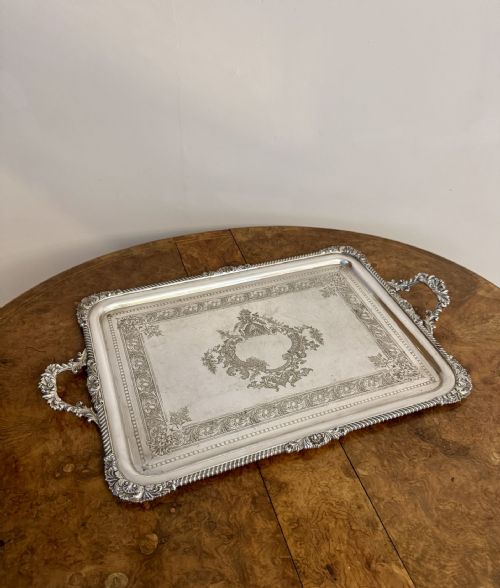
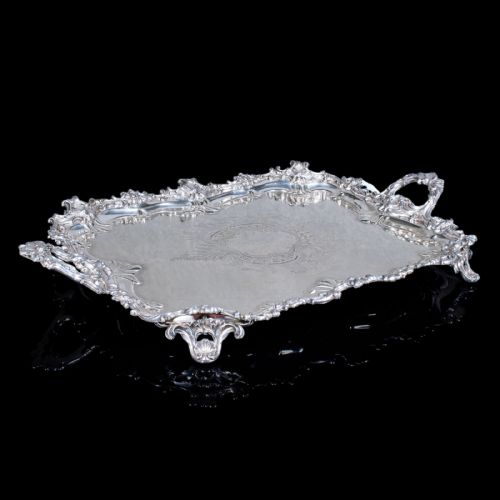
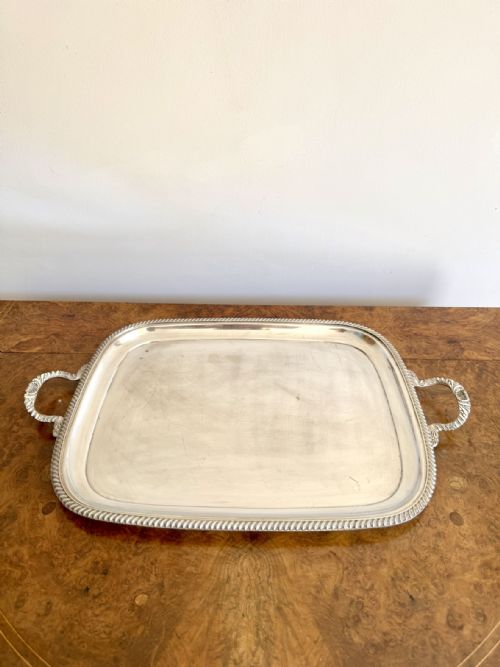
Silver tray handles appear across serving trays, galleries, and presentation platters spanning the Victorian, Edwardian, and Art Deco eras. Buyers searching for silver tray handles encounter items made from solid sterling silver or various silver-plated foundations, featuring grips integrated directly into the metal framework or applied as distinct decorative elements.
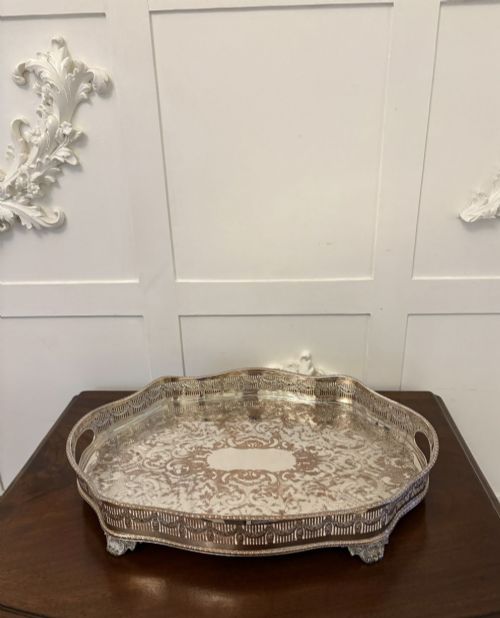
The pieces listed on this page range from large butler and cocktail trays with substantial cast handles to smaller gallery trays and bread baskets with pierced or wirework grips. Many examples originate from English workshops operating through the nineteenth and twentieth centuries, alongside continental and modernist productions.
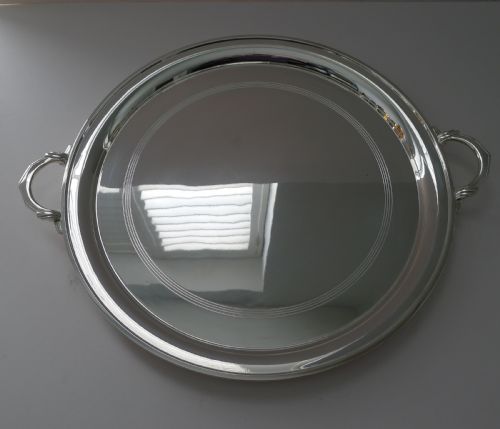
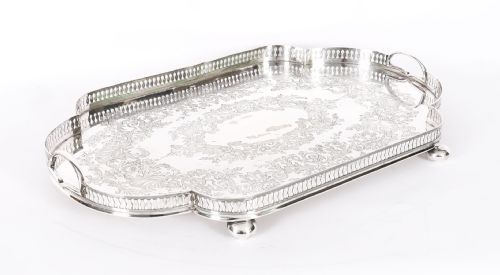
Common forms include oval serving trays with engraved centres, handled meat dishes, and round Art Deco designs where the handles follow the geometric flow of the rim. Every piece relies on its handles to balance the distribution of weight when carrying tea, drinks, or silver service.
How they were made
Makers utilised sterling silver or coated base metals such as nickel silver, copper, and EPNS using electroplating techniques developed during the nineteenth century. Silver plate applications were bonded to copper or white metal alloy foundations to provide the appearance and lustre of solid silver at a different scale of production.
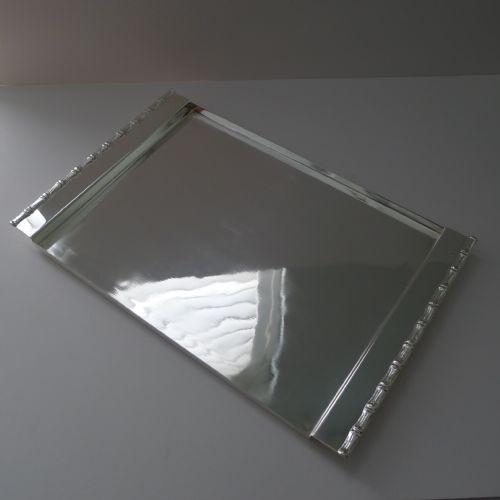
Handles were typically cast separately and soldered, riveted, or screwed onto the raised borders and rims of the trays. Techniques such as hand-engraving, piercing, and casting created floral, geometric, or naturalistic motifs like bamboo, coral, and grapevine around the grip areas.
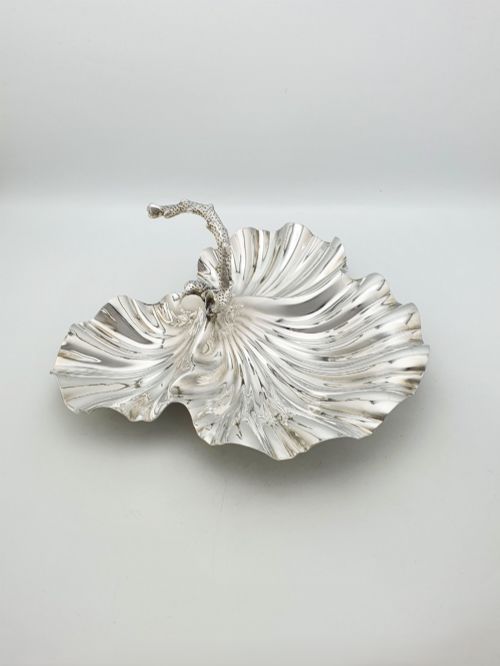
Several trays come equipped with handles shaped like organic bamboo, coral, or rustic grapevine.
What varies in quality
Quality rests in the weight of the metal and the integrity of the joinery where the handles meet the body of the tray. Thicker gauge silver plate and solid sterling silver retain their plating and structural rigidity better over decades of lifting and carrying.
The refinement of the casting and hand-engraving determines the visual depth of the borders and the comfort of the handle shape. Maker attribution to known silversmiths or established electroplate manufacturers also distinguishes standard domestic ware from exhibition-grade presentation pieces.
Keith Murray For Mappin And Webb·James Deakin·Christofle·Thomas Bradbury And Sons·John Hunt·Harrison Bros·Mappin And Webb·Elkington And Co·Barker Brothers
The Silver Tray Handles Glossary
- EPNS
- Electroplated Nickel Silver. This denotes a base metal alloy coated with a layer of silver through an electrolytic process.
- Gallery tray
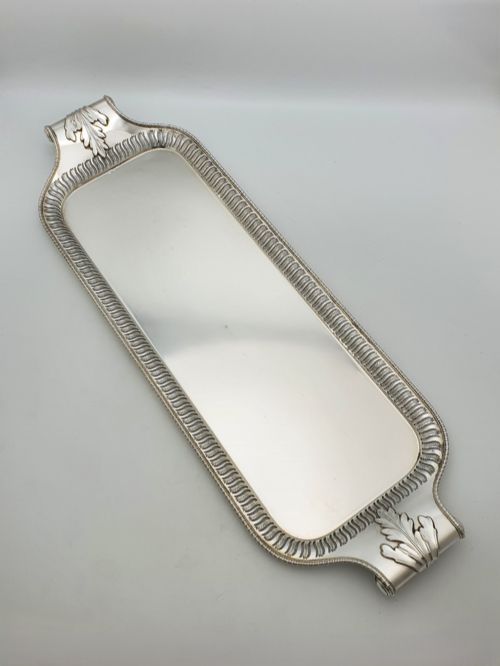
- A flat serving surface enclosed by an upright pierced or solid metal gallery rail. These architectural borders often incorporate handles into their structural design.
- Sheffield plate
- An early form of fused plating where a thin sheet of silver was melted onto a copper ingot before being rolled into sheets. This technique predates modern electroplating.
- Sauciere
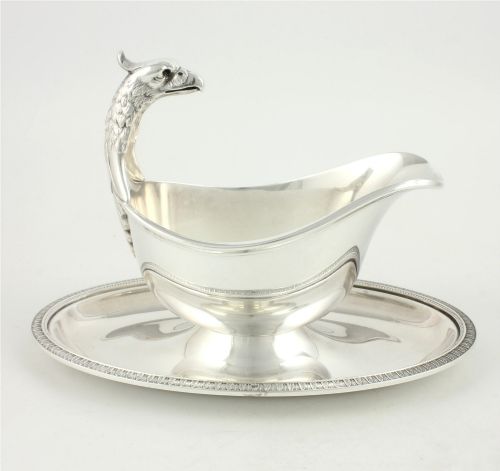
- A boat-shaped vessel designed for serving sauces and gravies, frequently incorporating a fixed handle and matching undertray.
Silver Tray Handles: Frequently Asked Questions
How do I clean silver plated handles?
Clean silver plated handles using a soft cloth and a specialised silver cleaner designed to preserve thin metallic coatings. Avoid abrasive pads that wear down the plating over time.
Store pieces in dry environments to prevent tarnishing and moisture accumulation around the soldered joints of the handles.
Were these trays used for serving drinks?
Many large oval and gallery trays served as butler trays or cocktail service pieces in Edwardian and Art Deco drawing rooms. Their sturdy handles accommodated the weight of decanters and glassware.
Smaller trays functioned primarily for afternoon tea service, calling cards, or presentation purposes.
How can I tell sterling silver from silver plate?
Examine the piece for British hallmark stamps indicating the lion passant, city mark, and date letter denoting solid sterling silver. Silver plate items usually display manufacturer marks such as EPNS or EP.
Weight and wear patterns also indicate the underlying metal, as worn plate reveals base copper or nickel underneath.
What periods are most common for these trays?
Victorian and Edwardian examples dominate the earlier portion of the inventory, showcasing ornate engraving and classical borders. Art Deco and mid-century designs appear frequently in later twentieth-century productions.
Georgian pieces represent the earliest manufacturing dates found in the collection.