



Sterling Silver Platter
These sterling silver platter pieces bring substantial weight and historic craft to any room, offering enduring utility alongside period elegance.
Sterling Silver Platter
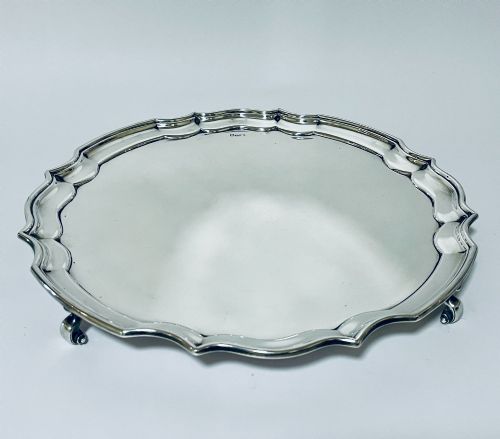
A sterling silver platter serves as a formal vessel for presentation and service, appearing across various historical eras from the eighteenth century through the twentieth. When exploring this selection, buyers encounter forms ranging from traditional salvers and trays to tazza footed bowls and large oval serving pieces.
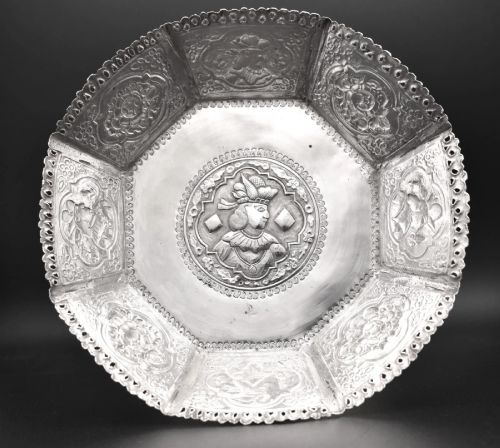
The objects present diverse regional characteristics, including English provincial work from Sheffield and York, Irish pieces, and colonial examples from India and Burma. Georgian, Victorian, and Edwardian periods dominate the selection, accompanied by later Art Deco designs.
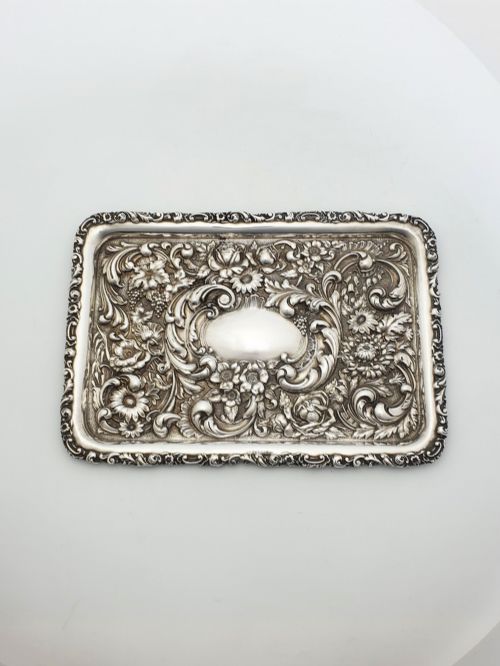
Makers mark many of these items, connecting them to established silversmiths and retail houses from London, Sheffield, and beyond. Pieces often feature specific decorative treatments, such as rococo floral repoussé or engraved surfaces, marking their status as functional art.
How they were made
Silversmiths constructed these items primarily in sterling silver, utilising hand-raising and casting techniques to achieve rigid forms and detailed borders. Many examples employ repoussé work, where artisans hammered designs from the reverse to create raised ornamental motifs on the surface.
Engraving frequently decorates the central fields or borders, executed by hand with sharp gravers to produce intricate geometric or floral patterns. Makers added cast borders and feet separately to heavier bodies, attaching them securely to support the weight of the silver.
Materials recorded across the inventory consist entirely of sterling silver and silver, incorporating regional styles from British workshops and international makers.
What varies in quality
Quality rests significantly on the clarity and completeness of the hallmarks, which verify the maker, town, and assay date of the silver. The crispness of the hand-chased repoussé work and the depth of any engraving distinguish finer pieces from standard production.
Substantial gauge metal provides a rigid, heavy feel that separates superior platters from lighter items prone to flexing. The integration of cast decorative borders and feet without distortion or excessive solder shows the skill level of the original workshop.
S.C. Younge & Co.·Robert Breading·Harrison Bros·Elkington & Co.·Tiffany & Co·James Fray·Paul Storr·Hunt & Roskell
The Sterling Silver Platter Glossary
- Salver
- A small or medium tray, usually standing on feet, used for presenting items or serving drinks. These pieces often feature shaped rims and engraved surfaces.
- Repoussé
- A metalworking technique where the artisan hammers the design from the reverse side to form raised relief patterns on the front. This method creates tactile floral and scroll ornamentation.
- Hallmark
- A series of stamped marks on precious metals indicating the standard of purity, the maker, the assay office, and the year of production. They provide the primary documentary evidence for dating.
- Tazza
- A shallow bowl or plate mounted on a stem and foot, used historically for serving small portions or display. Burmese and Anglo-Indian variants often take this footed form.
- Cast border
- An ornamental rim produced by pouring molten metal into a mould before attaching it to the main body of the tray. This adds structural rigidity and decorative weight.
Sterling Silver Platter: Frequently Asked Questions
How were sterling silver platters used?
These items served primarily for presenting documents, cards, or drinks in formal domestic settings. Wealthy households utilised them for daily service and grand entertaining alike.
Over time, many functioned as centrepieces on dining tables or sideboards, displaying the household's wealth through polished metal surfaces and heraldic engravings.
How do I clean a silver platter?
Maintenance requires mild silver polish and a soft cloth to remove tarnish without abrading the metal surface. Avoid harsh chemical dips that strip the natural dark highlights from engraved lines.
Regular washing in warm soapy water followed by immediate drying prevents water spots and keeps the silver bright during everyday display.
How can I tell a Georgian platter from a Victorian one?
Georgian pieces generally show cleaner, restrained neoclassical lines or early rococo revival forms, often accompanied by crisp, hand-punched hallmarks. Makers relied on distinct script and sovereign duty marks that shifted across reigns.
Victorian items frequently exhibit heavier, more ornate cast borders and deep repoussé floral work reflecting industrial advances in metal shaping and changing design tastes.
Are these platters safe for serving food?
Sterling silver is naturally non-toxic and serves safely for dry foods or cold items. Careful washing after use prevents acidic foods from pitting the delicate metal surface.
Many period items show surface wear from historical dining use, which adds character without hindering their continued function for modern presentation.