

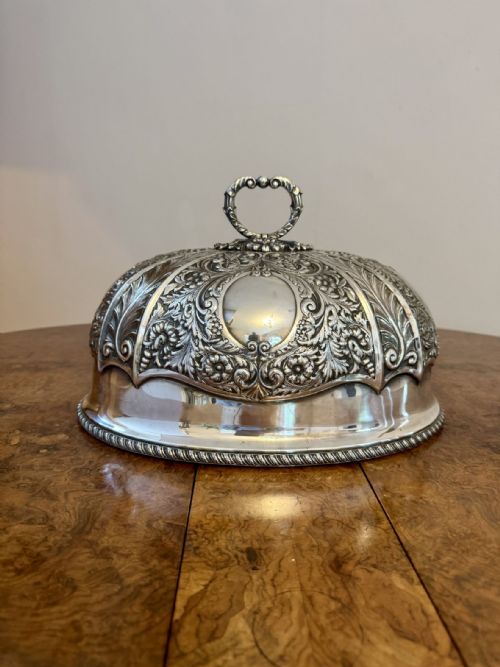


Engraved Silver Platter
An engraved silver platter brings centuries of fine metalwork to the table, offering a decorative surface for serving tea, meat or dry goods.
Engraved Silver Platter
When searching for an engraved silver platter, buyers encounter an array of serving dishes, salvers, tea trays, and meat domes spanning several centuries. The selection encompasses pieces from the Georgian, Victorian, and Edwardian eras, alongside Anglo-Indian and Middle Eastern examples.
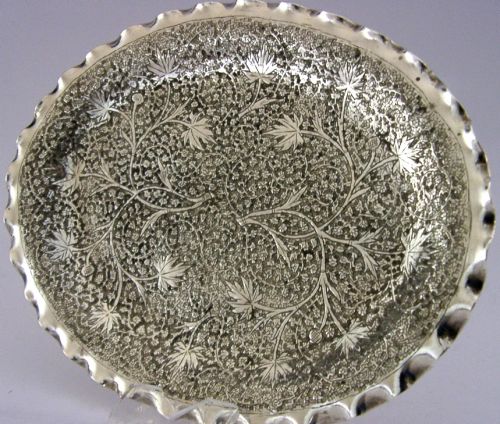
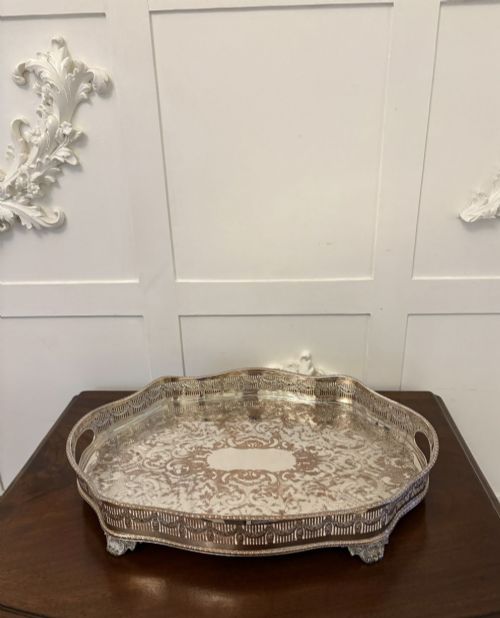
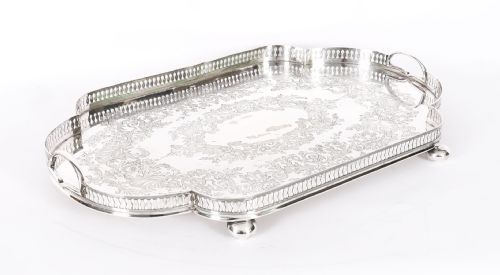
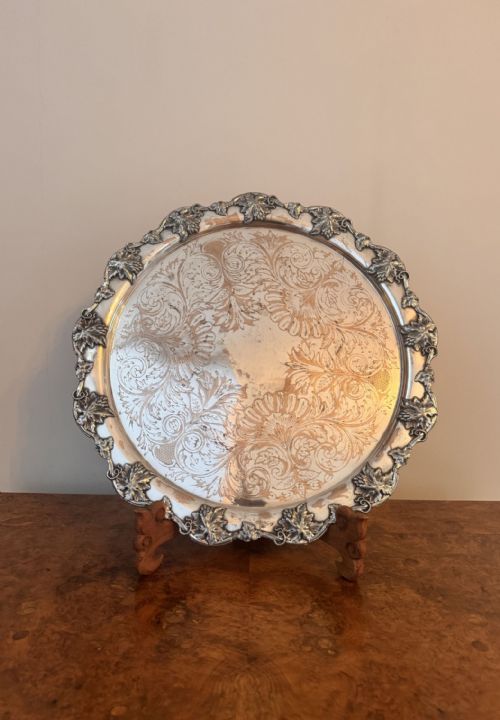
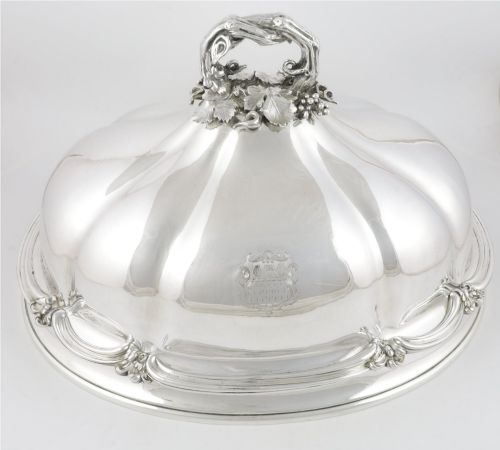
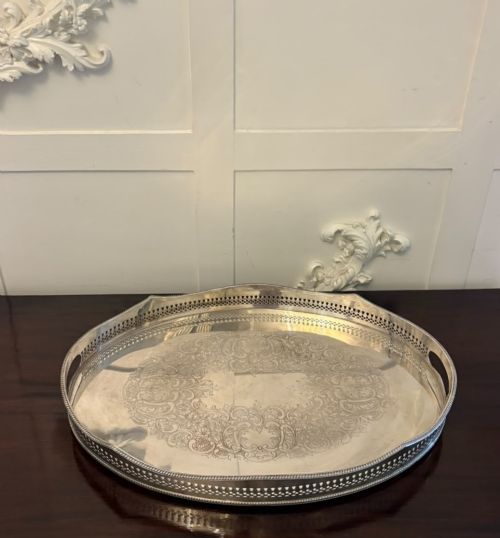
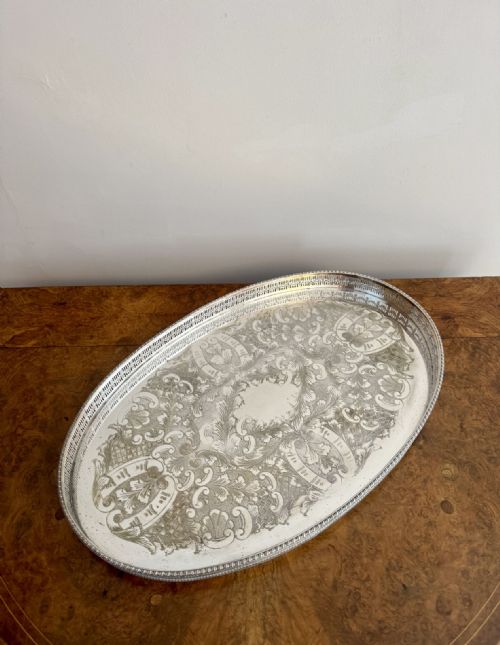
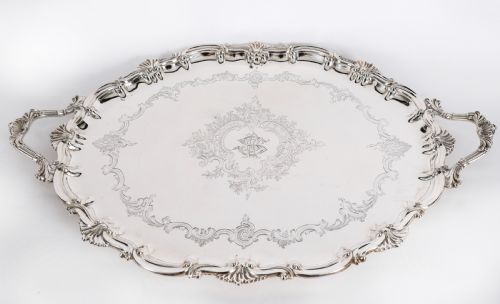
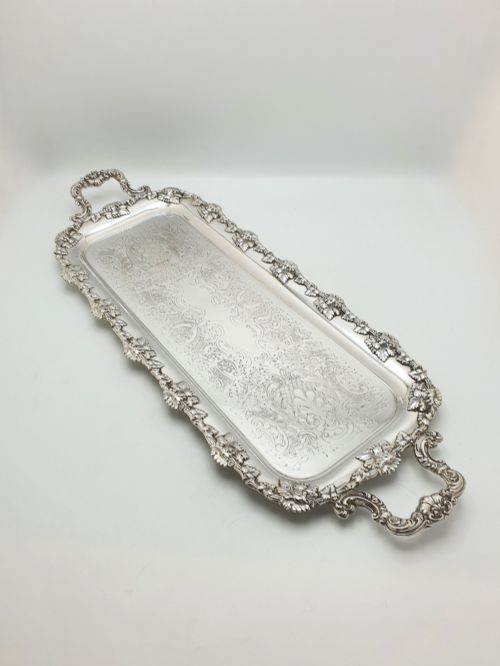
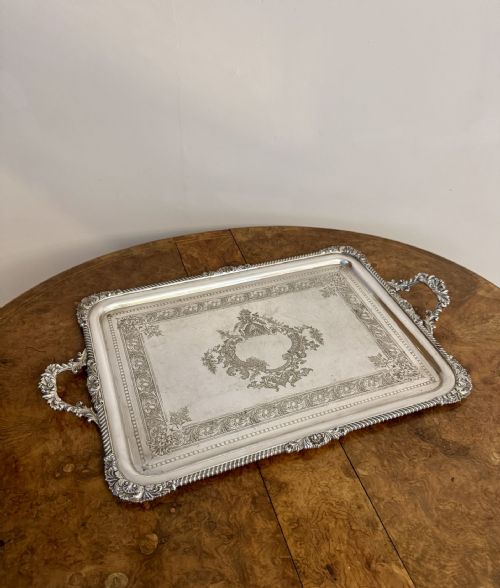
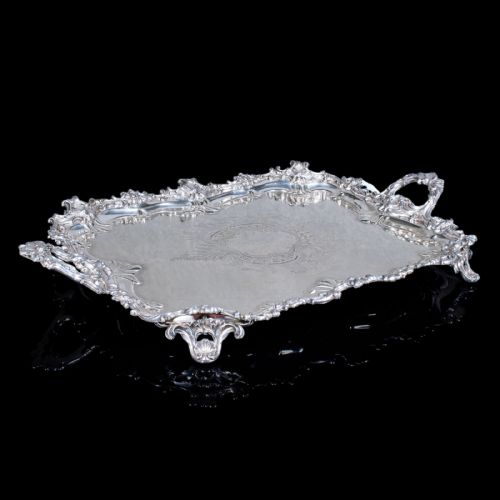
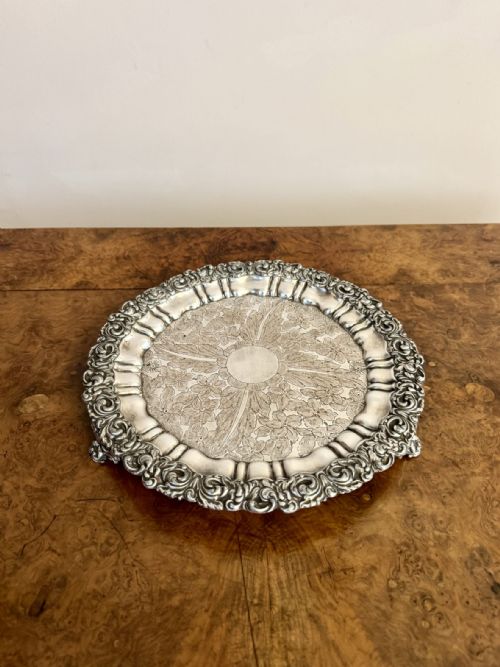
The most common items found in this category are silver-plated and Old Sheffield Plate serving trays, often decorated with floral engraving, grapevine borders, or embossed scrolls. Form follows function across these serving dishes, varying from circular salvers to large oval presentation trays with handles and galleries.
Origin and period dictate the character of each piece, ranging from English sterling silver items marked by regional makers to heavier plated items designed for nineteenth-century dining rooms. Platters range in scale from small card trays and chargers to substantial meat covers and afternoon tea trays.
Materials and construction methods
Master silversmiths and manufacturers worked primarily in sterling silver, silver plate, and Old Sheffield Plate, occasionally utilising copper, nickel silver, and EPNS. Old Sheffield Plate fused a thin layer of silver onto a copper base, creating durable vessels with distinct edge details.
Surface decoration relied on skilled hand engraving, floral chasing, and intricate embossed scrolls applied across the tray surfaces and raised rims. Makers also constructed gallery trays with pierced or cast openwork borders soldered to the base plates.
Engraved Silver Platter Retail Price Guide 2026
Typical asking prices for engraved silver platter among the pieces listed under this phrase on Sellingantiques today, from the lower quarter to the upper quarter. They describe what is for sale here now, not the wider market.
Listings feature items in silver plate, sterling silver, copper, and Old Sheffield Plate spanning the Georgian, Victorian, and Edwardian periods.
Assessing quality in antique platters
Depth and crispness of the hand engraving distinguish superior platters from standard production items, as shallow or worn chasing suggests heavy polishing over generations. The weight of the metal and the rigidity of the tray body also indicate the standard of manufacture.
Makers known for exceptional output, such as Matthew Boulton or Mappin & Webb, maintained rigorous standards in plating thickness and structural soldering. The survival of original silver plating on copper or base metals without significant wear or core telegraphing remains a key indicator of preservation.
James Deakin·Mappin & Webb·Thomas Bradbury & Sons·John Harrison·Henry Wilkinson·Matthew Boulton·Robert Breading·Harrison Bros·Christofle
The Engraved Silver Platter Glossary
- Salver
- A flat tray, typically with feet, used for serving glasses or documents. These circular or shaped dishes often feature chased central engraving.
- Old Sheffield Plate
- A composite material made by fusing silver to a copper core before rolling into sheets. This technique predates modern electroplating and leaves a characteristic copper seam visible on raw edges.
- Meat Dome
- A large domed cover used to keep roast joints warm on a serving platter. They frequently feature engraved family crests or decorative handles.
- Gallery Tray
- A serving tray featuring a pierced, vertical metal gallery or railing around the perimeter. These borders prevented items from sliding off during service.
Engraved Silver Platter: Frequently Asked Questions
What is an engraved silver platter used for?
These vessels served various functions in formal dining and entertaining, from presenting afternoon tea to holding roast meats under domes.
Over time, owners also utilised larger trays for display on sideboards or as presentation pieces for civic and domestic events.
How do I clean an antique silver tray?
Maintenance requires mild silver polish applied gently with a soft cloth to preserve the underlying engraving and plating.
Harsh abrasive dips must be avoided, particularly on Old Sheffield Plate where excessive cleaning can wear through the thin silver layer to the copper beneath.
What is the difference between silver plate and sterling silver?
Sterling silver consists of solid precious metal marked with official hallmarks indicating purity, whereas silver plate applies a thin layer of silver over a base metal such as copper or nickel silver.
Plated items offer the visual appeal of solid silver at a different weight and historical price point.
How can I date an engraved silver platter?
Dating relies on maker marks, town hallmarks, and registration numbers stamped into the metal, which can be cross-referenced with silversmith records.
Stylistic indicators such as Victorian grapevine borders, Georgian scrollwork, or Edwardian gallery designs also help narrow down the period of manufacture.