
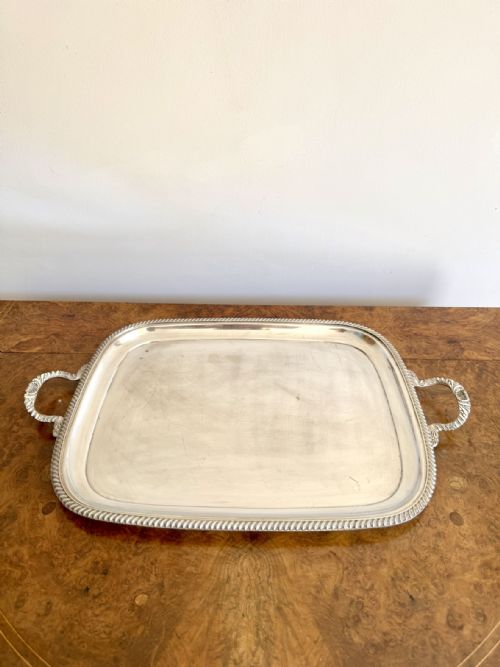
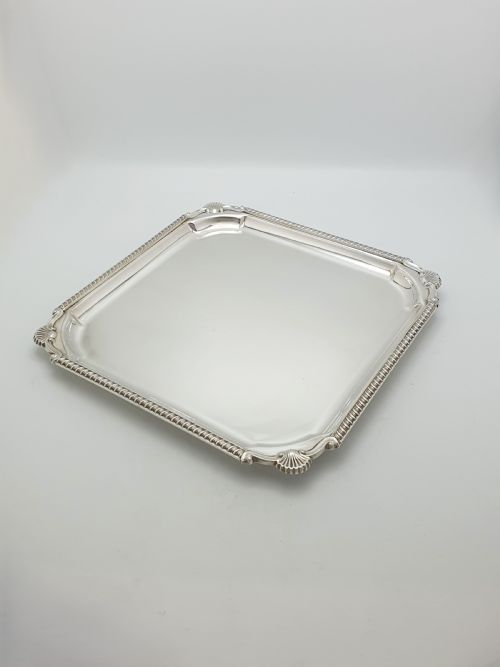


Gadrooned Silver Platter
A gadrooned silver platter brings distinctive edge-moulding to the table, offering a durable serving surface that grounds any formal dining arrangement.
Gadrooned Silver Platter
A gadrooned silver platter is a serving vessel defined by its decorative notched or fluted edge, appearing across domestic serving trays, dinner plates, and entree dishes. When searching for a gadrooned silver platter, a buyer encounters forms ranging from Georgian serving dishes to Edwardian rectangular entree dishes and Art Deco cocktail trays.
How they were made
These items rely on core metals such as copper and sterling silver, frequently enhanced through methods like Old Sheffield Plate or electroplating to achieve a durable silver finish. Makers apply the distinctive gadrooned border along the outer rim, shaping the metal manually or utilising industrial techniques depending on the period.
The construction of a dinner plate or serving dish involves hammering, rolling, or pressing the base material before soldering or fusing the decorative edging into place. Workshops combine solid silver, copper, and silver plate to balance weight, appearance, and everyday utility.
Listings span the eighteenth, nineteenth, and twentieth centuries, incorporating Georgian, Victorian, Edwardian, and Art Deco design periods.
What varies in quality
The standard of a platter rests upon the crispness of the border detail and the preservation of the underlying metal beneath the silver layer. Pieces demonstrating robust weight and precise edge-moulding separate finer workshop output from simpler mass-produced alternatives.
Makers' marks and hallmarks provide clear indicators of origin and material integrity, distinguishing stamped sterling silver from plated copper wares. The harmony of proportions and the smoothness of the central well further determine the distinction between ordinary utility items and superior dining table centerpieces.
Matthew Boulton·Robert Breading·Elkington and Co·Frank Cobb and Co
The Gadrooned Silver Platter Glossary
- Gadroon
- A decorative carved or embossed border pattern consisting of continuous convex curves or flutes. It frequently decorates the outer rim of silver platters and serving dishes.
- Old Sheffield Plate
- An early method of fusing a thin sheet of sterling silver to a thicker copper core by heat and pressure. This technique produces durable domestic wares characteristic of eighteenth and nineteenth-century manufacturing.
- EPNS
- Electroplated Nickel Silver, a base alloy of nickel, copper, and zinc coated with a layer of pure silver through an electrolytic process. It became widespread for tableware production from the mid-nineteenth century onwards.
- Entree dish
- A covered serving vessel designed for presenting main courses or secondary dishes at the dining table. These rectangular or circular dishes often feature removable handles and matching gadrooned borders.
- Salver
- A flat tray, typically made of silver or silver plate, used for serving drinks or presenting items. They usually rest upon small feet or a raised flat base rather than deep sides.
Gadrooned Silver Platter: Frequently Asked Questions
What is a gadrooned border?
A gadrooned border is a decorative, rounded moulding that runs along the outer edge of a tray or plate. It provides a tactile, textured finish that catches the light during dining.
This ornamental detail appears frequently on traditional tableware, adding weight and definition to the profile of serving platters.
How were old serving platters used?
These vessels served meals at formal dining tables, carrying meats, entrees, and side dishes from the kitchen. They protected table surfaces and presented food with appropriate ceremony.
Beyond dining, larger trays functioned as salvers for drinks or letters, remaining on display on sideboards when not in active service.
Can I use silver plated platters daily?
Silver plated and sterling silver platters withstand regular use provided they receive gentle cleaning with appropriate silver care products. Avoiding abrasive materials preserves the delicate plating over the underlying copper or nickel.
Many households incorporate these durable historic items into modern dining routines, enjoying their functional heritage alongside contemporary tableware.
How do I identify the period of a platter?
Makers' marks, style indicators, and manufacturing methods reveal the era in which a platter was produced. Georgian and Victorian pieces often display distinct weight, hand-finished details, and specific assay office symbols.
Comparing the border style and metal composition against known historical timelines helps determine whether a piece originates from the eighteenth, nineteenth, or early twentieth century.