




Antique Silver Meat Platters
These antique silver meat platters and associated domes offer grand dining presence, combining robust serving utility with exceptional period craftsmanship.
Antique Silver Meat Platters
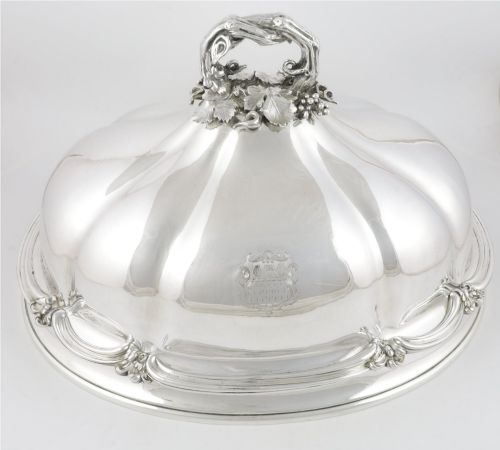
When you search for antique silver meat platters, you encounter large serving vessels, warming dishes, and substantial meat domes spanning the Georgian, Victorian, and Edwardian eras. These domestic items formed the centrepiece of formal dining tables, designed to present substantial joints of meat while keeping the food warm.
How they were made
The earlier items rely heavily on Old Sheffield Plate, a process fusing a thin sheet of silver to a thicker copper core. This technique leaves characteristic copper edges and tells the story of sophisticated 18th and 19th century metallurgical methods.
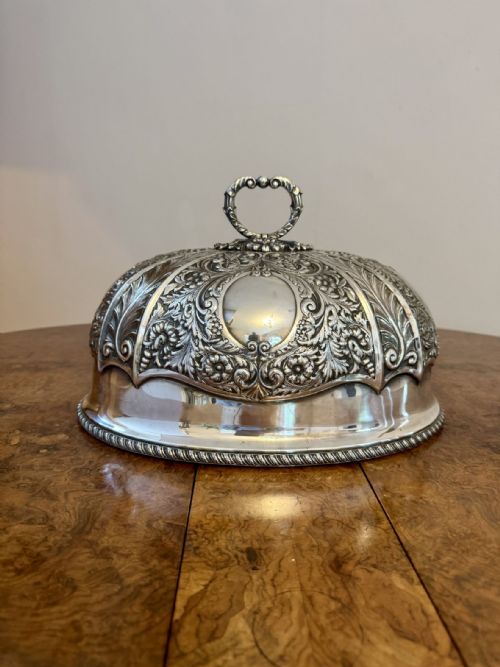
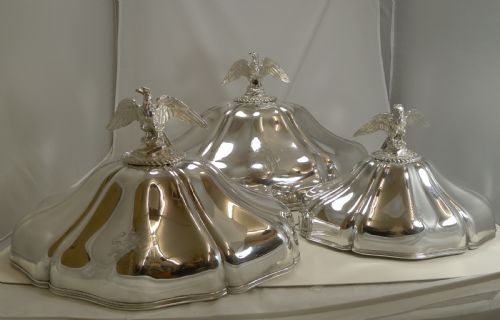
Later pieces utilise solid silver or base metals with electroplated silver, known as EPNS. Manufacturers applied detailed chased decoration, engraved armorial crests, and applied handles often cast in the form of eagles or foliage.
Listings span the 18th, 19th, and early 20th centuries, incorporating Georgian, Regency, Victorian, and Edwardian stylistic influences across Britain and France.
What varies in quality
Weight and gauge set the foundation for quality, particularly in solid silver platters where heft denotes substantial silver content. In Old Sheffield Plate, the integrity of the fused metal and minimal bleed of the underlying copper dictate the standard.
Artistry in the handles, cast ornament, and engraved crests distinguishes standard domestic wares from bespoke commissions associated with prominent makers or noble houses. Preservation of the original silver surface without excessive wear or replating adds distinction.
Roberts Cadman·Henry Wilkinson·Robert Breading·Boulton·Puiforcat·Durand Paris
The Antique Silver Meat Platters Glossary
- Old Sheffield Plate
- A composite material made by fusing a sheet of silver to a copper ingot. This predates electroplating and exhibits subtle copper lines at exposed edges.
- Mazarine
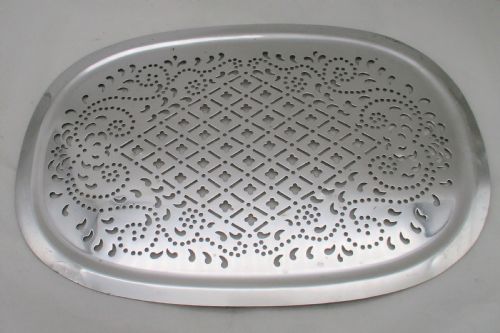
- A pierced insert placed inside a platter to drain juices away from the meat. These trays help keep roasted joints elevated during service.
- Meat Dome
- A large, bell-shaped cover designed to fit over a platter. They retain heat and keep food protected at the dining table.
- EPNS
- Electroplated Nickel Silver. This method became common in the 19th century for coating base metals with a thin layer of silver.
- Sterling Silver
- An alloy consisting of silver and other metals, typically copper, standardised for durability and high silver purity.
Antique Silver Meat Platters: Frequently Asked Questions
What is the difference between a meat dome and a platter?
A platter is the flat tray or dish upon which the joint of meat rests during service.
A meat dome is the large cover placed over the platter to trap heat and protect the food until carving.
How were Old Sheffield Plate platters made?
Old Sheffield Plate was created by thermally fusing a thin layer of silver onto a thick copper block before rolling them into sheets.
This fusion technique differs entirely from later electroplating and leaves distinct visual markers along cut edges.
What is a mazarine used for?
A mazarine is a pierced draining plate that sits directly on top of the serving platter.
It allows meat juices to collect underneath so the joint stays elevated and dry during presentation.
How do I care for antique silver and plated tableware?
These pieces require gentle cleaning with non-abrasive silver polishes to preserve the delicate plating and original surface.
Regular handling helps maintain the natural patina accumulated over centuries of use.