

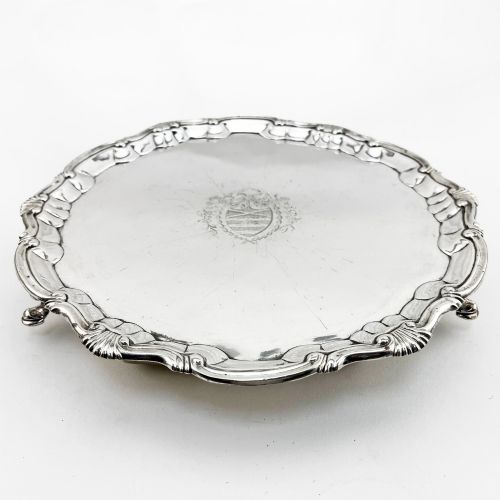
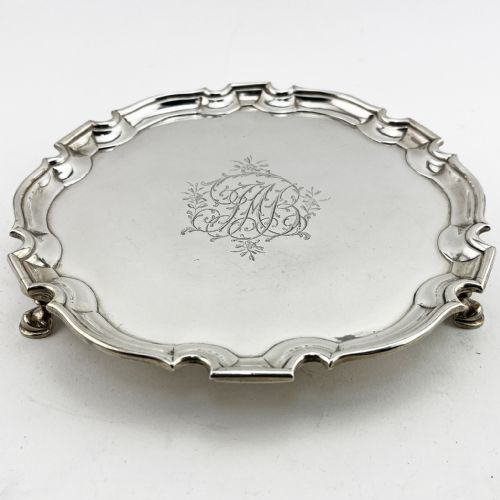
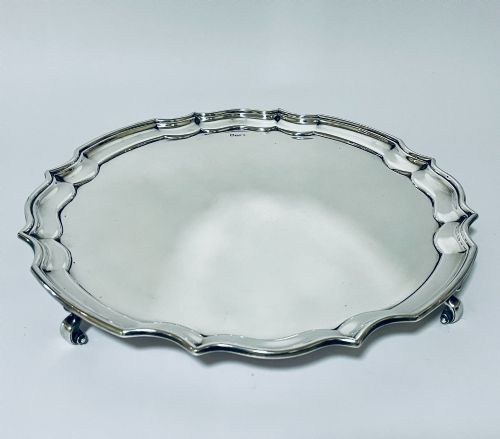


Solid Silver Serving Tray
A solid silver serving tray commands a room with its weight and polish, built to carry glasses or courses with absolute stability.
Solid Silver Serving Tray
A solid silver serving tray encompasses varied forms including salvers, platters, bread dishes, and drinks trays spanning from the eighteenth century through the twentieth century. These pieces emerge in Georgian, Victorian, Edwardian, and Art Deco styles, reflecting the prevailing design sensibilities of their respective eras.
The versions most commonly met on this page include sterling silver salvers and serving dishes, often featuring traditional handles, pierced borders, or engraved surfaces. Makers from England, Ireland, France, and America shaped these items to serve functional roles in dining and hospitality.
Assessing quality
Quality in a solid silver serving tray depends upon the crispness of the chasing, the thickness of the metal plate, and the integrity of any applied borders or feet. Heavier gauge silver resists bending and retains sharper detail in engraved crests or floral motifs.
The reputation of the maker and the clarity of the hallmarks elevate certain examples above standard production pieces. Work by renowned firms or identifiable silversmiths demonstrates superior balance, proportion, and finishing craftsmanship.
Solid Silver Serving Tray Retail Price Guide 2026
Typical asking prices for solid silver serving tray among the pieces listed under this phrase on Sellingantiques today, from the lower quarter to the upper quarter. They describe what is for sale here now, not the wider market.
Listings span from George II pieces dated seventeen-hundred up to Art Deco designs of the nineteen-thirties.
Robert Abercromby·Robert Breading·Tiffany & Co·Martin Hall·Puiforcat·Walker & Hall
The Solid Silver Serving Tray Glossary
- Salver
- A flat tray, typically with feet, used for serving glasses or documents. These pieces often feature scalloped edges or engraved centres.
- Hallmark
- A mark or series of marks stamped on articles of gold, silver, and platinum. They indicate the standard of purity, the maker, and the year of assay.
- Pierced
- Work decorated by cutting or piercing patterns through the metal. This technique creates lightweight openwork borders on dishes and trays.
- Sterling silver
- An alloy of silver containing ninety-two point five percent by mass of silver and seven point five percent by mass of other metals. This standard ensures structural rigidity for functional tableware.
- Platter
- A large flat dish or tray used for serving meat or fish at the table. Platters frequently appear in oval or rectangular forms with raised rims.
Solid Silver Serving Tray: Frequently Asked Questions
What is the difference between a salver and a tray?
A salver traditionally describes a flat serving vessel supported by small feet, often utilised for drinks or calling cards in formal settings.
Trays generally include handles and broader surfaces designed for carrying multiple items across a room.
How do I care for solid silver serving trays?
Maintenance requires occasional polishing with a soft cloth and a dedicated silver cleaner to remove tarnish without abrading the metal surface.
Storing the items in dry conditions away from direct sunlight preserves the original polish and prevents oxidation.
Can these trays be used for daily dining?
Solid silver is durable enough for regular use, provided soft implements are used to avoid scratching the polished surface.
Many collectors prefer to use them for special occasions or display them on sideboards when not in active service.
How are the dates determined?
Dating relies primarily upon official hallmarks stamped into the metal, which record the specific year letter for the assay office.
Stylistic elements such as Georgian borders or Art Deco geometric handles provide further confirmation of the period.