
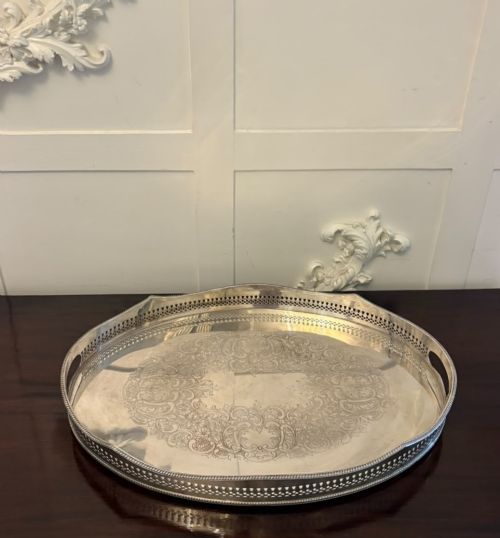
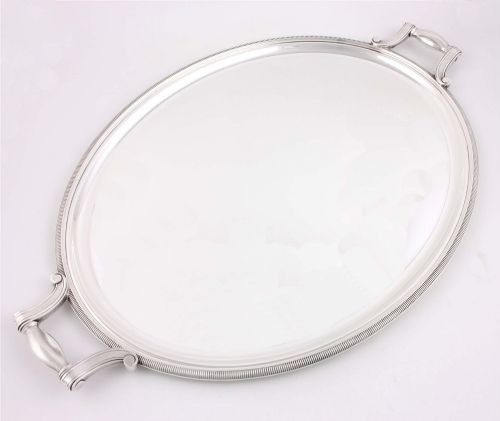

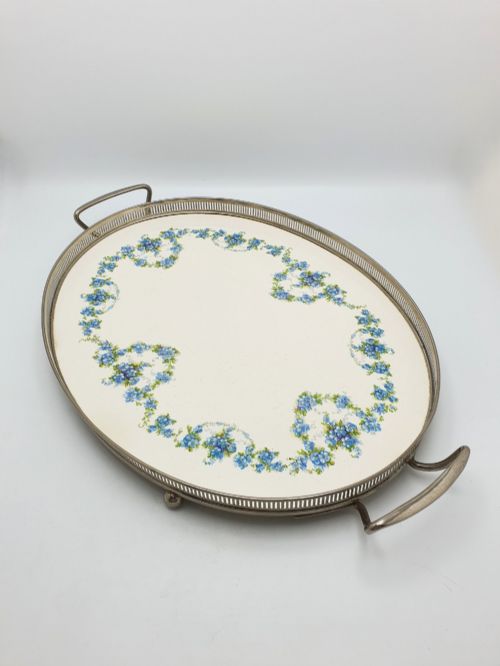
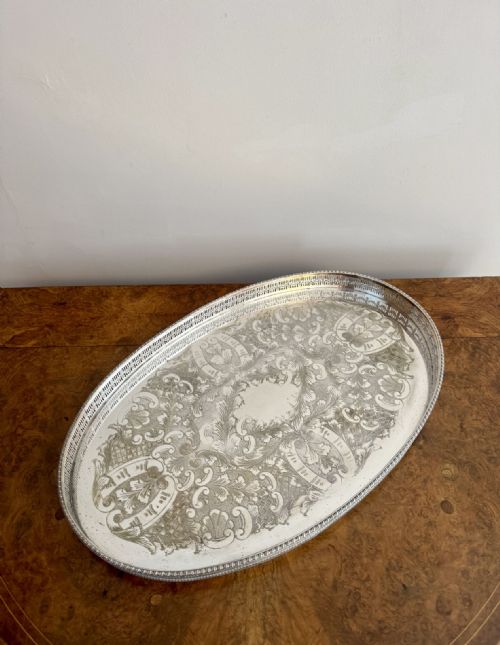
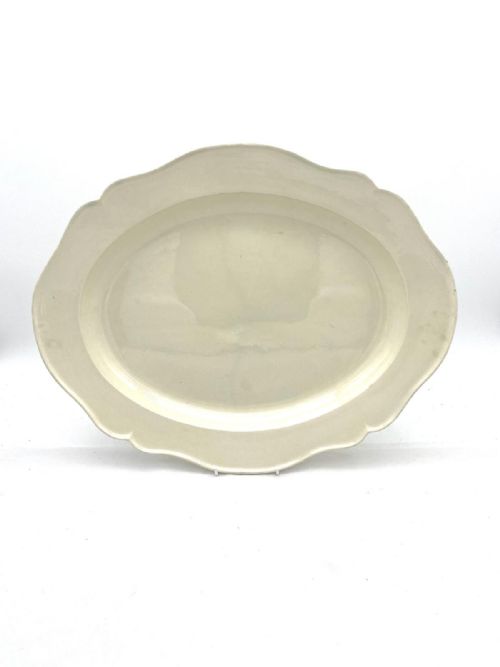
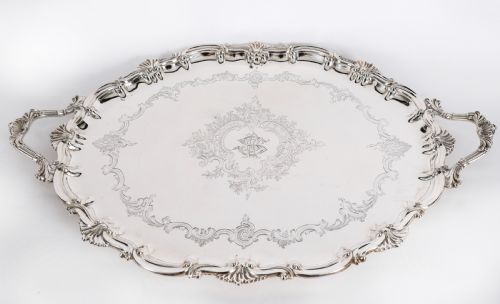


Silver Oval Serving Platter
A silver oval serving platter brings both presence and function to a table, offering a polished stage for everything from roasts to drinks.
Silver Oval Serving Platter
A silver oval serving platter spans centuries of dining traditions, ranging from Georgian sterling silver pieces to Edwardian silver-plated iterations. You encounter these items in various forms on this page, including large cocktail trays, engraved tea trays, and deep meat platters.
Makers shaped these items for practical dining as well as display, utilising durable base metals and ceramics alongside precious silver. The selection includes substantial George III platters alongside later Art Deco designs from notable international silversmiths.
Methods and materials
Craftsmen utilised sterling silver, silver plate, and Old Sheffield plate, often building form around sturdy base metals or incorporating ceramic creamware bodies. Electroplated nickel silver and EPNS became common methods for achieving a bright finish during the nineteenth and twentieth centuries.
Decoration relied on hand engraving, intricate embossed scrolls, and applied gallery borders. Silversmiths hammered, shaped, and soldered handles onto heavy metal blanks to create durable serving vessels.
One exceptional piece on record travelled all the way to the World Fair in Chicago during 1893 before finding its way to collectors today.
Markers of distinction
Quality rests heavily on the crispness of the engraved detail and the weight of the metal used in the construction. Pieces bearing clear hallmarks from established makers demonstrate superior metal purity and structural integrity.
The durability of the silver plating relative to the underlying base metal dictates longevity. Thicker application of silver and robust handle attachments separate everyday utility pieces from fine presentation items.
Mappin & Webb·Christofle·Thomas Bradbury & Sons·Henry Wilkinson·Walker & Hall·Robert Breading·Harrison Bros Sheffield·Elkington & Co·Tiffany & Co·Asprey·Roberts & Belk
The Silver Oval Serving Platter Glossary
- Sterling silver
- A silver alloy containing 92.5 percent pure silver by mass and 7.5 percent other metals, usually copper. This standard ensures appropriate durability for domestic tableware.
- Old Sheffield plate
- An early method of fusing a thin sheet of sterling silver to a thicker copper ingot by heat and pressure. It creates a distinctive dual-metal material found in older serving items.
- EPNS
- Electroplated nickel silver, which denotes a base metal alloy of copper, nickel, and zinc coated with a layer of pure silver through electrolysis. It provides the appearance of solid silver at a lower production cost.
- Creamware
- A refined earthenware developed in Yorkshire featuring a pale yellow or creamy glaze. It appears alongside metal wares in serving dishes and chargers from the eighteenth century.
- Salver
- A flat tray, typically made of silver, used for presenting items such as letters, glasses, or visiting cards. They share overlapping forms with serving platters in historical inventories.
Silver Oval Serving Platter: Frequently Asked Questions
What is the difference between sterling silver and silver plate?
Sterling silver consists of solid precious metal throughout the entire piece, marked by official assay office stamps. Silver plate applies a thin layer of silver over a base metal such as copper or nickel silver.
Heavier sterling items generally retain intrinsic metal value over time. Plated pieces offer the same reflective surface for dining without the higher cost of solid silver.
How were these platters used historically?
These pieces served practical roles in carrying roasted meats, tea sets, or cocktail decanters across dining rooms and drawing rooms. Large trays with handles allowed servants to transport heavy dinner services securely.
Presentational platters also functioned as decorative centerpieces on sideboards when not actively serving food or drink.
How do I care for a silver platter?
Regular dusting and occasional gentle cleaning with a specialist silver polish prevent tarnish accumulation. Avoid harsh abrasive cloths that might scratch the soft metal surface or wear through plated layers.
Hand washing in warm soapy water with a soft sponge preserves the finish. Thorough drying immediately afterwards prevents water spots from forming on the metal.
How can I tell the period of a piece?
Makers marks, hallmarks, and style indicators provide the most reliable dating evidence. Georgian and Victorian pieces often feature specific duty marks and maker initials corresponding to historical registration records.
Stylistic shifts, such as the geometric lines of Art Deco or the floral motifs of Edwardian design, help narrow down the decade of manufacture.