




Vintage Silver Cocktail Tray
A vintage silver cocktail tray brings the geometric elegance of the interwar bar into contemporary rooms.
Vintage Silver Cocktail Tray
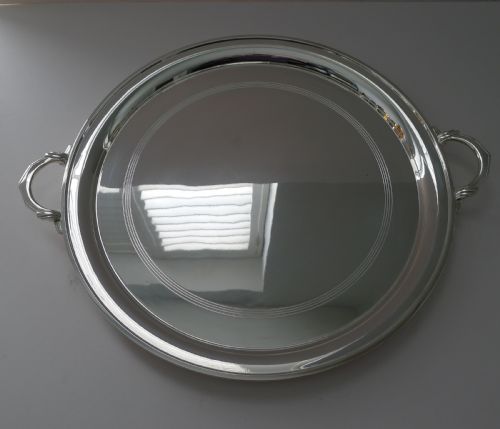
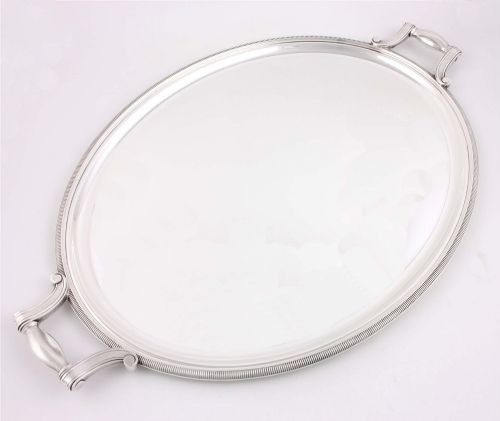
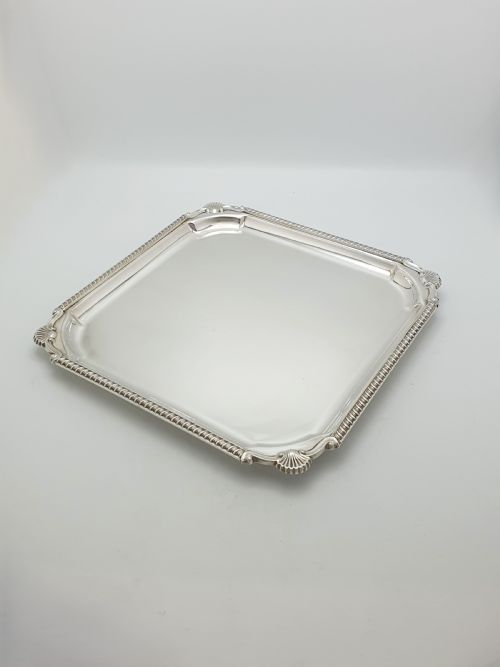
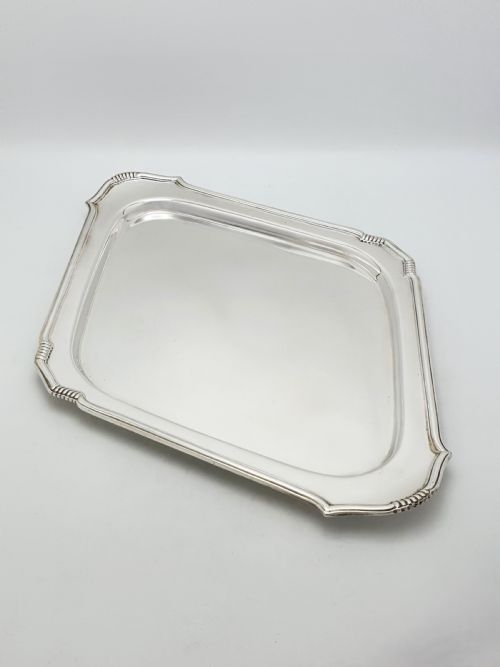
A vintage silver cocktail tray is a serving piece designed for glassware, decanters, and barware during the twentieth century. These objects include circular, oval, square, and diamond-shaped vessels intended for social entertaining.
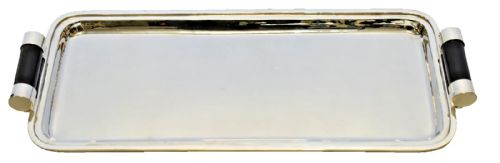
The selections span from Edwardian models and the 1900s through the interwar years to Mid-Century Modern designs. Pieces frequently incorporate handles, gallery rails, or borders for secure beverage transport.
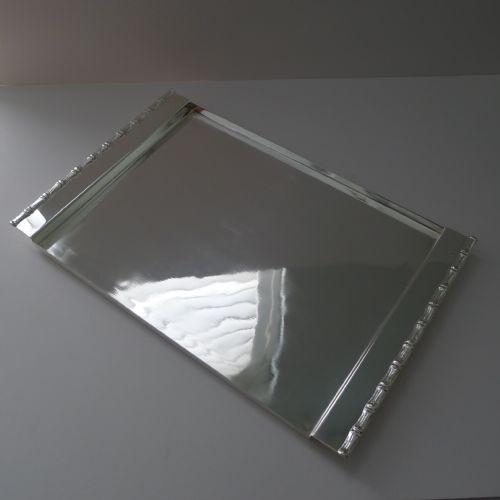
Art Deco iterations dominate the selection, showing geometric lines, stylized borders, and clean profiles characteristic of the 1920s and 1930s. Other examples draw on French Rococo Revival or modernist idioms with bamboo-form handles and clean planes.
Materials and construction
Makers utilised silver plate, electroplated nickel silver, and base metal foundations to shape the primary body of each vintage silver cocktail tray. These metallic surfaces received polished finishes, engine-turned patterns, or intricate embossed scrolls.
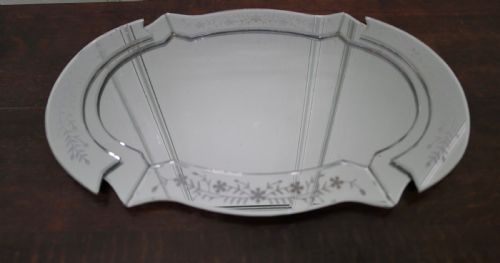
Many designs integrate glass or mirror inserts, including Venetian cut glass and cobalt blue mirror panels secured within metal frames. Handles and decorative borders were cast separately and soldered or riveted to the main body.
Several trays include cobalt blue mirror glass, proving that interwar cocktail hour favored a touch of dramatic colour.
Craftsmanship and weight
Quality rests in the substantial gauge of the metal foundation and the crispness of chased or embossed ornament. Heavier specimens maintain rigidity under the weight of heavy crystal decanters without flexing.
Execution of decorative elements distinguishes standard production from finer workshop output, particularly in the precision of gallery rails and handle joints. Silver plating thickness and the preservation of original mirror surfaces dictate the longevity of the piece.
Keith Murray For Mappin & Webb·Hukin & Heath·Walker & Hall·James Dixon & Sons·Roberts & Dore·Victor Saglier
The Vintage Silver Cocktail Tray Glossary
- EPNS
- Electroplated nickel silver, a common metallic base for silver plated items. This designation indicates a layer of silver deposited onto a durable nickel alloy core.
- Gallery tray
- A serving vessel featuring a low, pierced or solid gallery rail around the perimeter. This raised border prevents glassware from sliding off during movement.
- Engine-turned
- A decorative technique involving precise geometric patterns mechanically engraved into metal. This surface treatment diffuses light and conceals minor handling marks.
- Salver
- A flat metal serving plate or tray typically supported on small feet. These pieces historically served drinks or letters.
- Silver plate
- A thin coating of pure silver bonded to a base metal foundation such as nickel silver or copper. This process provided the visual appeal of solid silver at a lower production cost.
Vintage Silver Cocktail Tray: Frequently Asked Questions
How do I clean my silver tray?
Maintenance requires a soft cloth and a specialised silver polish formulated to preserve plated surfaces. Gentle circular motions remove tarnish without abrading the underlying metal.
Water and harsh chemical immersion should be avoided, particularly on pieces containing mirror glass inserts or wooden elements. Immediate drying prevents moisture pooling around soldered joints.
Can I use these trays for serving drinks?
These serving vessels function effectively for carrying glassware, bottles, and bar accessories during social gatherings. The solid metal construction and integrated handles provide stable transport.
Protection against acidic liquids like citrus juice preserves the silver plate and mirror surfaces. Placing coasters underneath wet glasses prevents prolonged moisture contact.
How do I date a silver tray?
Dating relies on stylistic markers such as geometric Art Deco motifs from the 1930s or Edwardian scrollwork from the early 1900s. Maker marks stamped on the base often link pieces to known manufacturing periods.
Techniques like engine-turning and the choice of handle geometry also align with specific manufacturing decades. Comparing maker stamps against historical trade directories clarifies the production window.
What is the difference between silver plate and sterling?
Silver plate consists of a thin layer of pure silver applied over a base metal core such as nickel silver. Sterling silver is a solid alloy containing a high proportion of pure silver throughout its entire mass.
Most items in this category utilise silver plating rather than solid precious metal. Maker marks on plated pieces typically include specific acronyms distinguishing them from solid silver hallmarks.