




Engraved Silver Drinks Tray
An engraved silver drinks tray brings weight and surface detail to a gathering, moving easily from tea service to a cocktail display.
Engraved Silver Drinks Tray
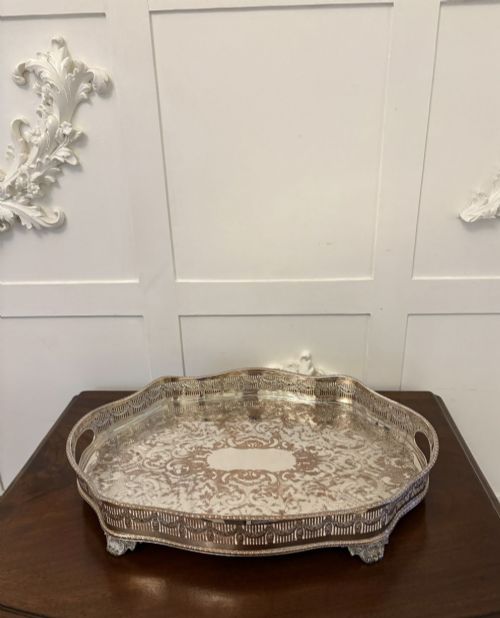
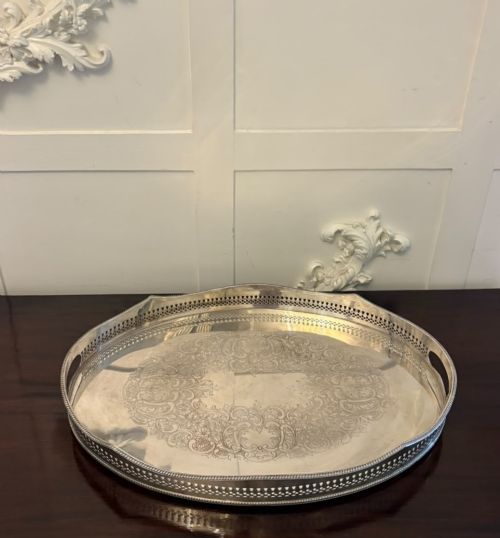
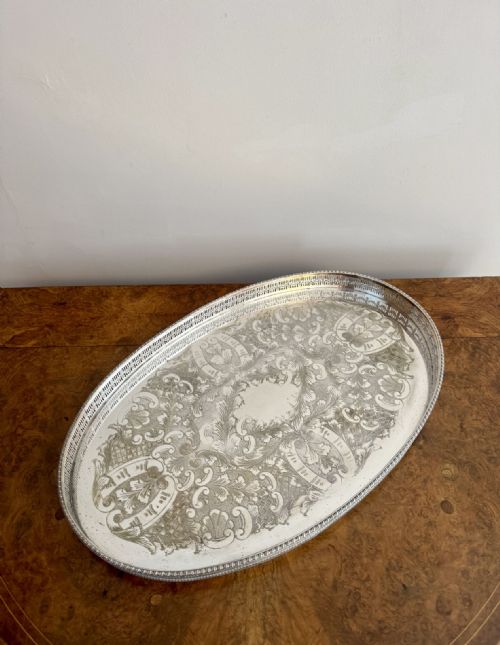
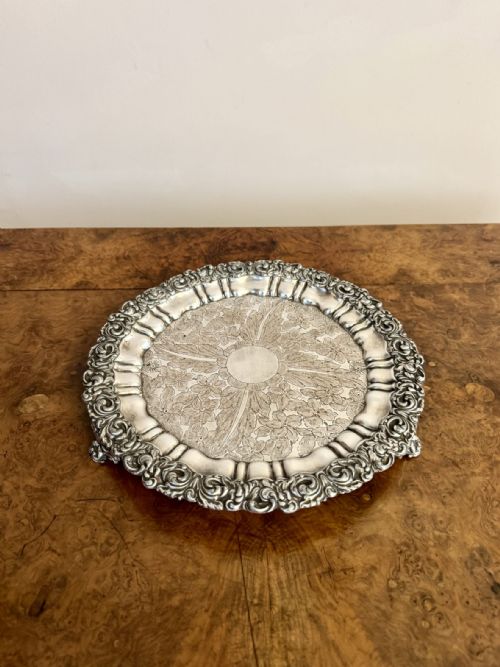
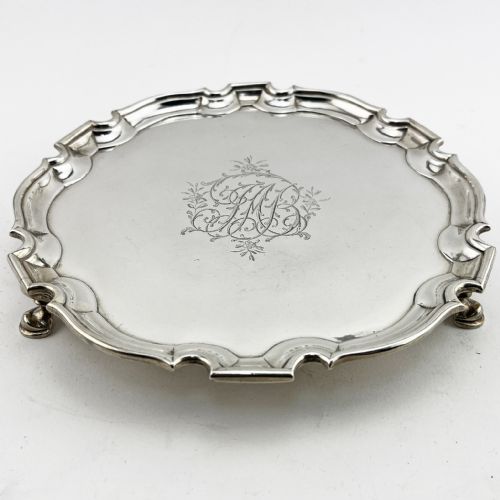
An engraved silver drinks tray encompasses oval and circular serving platters, tea trays, and smaller salvers designed to carry glassware and decanters. The pieces appearing most frequently on this page date from the Victorian and Edwardian eras, executed in silver plate, EPNS, or solid sterling silver.
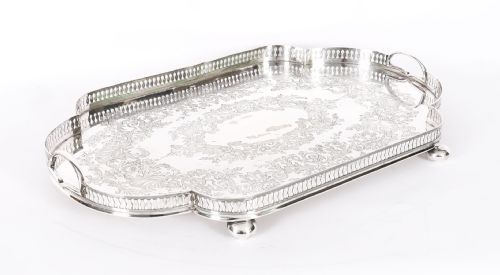
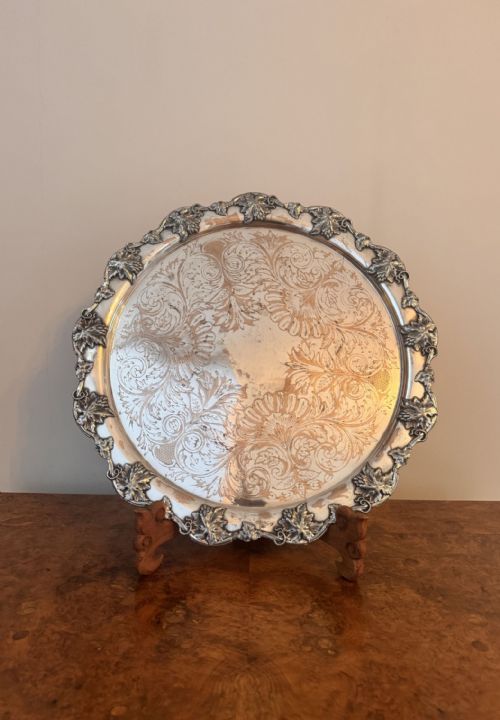
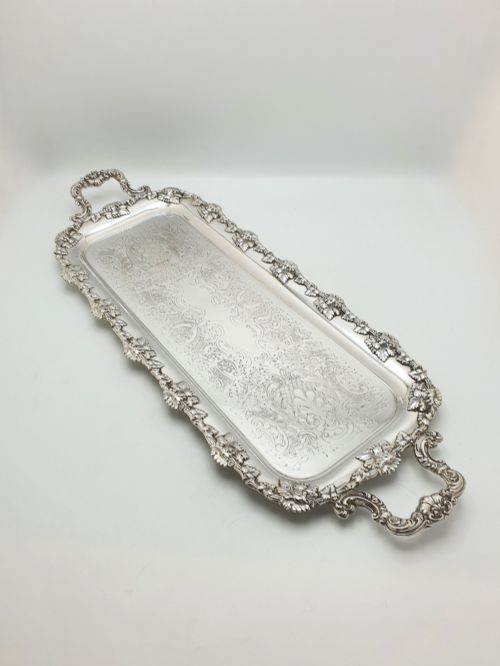
Makers produced these surfaces in varying scales, from compact cocktail trays with Celtic designs to monumental gallery trays with raised rims and pierced borders. Forms range from heavy Georgian and William IV sterling salvers to later silver-plated serving trays featuring intricate embossed scrolls and grapevine borders.
Materials and Construction
The construction relies heavily on base metals such as copper, nickel silver, and electroplated nickel silver, which were coated in a layer of silver or utilised as Old Sheffield Plate. Makers applied surface enrichment through hand engraving, chasing, and etching, creating floral scrolls, fern motifs, and armorial crests across the metal.
Gallery trays incorporated separate pierced galleries soldered to the base, while larger serving pieces often utilised applied cast borders depicting grapes or scrollwork. Sterling silver examples employed traditional silversmithing techniques, including hammering and casting, alongside standard Sheffield assay office methods.
Standards of Execution
Quality rests upon the crispness of the hand engraving and the structural integrity of the raised borders and handles. Superior pieces display deep, sharply defined chased work that remains clear across the centre of the tray, whereas lesser examples show shallow or worn patterns.
The thickness of the underlying silver plate and the durability of the base metal determine longevity, particularly where handles join the body. Heavier gauges of metal and substantial cast mounts distinguish finer production from lighter, purely utilitarian items.
James Deakin·Mappin & Webb·John Harrison·Harrison Bros·Christofle·J Dixon & Sons·Roberts & Dore·Elkington·Lee & Wigfull·Paul Storr·S.C. Younge & Co.
The Engraved Silver Drinks Tray Glossary
- EPNS
- Electroplated Nickel Silver. A common base metal composition coated with a layer of silver through an electrical process.
- Salver
- A flat tray, typically circular and raised on small feet, used for serving drinks or presenting items.
- Gallery tray
- A tray featuring a pierced or solid raised gallery wall around the perimeter to secure glassware.
- Old Sheffield Plate
- An early fusing technique where a sheet of silver was fused to a thicker copper core before rolling.
- Chasing
- A metalworking technique where the artisan punches and hammers the front surface to form raised decorative designs.
Engraved Silver Drinks Tray: Frequently Asked Questions
What is the difference between a tray and a salver?
A salver is traditionally a flat circular serving vessel raised on small feet, while a tray can be oval, rectangular, or circular and often includes handles.
Salvers usually held smaller presentation items or single decanters, whereas larger trays were built to carry a complete tea service or drinks set.
How do I clean an engraved silver tray?
Maintenance requires a soft cloth and a gentle silver cream formulated to lift tarnish without abrading the fine lines of the engraving.
Harsh chemical dips should be avoided, as they strip the darker oxidation that highlights the engraved patterns and can damage plated surfaces over time.
Can I use these trays for daily serving?
These trays function well for serving drinks and cocktails, provided they are handled with care to protect the surface from sharp impacts.
Placing felt or linen mats beneath heavy crystal decanters prevents scratching on both silver-plated and sterling surfaces.
How can I tell the age of a silver plated tray?
Dating relies on stylistic clues such as Victorian grapevine borders, Edwardian pierced galleries, and Art Deco geometric motifs.
Maker marks, stamping techniques, and the presence of Old Sheffield Plate construction methods also provide clear chronological markers.