


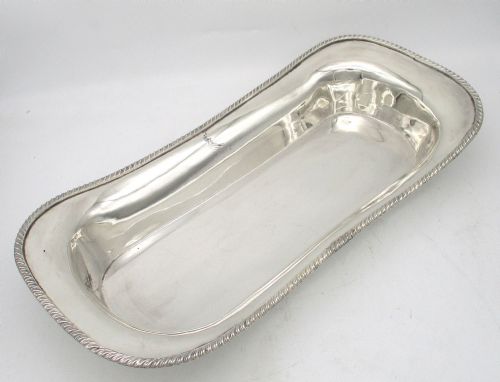

Victorian Silver Plate Tray
A victorian silver plate tray brings solid weight and formal polish to afternoon tea or a drinks service.
Victorian Silver Plate Tray
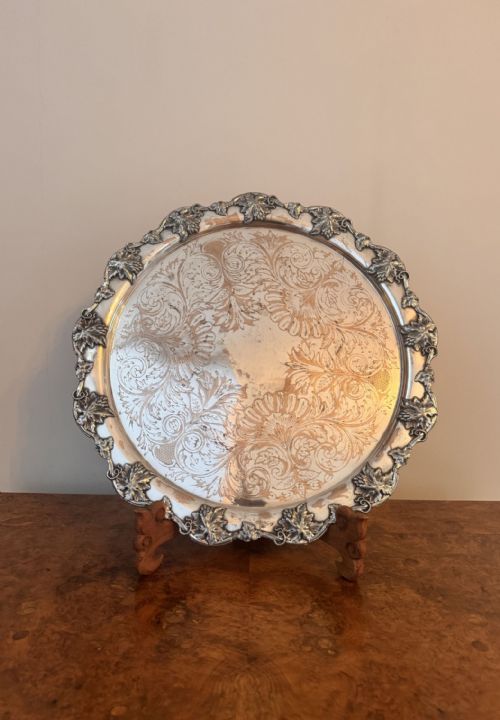
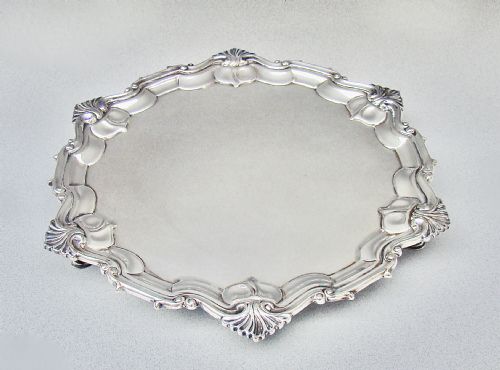
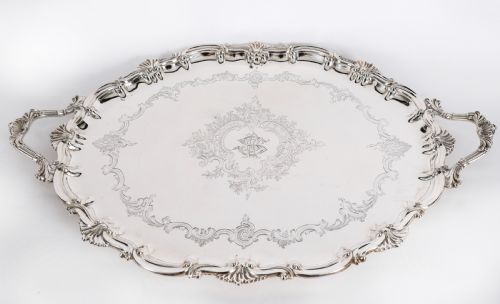
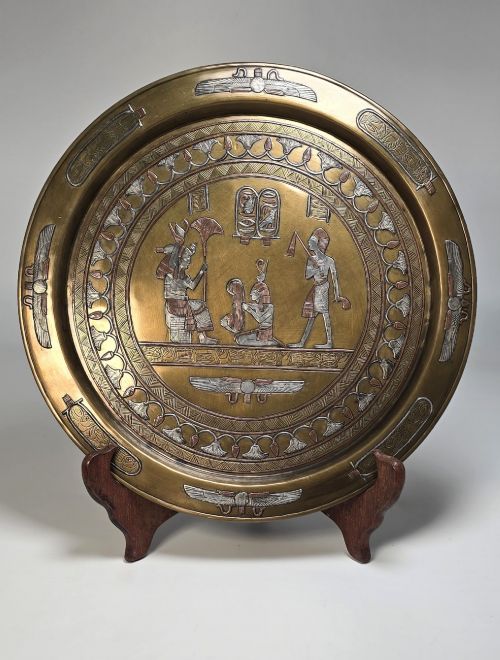
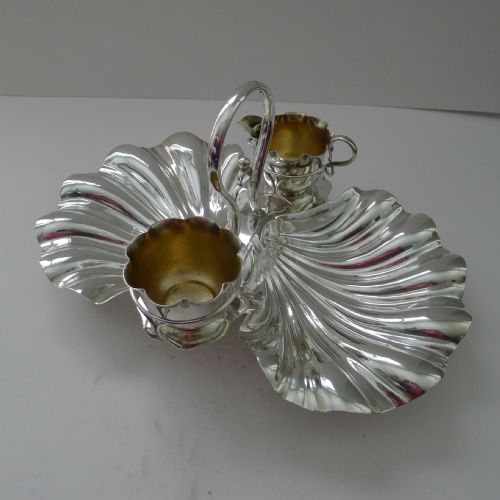
A buyer seeking a victorian silver plate tray encounters domestic serving pieces spanning tea trays, salvers, gallery trays with pierced brass or plated surrounds, and butler trays mounted with wooden bases in mahogany or oak.
The objects originate primarily from the nineteenth century, ranging from early Victorian and 1860s examples through to the Edwardian period, appearing in circular, oval, and rectangular formats.
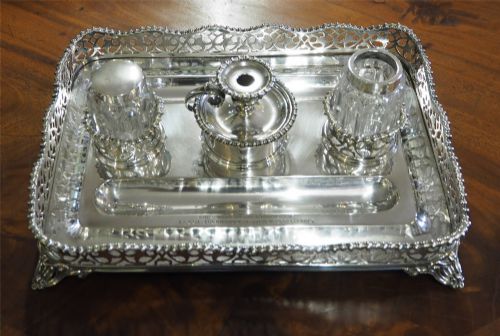
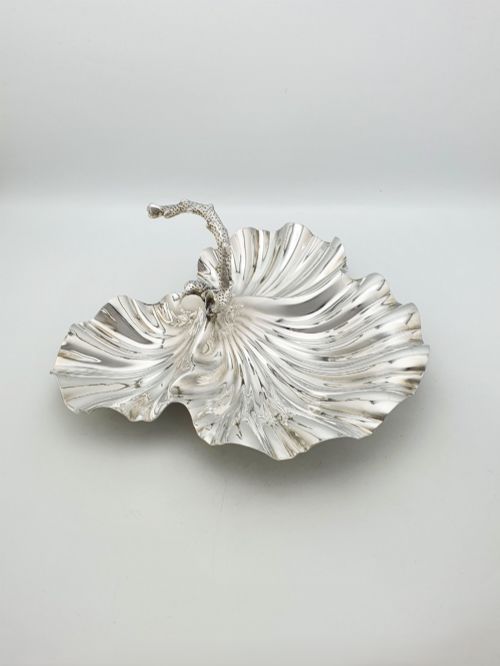
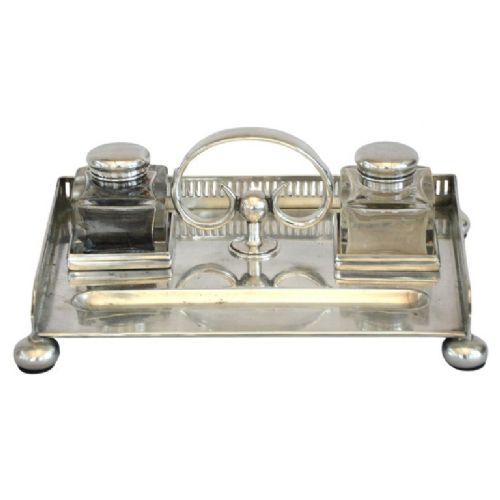
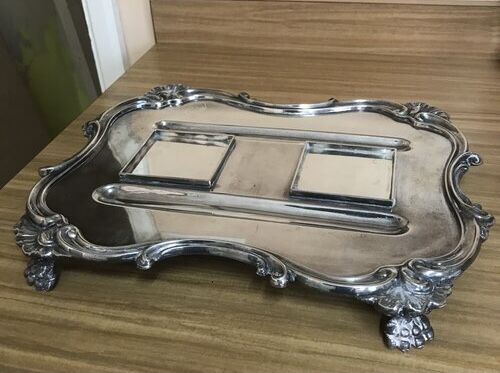
Beyond standard serving platters, the category encompasses specialised forms including knife trays, desk accessories, and fitted presentation pieces bearing handles and raised rims.
Materials and Techniques
Manufacture relies heavily on a base metal core of copper, nickel silver, or electroplated nickel silver, commonly abbreviated as EPNS, upon which a layer of silver is chemically or galvanically applied.
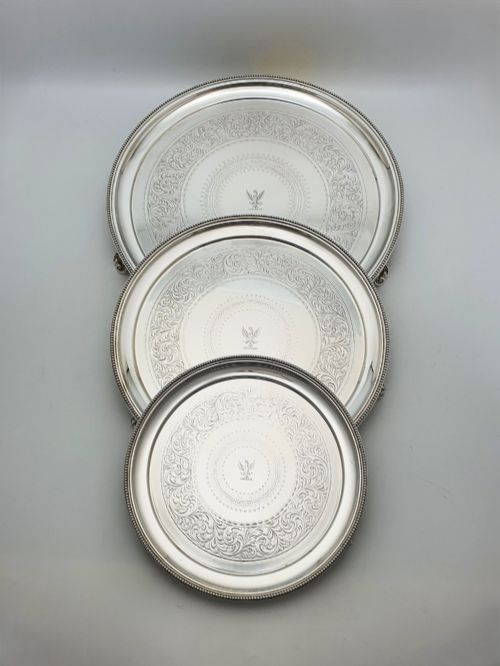
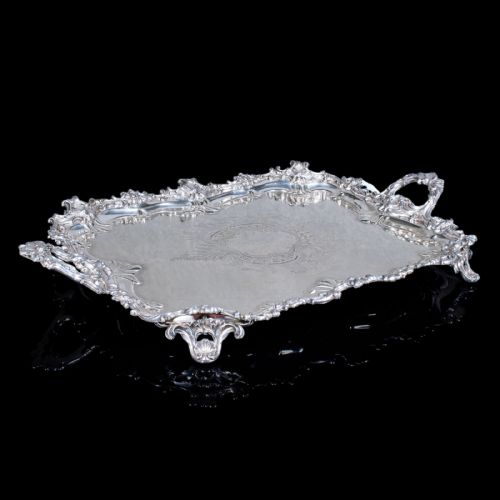
Maker workshops employed engraving, piercing, and repoussé techniques to decorate the surfaces with floral motifs, scrolls, and armorial crests.
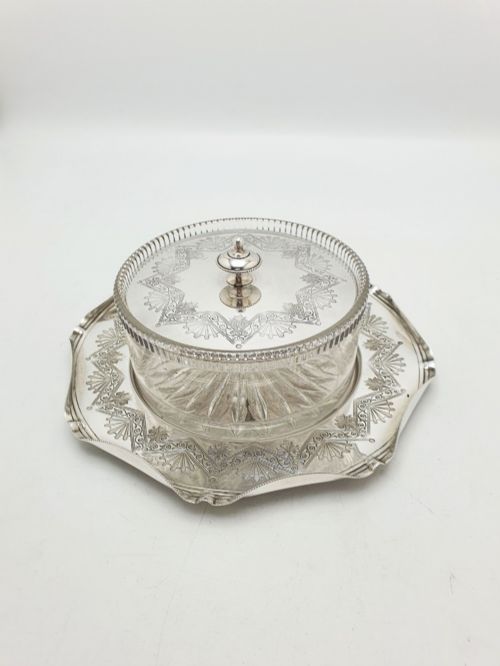
Combinations of silver plate with contrasting elements such as cut glass liners, ebonised wood, and carved oak demonstrate the structural versatility of the period's metalworkers.
Listings feature items spanning the 1850s to the Edwardian era, incorporating glass liners, mahogany bases, and copper cores.
Distinctions in Standard
Substantial gauge metal provides the foundational heft expected in superior items, distinguishing thick-walled platters from lighter, more flexible alternatives.
The integrity of the plated surface determines lasting durability, with heavier deposits resisting base metal breakthrough during decades of cleaning.
Hand-chased engraving and crisp casting on handles and pierced galleries separate standard commercial output from workshop pieces produced by premier makers.
William Hutton And Sons·Elkington And Co·Thomas Bradbury And Sons·Walker And Hall·Daniel Arter·John Harrison·Padley Parkin·Walker Knowles·Philip Ashberry And Sons·Lee And Wigfull·Roberts And Belk·Thomas Wilkinson·Atkin Brothers
The Victorian Silver Plate Tray Glossary
- Silver Plate
- A base metal object coated with a thin layer of silver through chemical or electrochemical methods. This technique allowed Victorian households to display metallic lustre without paying solid silver prices.
- Salver
- A flat tray, usually circular and supported on small feet, utilised for serving drinks or presenting cards. These pieces often feature engraved centres and decorative raised borders.
- Gallery Tray
- A tray encircled by an openwork metal or pierced gallery railing designed to prevent items from sliding off. They frequently incorporate wooden bases made from oak or mahogany.
- EPNS
- An abbreviation for electroplated nickel silver, denoting a strong alloy base coated via electrical current. The introduction of this method in the mid-nineteenth century transformed industrial metal production.
- Repoussé
- A metalworking technique where the artisan hammers the design from the reverse side to form a raised pattern on the front. This method creates tactile floral and scroll ornamentation.
Victorian Silver Plate Tray: Frequently Asked Questions
How were silver plate trays used?
Victorian households utilised these trays primarily for serving afternoon tea, carrying decanters, and presenting calling cards in formal reception rooms.
Larger versions remained in the pantry for heavy service, while smaller salvers stayed in constant daily circulation across drawing rooms.
How do I clean an old tray?
Maintenance requires mild silver cream applied with a soft cloth to preserve the remaining plate layer over the nickel or copper base.
Harsh abrasive dips strip away the historic finish, so gentle wiping preserves the dark patina in recessed engraved lines.
How can I tell the period?
Dating relies upon maker marks, registration diamonds, and stylistic clues such as heavy cast rococo revival handles or clean Edwardian lines.
Heavier copper bases frequently indicate older nineteenth-century manufacture before twentieth-century gauge reductions took effect.