

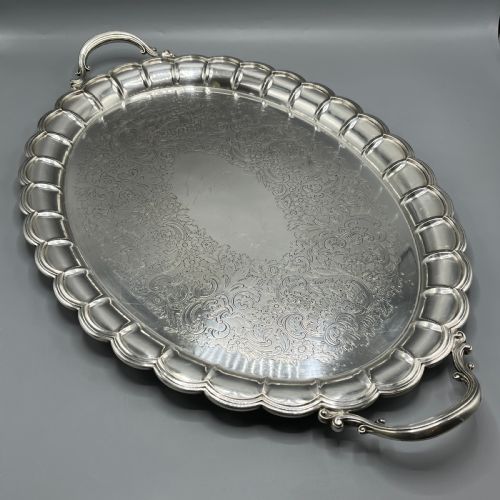
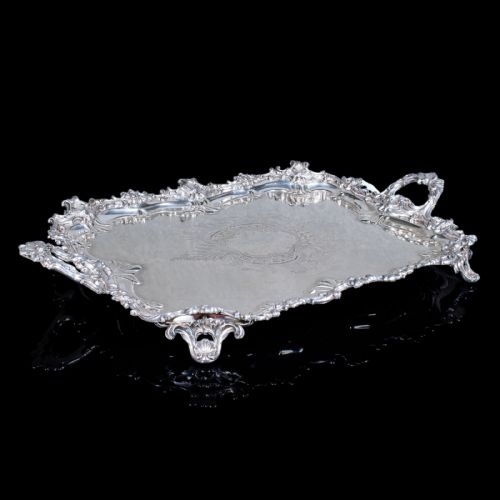
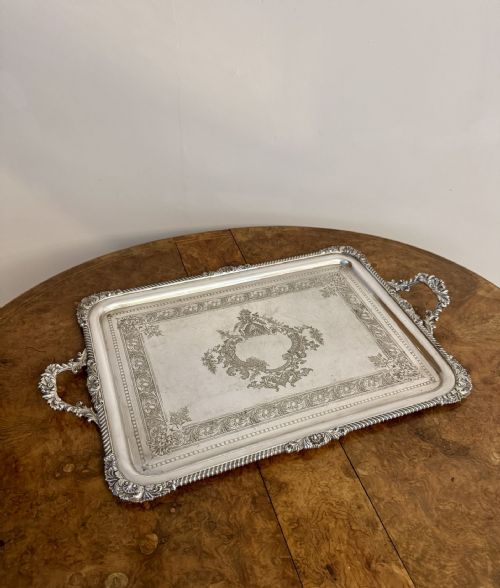
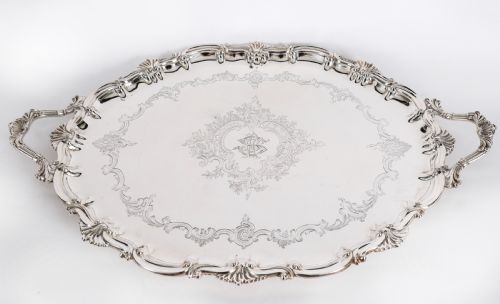
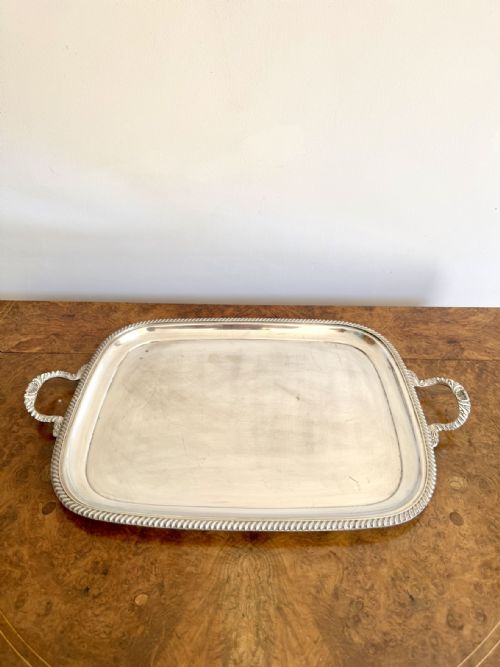


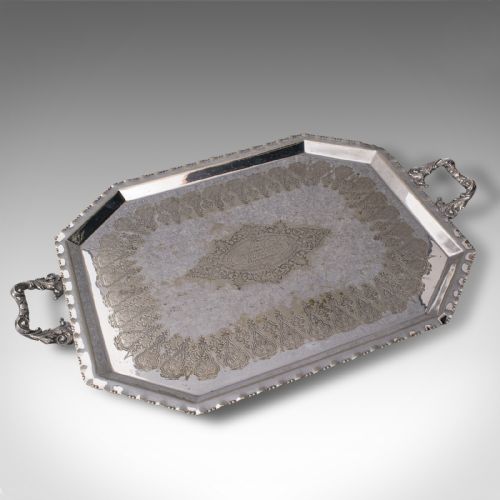


Handled Silver Salver
A handled silver salver provides a sturdy surface for carrying drinks or afternoon tea, combining practical service with period craftsmanship.
Handled Silver Salver
A handled silver salver brings together serving trays and platters designed for domestic use, most frequently encountered in silver plate, electroplated nickel silver, and sterling silver. These pieces emerge across Victorian, Edwardian, and Art Deco periods, spanning the nineteenth and twentieth centuries.
Makers from English workshops, Scottish regions, and European centres shape these trays into oval, round, and large serving forms. Buyers meet everything from simple presentation pieces to heavily engraved gallery trays intended for formal hospitality.
Materials and construction methods
Workshops utilise sterling silver alongside base metals coated in silver plate, EPNS, and old Sheffield plate techniques to achieve a durable reflective finish. Copper and nickel silver often form the underlying core beneath the applied silver layer.
Craftsmen mount handles securely to the main tray body, frequently incorporating detailed engraving, applied borders, and wooden elements for structural support.
Handled Silver Salver Retail Price Guide 2026
Typical asking prices for handled silver salver among the pieces listed under this phrase on Sellingantiques today, from the lower quarter to the upper quarter. They describe what is for sale here now, not the wider market.
Current listings feature handled silver salver forms from the Victorian, Edwardian, and Art Deco eras, produced in sterling silver, silver plate, and copper.
Assessing quality in handled silver salvers
The weight of the metal and the crispness of the engraved decoration determine the standard of an individual tray. Substantial proportions and well-balanced handles indicate careful manufacturing by established firms.
The thickness of the silver plating and the preservation of the underlying metal show how heavily a piece has been used and polished over time.
Thomas Bradbury & Sons·Harrison Bros·Elkington & Co·Walker & Hall·Peters Hamburg·Victor Saglier
The Handled Silver Salver Glossary
- Silver Plate
- A thin layer of silver applied to a base metal core such as copper or nickel silver. This technique allowed makers to produce substantial decorative items at a lower cost than solid silver.
- EPNS
- Electroplated Nickel Silver. A common base material for domestic metalware during the Victorian and Edwardian eras.
- Gallery Tray
- A tray featuring an openwork pierced metal rim or gallery around the edge. These borders helped keep decanters and glasses secure during transit.
- Old Sheffield Plate
- A method of fusing a thin sheet of silver to a copper ingot before rolling and shaping. This early process creates a distinctive appearance different from later electroplating.
Handled Silver Salver: Frequently Asked Questions
How do I clean a handled silver salver?
Use a soft cloth and a specialised silver cleaner appropriate for the surface metal.
Avoid abrasive materials that might wear through thin silver plating or scratch engraved details.
Are these trays suitable for daily use?
Many examples remain robust enough to serve drinks or display items in a modern room.
Consider the weight and the condition of the surface plating before using them for heavy service.
How can I tell the period of a tray?
Stylistic clues such as Art Deco geometric lines or Victorian floral engraving point toward specific decades.
Maker marks and specific plating methods also help narrow down the date of manufacture.