



Sterling Silver Serving Box
These sterling silver serving box pieces are fitted containers and presentation implements for the table, bringing period craftsmanship directly into domestic use.
Sterling Silver Serving Box
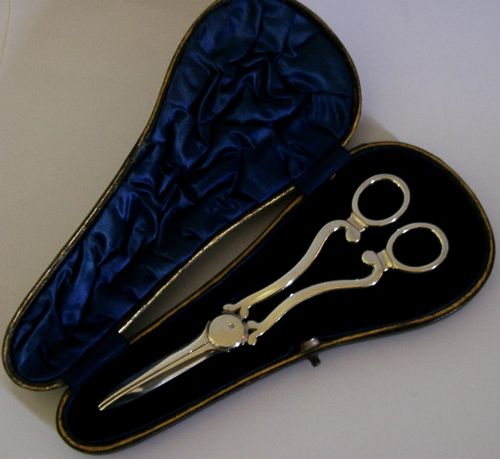
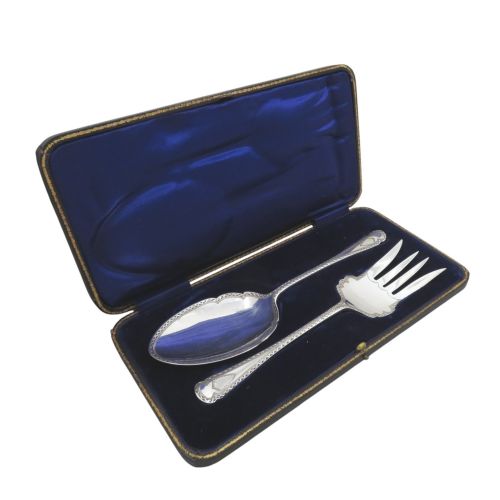
A sterling silver serving box encompasses fitted presentation cases and specialised containers housing silver utensils, grape shears, fish servers, and dessert pieces. These items originate from periods spanning the Georgian, Victorian, Edwardian, and mid-twentieth-century eras, reflecting changing dining customs. The selection frequently includes boxed sets lined with silk, velvet, or satin, protecting implements designed for specific culinary tasks.
The objects take various forms, from single biscuit boxes and salvers to multi-piece cutlery sets and individual presentation spoons. Many examples pair solid sterling silver with internal partitions covered in leatherette or leather to secure the contents. Buyers encounter both standalone table boxes and fitted presentation cases containing matched serving cutlery.
Materials and construction methods
Silversmiths utilised solid sterling silver for blades, bowls, and box fittings, shaping the metal through casting, hammering, and engraving. Handles and decorative elements incorporate materials such as mother of pearl, while interior linings employ silk, satin, velvet, and leather. Cut crystal and glass appear alongside silver in vanity and dresser containers.
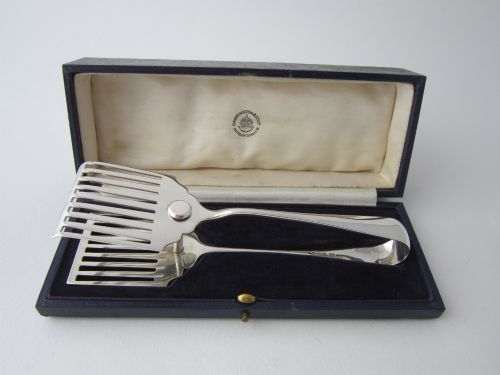
Cases and boxes utilise rigid wooden foundations covered in leather or leatherette to protect the precious metal inside. Fitted interiors secure individual serving spoons, forks, grape shears, and tongs within dedicated recesses. Craftspeople integrated textiles and metals to create durable enclosures for domestic silver.
Sterling Silver Serving Box Retail Price Guide 2026
Typical asking prices for sterling silver serving box among the pieces listed under this phrase on Sellingantiques today, from the lower quarter to the upper quarter. They describe what is for sale here now, not the wider market.
Object forms span fish servers, berry spoons, asparagus tongs, and fitted biscuit boxes alongside standard cutlery sets.
Distinctions in construction and preservation
The standard of execution in metalwork and interior lining dictates the distinction between ordinary pieces and superior examples. Crispness in cast and engraved ornamentation on silver surfaces indicates skilled workshop production. The preservation of original fitted silk, velvet, and satin box linings heavily influences the integrity of the piece.
Cohesion between the container and its contents matters greatly, as original fitted boxes retain more historical context than assembled sets. The robustness of hinges, clasps, and internal partitions demonstrates the original tier of manufacture. Superior items maintain clear hallmarks and undamaged decorative detailing across both the silver and the housing.
Georg Jensen
The Sterling Silver Serving Box Glossary
- Sterling silver
- An alloy containing 92.5 percent silver and 7.5 percent other metals, typically copper, used to ensure durability in tableware. This standard forms the basis of British hallmarked silver.
- Hallmark
- An official mark stamped onto precious metals indicating the standard of purity, the assay office, and the year of manufacture. These symbols allow collectors to date items accurately.
- Grape shears
- Specialised scissors designed for cutting clusters of fruit at the table, often featuring ornate silver handles. They appear frequently in Edwardian and Victorian boxed sets.
- Salver
- A flat tray made of silver used for serving food or drinks. Examples range from plain domestic pieces to elaborately decorated presentation items.
- Presentation box
- A fitted container lined with materials like velvet, silk, or satin to hold and display cutlery or serving pieces safely.
Sterling Silver Serving Box: Frequently Asked Questions
What fits inside a sterling silver serving box?
These containers typically house specialised dining implements such as grape shears, fish servers, dessert spoons, and cake forks. Many boxes feature custom interior partitions lined with silk, velvet, or satin to hold specific cutlery sets securely.
Some variants serve as standalone containers for biscuits or presentation items rather than cutlery storage. The contents reflect the formal dining habits of the Georgian, Victorian, and Edwardian periods.
How do I care for silver inside fitted boxes?
Silver utensils require gentle cleaning with appropriate polish to remove tarnish without damaging delicate engraving or hallmarks. The internal linings of the box should be kept dry and away from direct sunlight to preserve the silk, velvet, or leather.
Storing pieces in their original fitted compartments helps protect the metal from airborne sulfur and physical knocks. Regular, careful maintenance preserves both the silver surfaces and the integrity of the antique container.
How can I tell the period of a box?
Hallmarks stamped onto the silver components provide the most reliable indication of a piece's date and place of manufacture. The style of the box, the typography of the maker's mark, and the materials used for the internal lining also offer clues to the era.
Victorian and Edwardian items often display distinct decorative motifs, such as Art Nouveau curves or heavy floral engraving, which help narrow down the decade of production.
Were these boxes used for everyday dining?
Most fitted serving boxes were designed for formal dining occasions and middle- to upper-class household entertaining. They kept specialised implements organised and protected between uses on the dining table or sideboard.
Over time, many of these sets transitioned into display pieces or collections as dining customs shifted away from multi-course formal meals.