



Sterling Silver Cruet Set
A sterling silver cruet set brings order to the dining table with matching vessels for salt, pepper and mustard.
What a sterling silver cruet set is
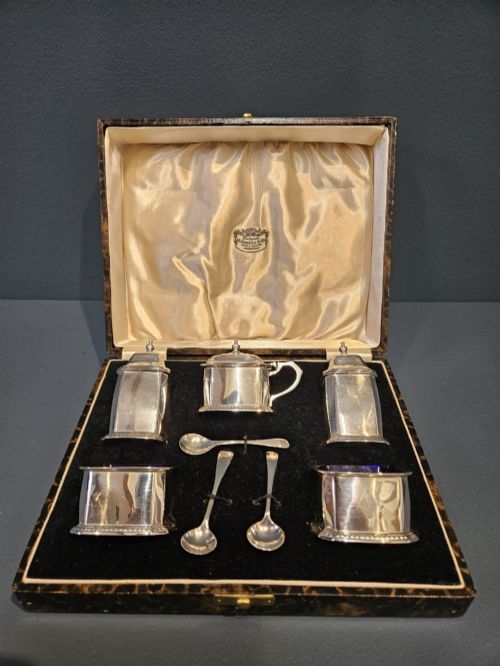
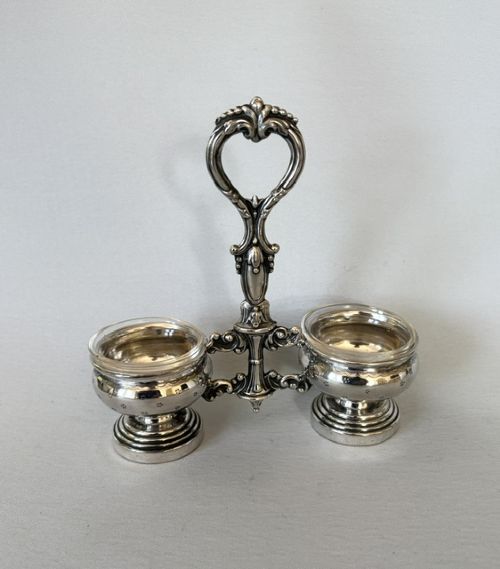
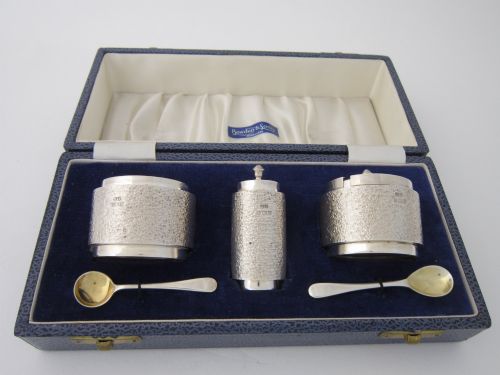
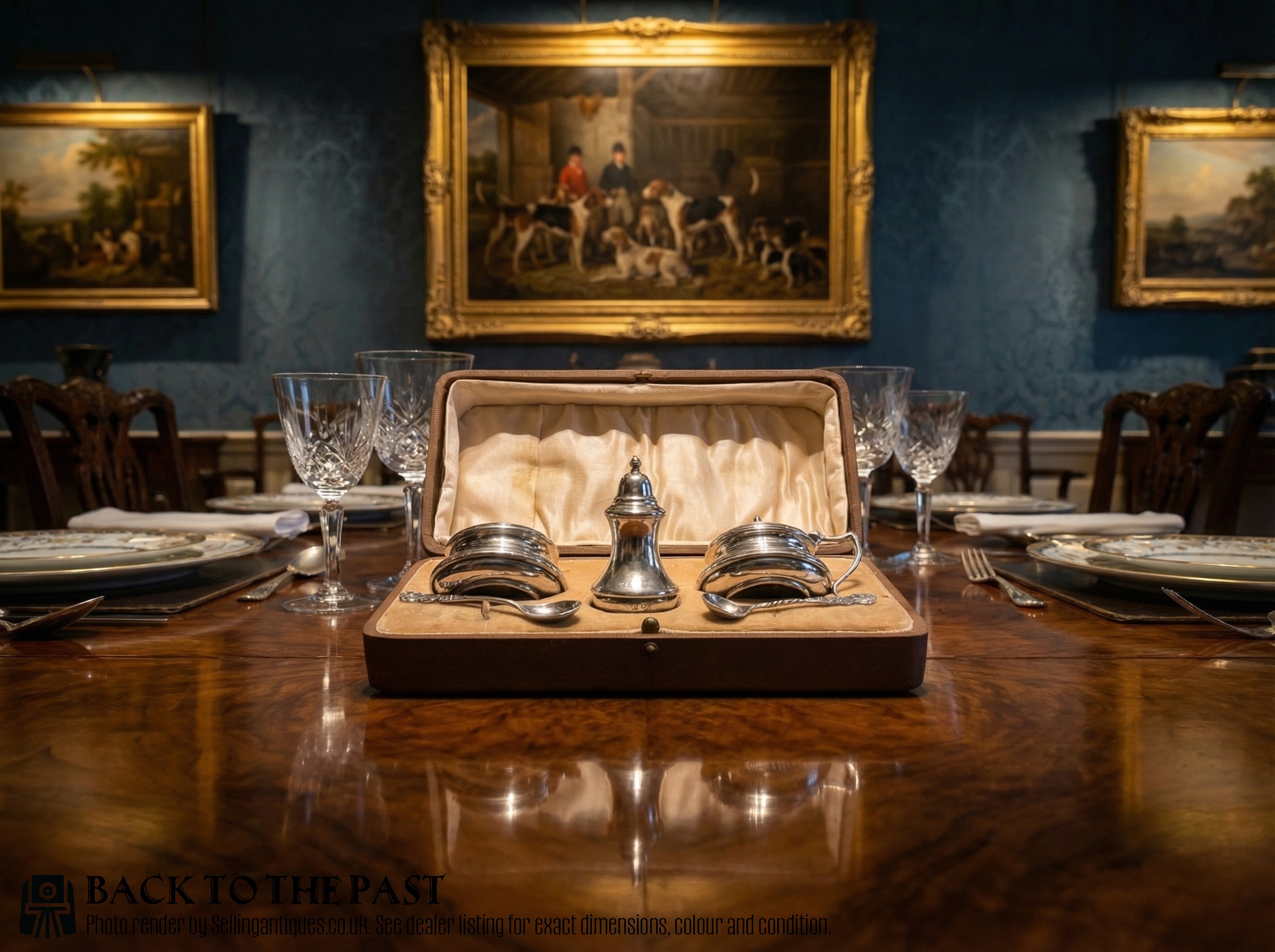
A sterling silver cruet set comprises matching vessels designed to hold condiments for the dining table, most commonly taking the form of three or four piece configurations. These collections frequently include open salt cellars, pepper pots and mustard pots, occasionally accompanied by their original spoons.
The pieces appearing on this page span several distinct periods from the Victorian era through the Edwardian years and the Art Deco style to Mid-Century Modern designs. Buyers encounter both cased presentation sets lined in silk and velvet and loose table sets intended for regular service.
How they were made
Makers shaped sterling silver through stamping, spinning and casting, pairing the precious metal with cut glass or crystal inserts for liquid or granular condiments. Interiors were often gold plated to prevent the corrosive action of salt and mustard from pitting the silver.
Fitted presentation boxes utilised a wooden or cardboard carcass covered in leatherette, then lined with fabrics such as velvet, satin and silk to hold each component securely in place.
Retail Price Guide 2026
Typical UK retail prices for sterling silver cruet set, calculated from the Sellingantiques database of over a million retail prices indexed since 2003. This retail price guide relies exclusively on Sellingantiques data; no external sources or auction records are used, so the figures do not describe the wider market.
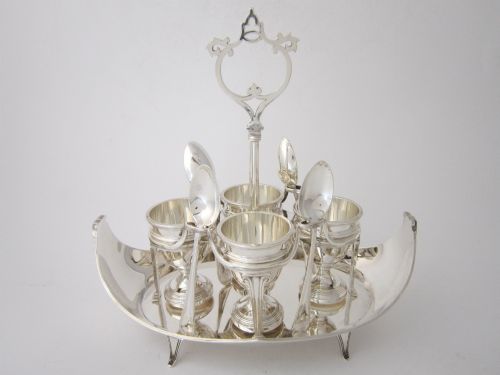
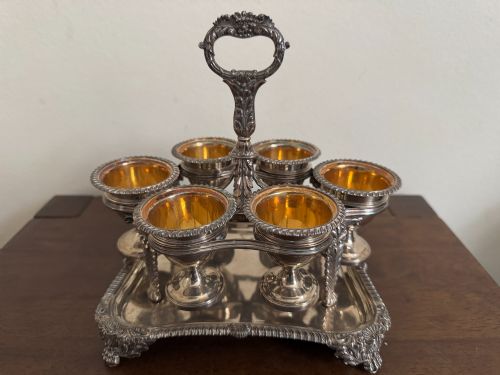
Victorian breakfast tables featured specialised egg cruet sets complete with tiny spoons, proving that ancestors took their morning boiled eggs very seriously indeed.
What varies in quality
Quality rests in the weight of the silver and the precision of the piercing and chasing, distinguishing heavy-gauge vessels from thin, utilitarian pressings. Maker attribution plays a significant part, with pieces bearing marks from established firms commanding greater attention.
The survival of original fitted cases, matching spoons and undamaged glass liners preserves the integrity of the set, while sets missing components or housing replacement liners show lesser uniformity.
Wilmot Manufacturing Co·Viners·Mappin & Webb·Ernest Druiff & Co·James Weir·Walker & Hall
The Sterling Silver Cruet Set Glossary
- Cruet set
- A collection of matching vessels for holding table condiments such as salt, pepper and mustard. These sets often sit on a dedicated silver stand or within a fitted presentation case.
- Condiment pot
- An individual container within a cruet set, designed for salt, pepper or mustard. Mustard pots typically feature a hinged lid and a blue glass liner.
- Hallmark
- A series of stamped marks on silver indicating the maker, the assay office, the standard of purity and the year of assay. English silver relies on these stamps to verify period and origin.
- Gold plate
- A thin layer of gold applied to the interior surfaces of silver salt and mustard pots. This plating protects the silver from chemical corrosion caused by acidic contents.
Frequently Asked Questions
How do I clean a sterling silver cruet set?
Use a specialised silver cloth or mild polish to remove tarnish, taking care around engraved details and glass inserts. Avoid soaking pieces with fitted liners or glued components.
Wash glass liners separately in warm soapy water and dry them completely before returning them to their silver frames.
Can I use these sets for everyday dining?
These sets are sturdy enough for regular use provided you empty corrosive condiments like salt and mustard after each meal. Hand washing preserves both the silver and any interior gold plating.
Store them away from direct sunlight and damp environments when not in active service on the table.
What is an egg cruet set?
An egg cruet set is a specialised Victorian or Edwardian configuration designed for boiled eggs at breakfast. It includes a stand holding individual egg cups alongside spoons and salt cellars.
Many examples also incorporate a central frame ring to hold toast or catch eggshells.
How do I date an unmarked set?
Dating relies heavily on style cues, such as the geometric lines of Art Deco pieces or the ornate repousse work of Victorian examples. Form and weight offer further clues to the manufacturing era.
Official hallmarks remain the most reliable method for determining the exact year of production.