
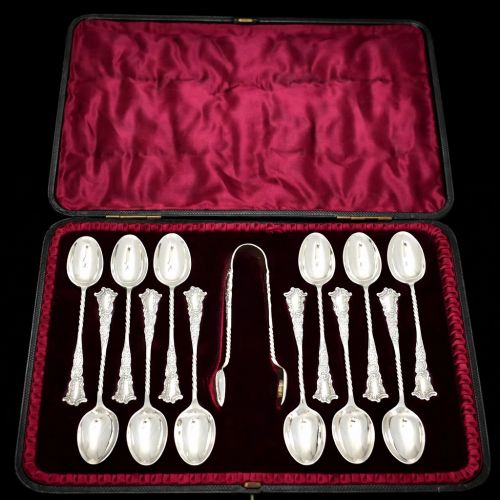


Sterling Silver Coffee Spoons
Sterling silver coffee spoons are small, elegant items of cutlery designed for after-dinner service, often found in fitted presentation boxes.
Sterling Silver Coffee Spoons
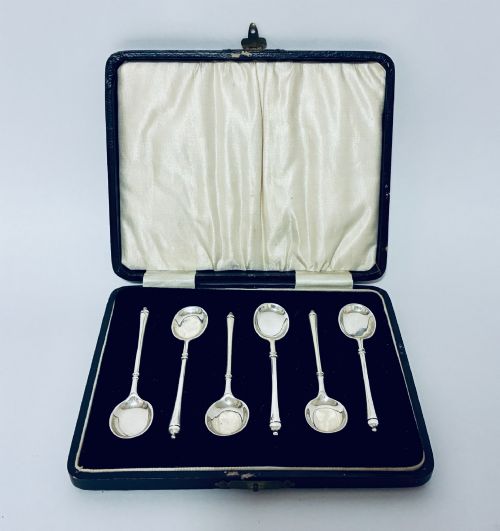
Sterling silver coffee spoons are small implements designed specifically for stirring after-dinner coffee or demi-tasse cups. You will most frequently encounter cased sets of six, often dating from the twentieth century.
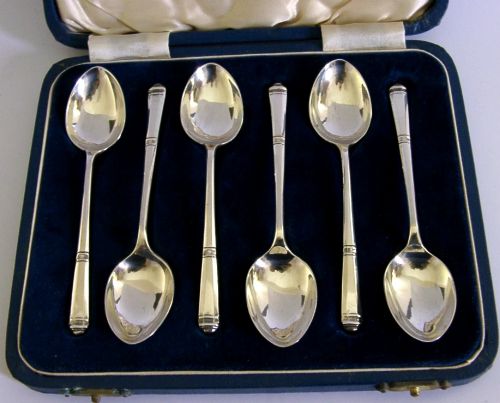
The selections span distinct periods ranging from the late Victorian era through Edwardian times and into the height of the Art Deco movement. Makers utilised various traditional styles, with geometric patterns and clean lines appearing frequently in later decades.
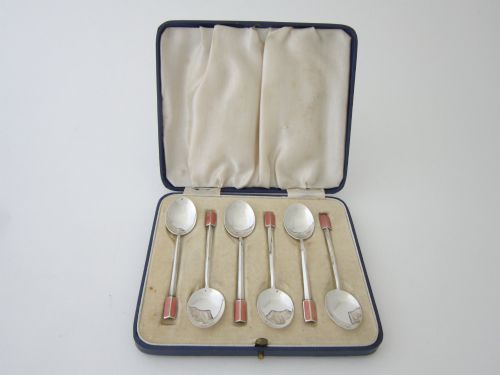
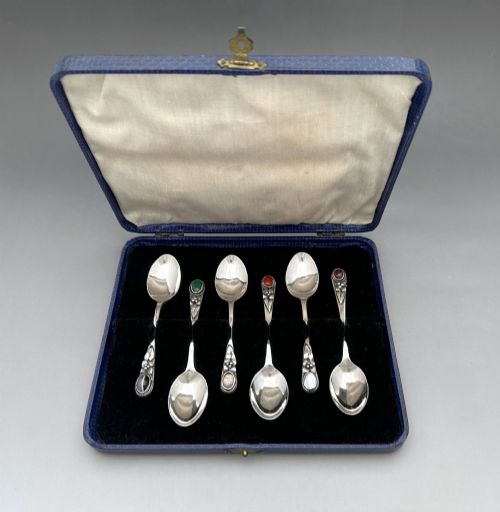
Many examples arrive with original fitted presentation boxes lined in velvet, satin, silk, or leatherette. These cases often preserve the spoons in pristine condition, protecting the delicate metalwork and any applied surface decoration from everyday wear.
Making and materials
Silversmiths shaped the primary structure of these implements using solid sterling silver, applying hallmarks to designate purity and origin. Certain pieces feature an additional layer of silver-gilt, providing a rich gold-coloured surface over the sterling base.
Vitreous enamel was frequently applied to the bowls or handles to add vibrant colour, particularly during the Art Deco period. Other variations incorporated semi-precious stones, Bakelite elements, or fitted ceramic coffee cans to complete the service.
Certain sets were manufactured specifically for use at the Tamesis sailing club.
Assessing quality
Quality rests upon the crispness of the original ornamentation and the depth of the silversmith's workmanship. Pieces featuring hand-applied vitreous enamel or intricate structural detailing demonstrate a higher degree of artisan skill than plain utilitarian examples.
The condition and completeness of the original fitted presentation case strongly influence the overall appeal of a set. Surviving boxes lined in undamaged silk, satin, or velvet indicate careful preservation and add significantly to the historical integrity of the silver.
Georg Jensen·Evald Nielsen·Walker and Hall·Liberty and Co·Robert Stebbings·Cooper Brothers and Sons·James Dixon and Sons·William Suckling Ltd
The Sterling Silver Coffee Spoons Glossary
- Demi-tasse
- A small cup used for serving espresso or strong coffee. Sterling silver coffee spoons are specifically proportioned to fit these compact vessels.
- Silver-gilt
- Sterling silver that has been coated with a thin layer of gold. This technique provides a warm golden finish while retaining a solid silver base.
- Vitreous enamel
- Glass fused to metal through high-temperature firing. This material provides durable, glossy colour decoration on handles and bowl backs.
- Hallmark
- A series of official marks stamped onto precious metals. These symbols indicate the maker, the assay office, and the standard of silver purity.
- Bakelite
- An early synthetic plastic utilised for decorative handles. This material appears on specific twentieth-century designs alongside solid silver.
Sterling Silver Coffee Spoons: Frequently Asked Questions
What is the difference between tea and coffee spoons?
Coffee spoons are noticeably smaller and feature shorter bowls designed to fit inside demi-tasse cups. Teaspoons are proportioned for standard teacups and larger vessels.
While tea spoons handle broader daily use, coffee spoons were primarily intended for formal after-dinner service.
Are these spoons made of solid silver?
The pieces listed are marked as sterling silver, denoting a high standard of purity. Many also carry official assay office hallmarks for specific towns and years.
Silver-gilt variations feature a solid silver base with an applied gold wash over the surface.
Why do many sets include fitted boxes?
Presentation cases were standard for sets given as gifts or kept for formal dining occasions. The fitted interiors lined with satin, velvet, or silk kept the small implements secure.
These boxes protected the delicate enamel and silver surfaces from tarnishing and scratching during storage.
How do I date an antique spoon set?
Hallmarks stamped onto the metal provide the exact assay year and the maker's mark. Stylistic indicators, such as geometric Art Deco motifs or floral Edwardian lines, also point to specific eras.
Enamel work and the presence of original fitted cases help narrow down the decade of manufacture.