

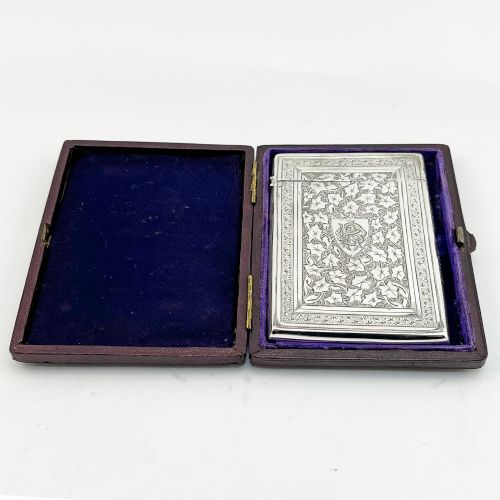
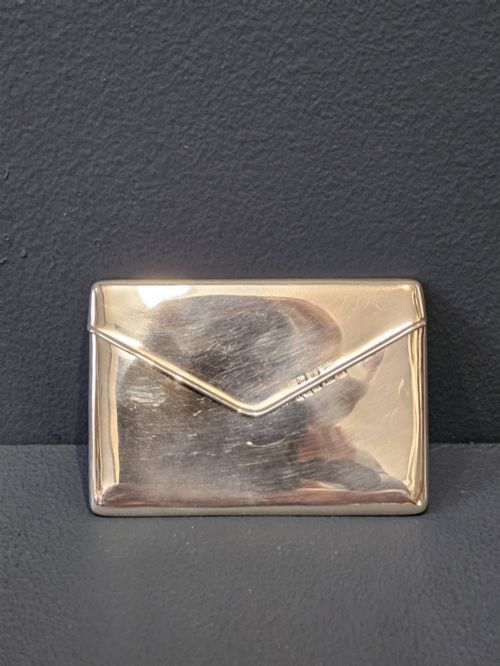
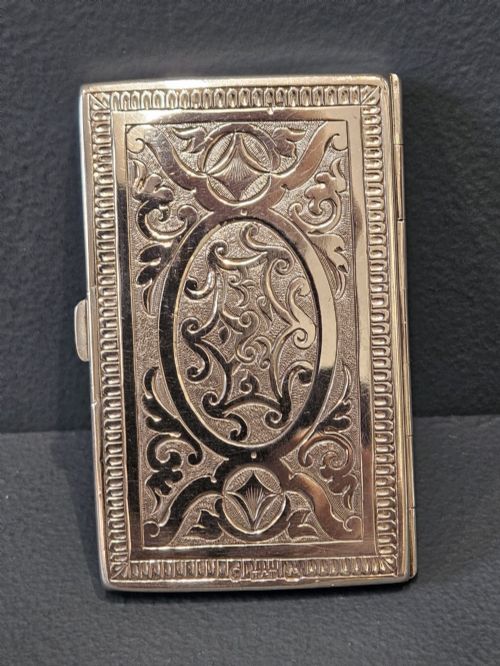
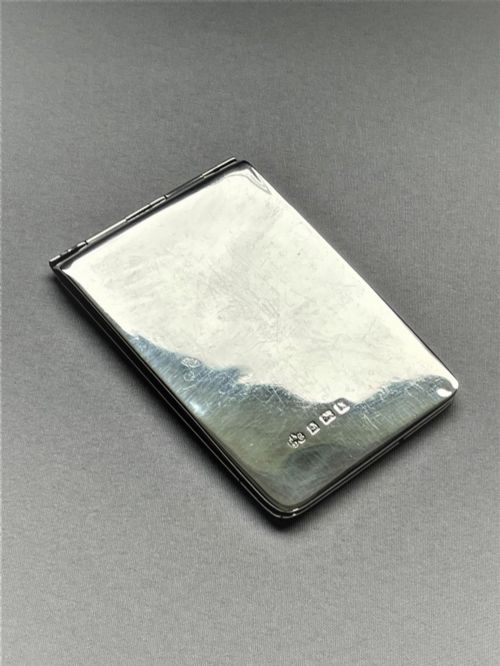
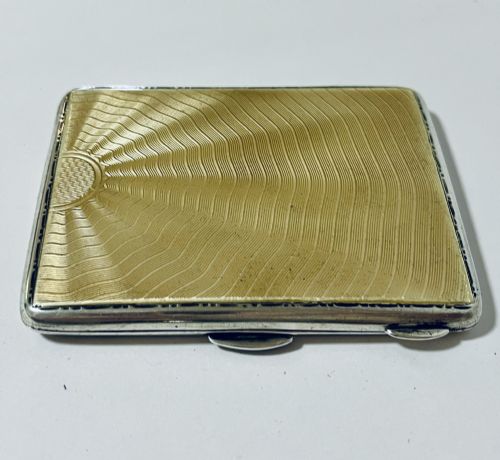


Sterling Silver Calling Card Holder
A sterling silver calling card holder is a pocket-sized repository for social introduction, mostly found here from Victorian and Edwardian makers.
Sterling Silver Calling Card Holder
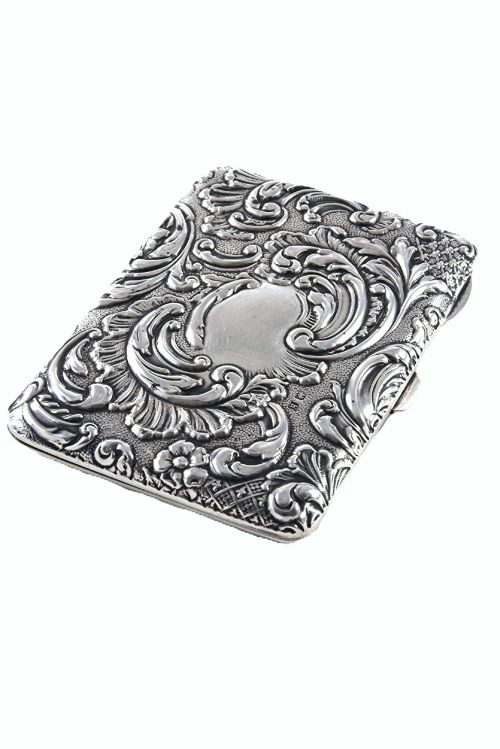
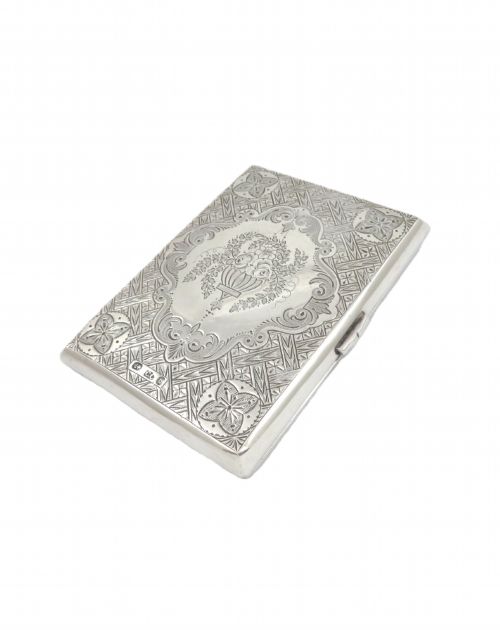
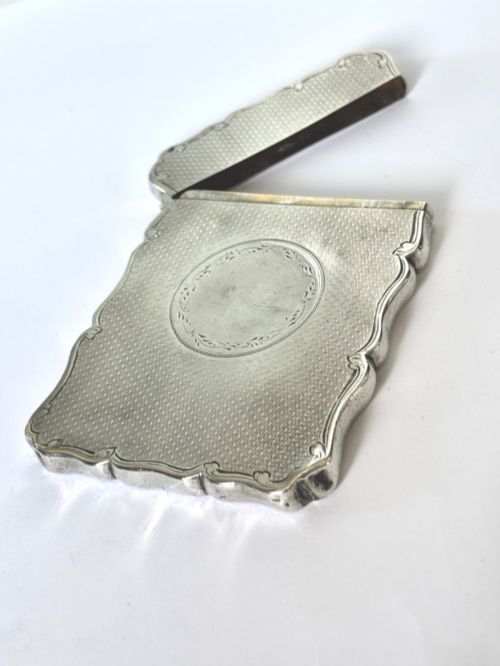
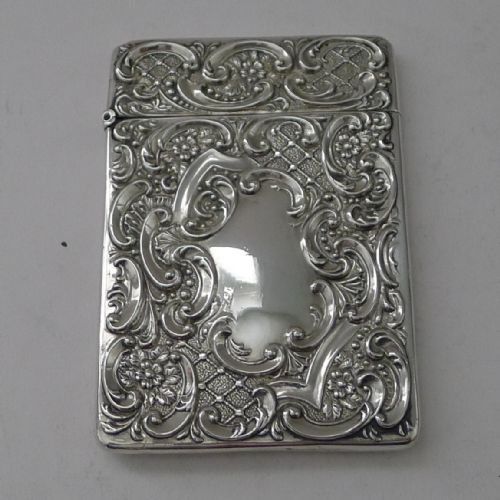
A sterling silver calling card holder is a pocket-sized receptacle designed to protect thin visiting cards during social calls. These pieces date across the Victorian and Edwardian eras, stretching from mid-nineteenth century examples up to the nineteen-thirties.
Buyers encounter card cases, card boxes, and combined stamp cases or aide memoires. The standard forms are flat, hinged cases shaped to fit a pocket or small bag.
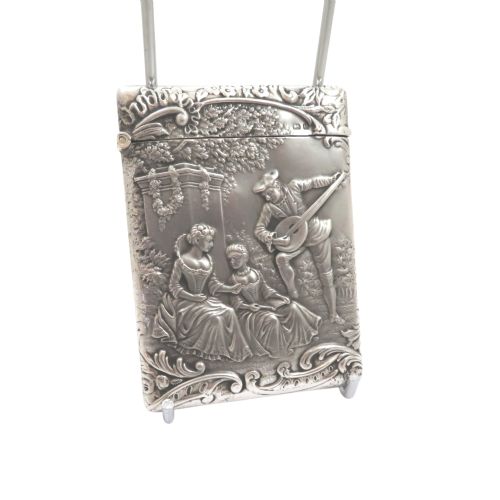
Origins include English workshops in Birmingham and London, alongside continental and American pieces. The selection on this page ranges from plain silver surfaces to elaborate novelty and castle top designs.
Materials and construction
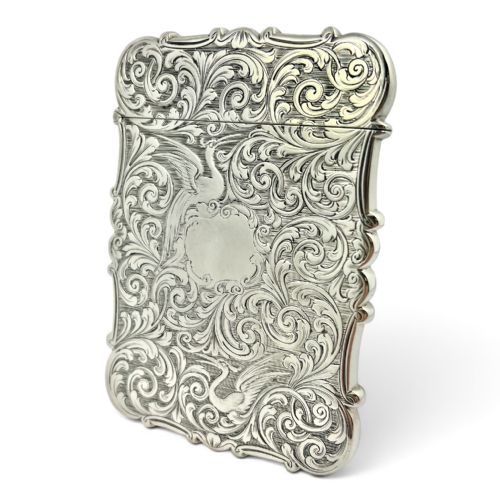
Silversmiths constructed these cases primarily in sterling silver and solid silver, occasionally applying silver gilt linings or gilt metal. Techniques involved pressing, folding, and heavy hand engraving to decorate the exterior metal.
Specialised decorative methods include vitreous enamel and polychrome enamel applications, alongside natural materials like Connemara marble and crocodile skin textures. Mechanisms vary from simple spring clips and unusual opening devices to secure hinged lids.
Sterling Silver Calling Card Holder Retail Price Guide 2026
Typical asking prices for sterling silver calling card holder among the pieces listed under this phrase on Sellingantiques today, from the lower quarter to the upper quarter. They describe what is for sale here now, not the wider market.
Some cases hide spring clip mechanisms designed to eject a single visiting card with theatrical politeness.
Markers of quality
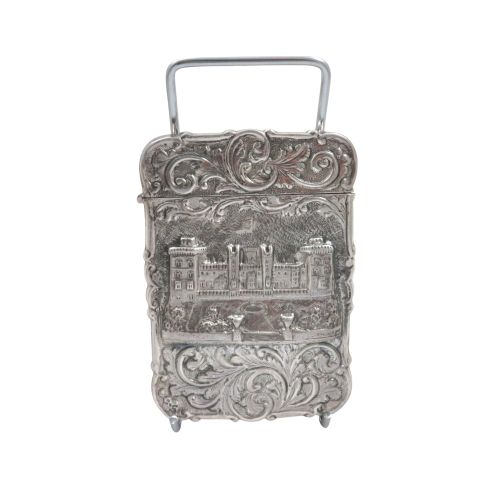
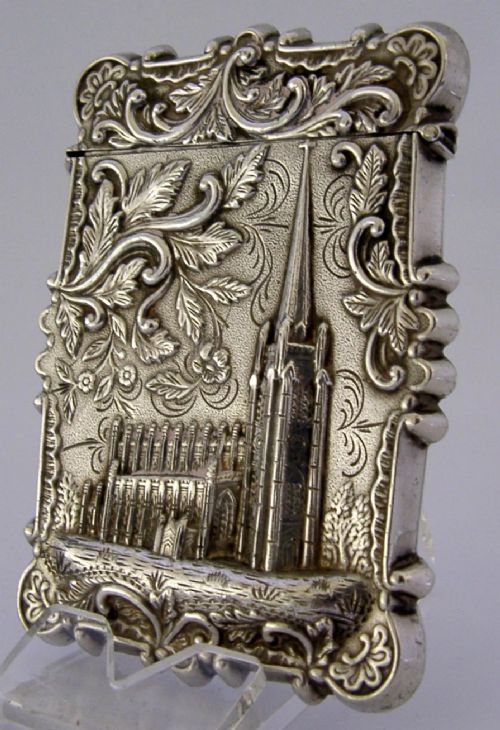
Quality rests in the crispness of the chasing and engraving, particularly on castle top designs depicting landmarks like Windsor Castle, St Paul's Cathedral, or Trinity Church. Sharp architectural detail and deep relief separate superior workmanship from shallow surface stamping.
The integration of secondary materials such as enamel work, gilt interiors, and unusual opening mechanisms elevates a piece. Maker attributions to prominent silversmiths also define the upper tier of the range.
Willian Aitken·Nathaniel Mills·George Unite·Foxall and Co
The Sterling Silver Calling Card Holder Glossary
- Castle top
- A card case featuring a high-relief architectural engraving of a specific famous building or landmark on the cover. These scenes are typically hand-chased by specialist silversmiths.
- Aide memoire
- A small pocket notebook or memorandum pad combined with a card case, often fitted with an internal ivory or paper leaf and a pencil.
- Sterling silver
- An alloy of silver containing ninety-two point five percent pure silver by mass, with the remainder being other metals, usually copper. British pieces bear full hallmarks confirming this standard.
- Silver gilt
- Sterling silver that has been coated with a thin layer of gold on the interior or exterior surfaces. This technique protects the silver from tarnishing in specific areas.
- Vitreous enamel
- Glass powder fused to the silver surface through high-temperature firing. It produces a glossy, coloured decorative layer that resists fading over time.
Sterling Silver Calling Card Holder: Frequently Asked Questions
How were calling card cases used?
Victorians and Edwardians utilised these slim cases to carry paper visiting cards when making formal social calls or leaving tokens at residences.
The rigid metal construction ensured the delicate paper cards remained flat and uncreased inside a pocket or reticule.
What is an aide memoire?
An aide memoire is a multifunctional case that combines a card holder with a small writing tablet or memorandum leaves for recording social engagements.
Many incorporate a tiny pencil held in a side loop alongside the internal compartments for visiting cards and stamps.
How do I identify the date of a silver case?
British pieces typically carry hallmarks stamped directly into the silver, including a date letter, a lion passant indicating sterling standard, and a town mark for assay offices like Birmingham or London.
Comparing these stamps against standard registry tables reveals the exact year of manufacture and the silversmith responsible.