



Engraved Silver Calling Card Box
An engraved silver calling card box is a small, pocketable receptacle for visiting cards, prized for its crisp hand-chased ornamentation and tactile weight.
Engraved Silver Calling Card Box
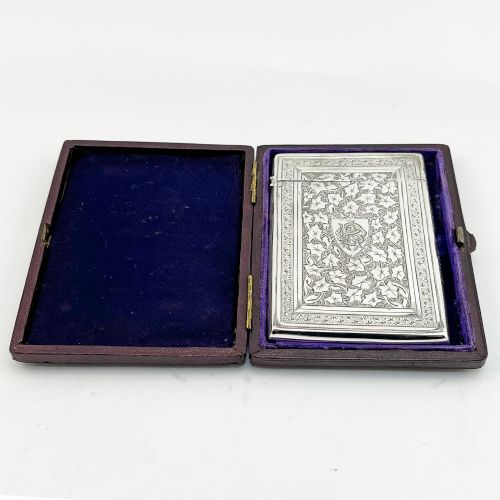
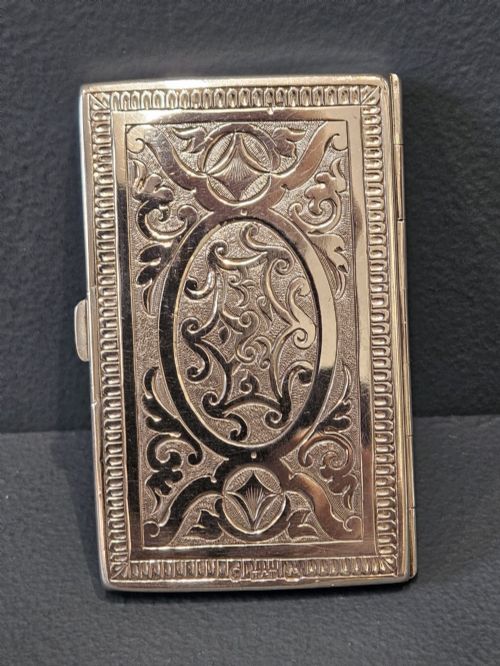
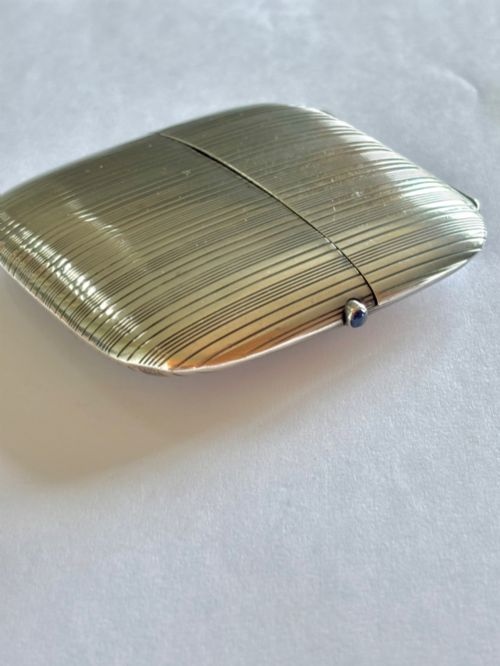
An engraved silver calling card box is a portable case designed to hold paper visiting cards during social calls, taking the form of card cases, card boxes, and aide-mémoires. These pieces date principally from the Victorian and Edwardian eras, alongside occasional examples from the mid-twentieth century.
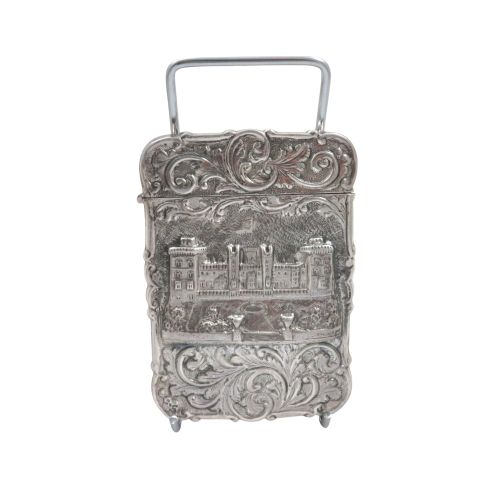
Buyers seeking an engraved silver calling card box will frequently encounter flat pocket cases as well as three-dimensional castle top boxes. These objects originate from English workshops, notably Birmingham, and occasionally extend to Russian or Art Deco designs.
The primary forms on this page range from plain sterling silver slip cases to hinged boxes lined with silver gilt. They reflect the strict etiquette of nineteenth-century calling, where leaving a card was an essential social ritual.
How they were made
Makers fashioned an engraved silver calling card box from sterling silver sheets, shaping the body through pressing, hammering, and soldering. Silver gilt linings appear in selected pieces, providing a rich contrast to the exterior metal.
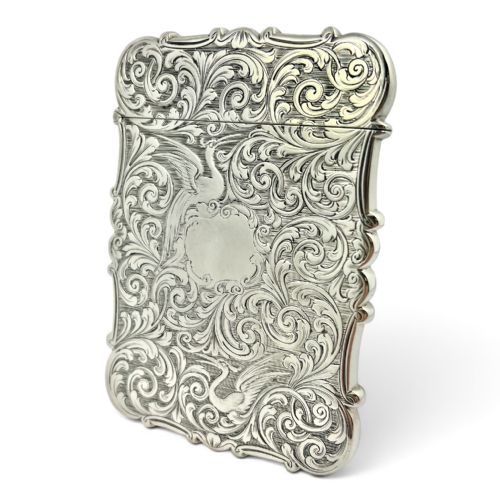
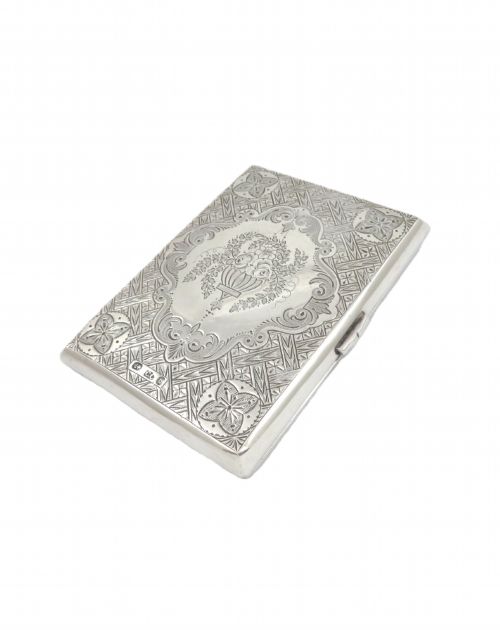
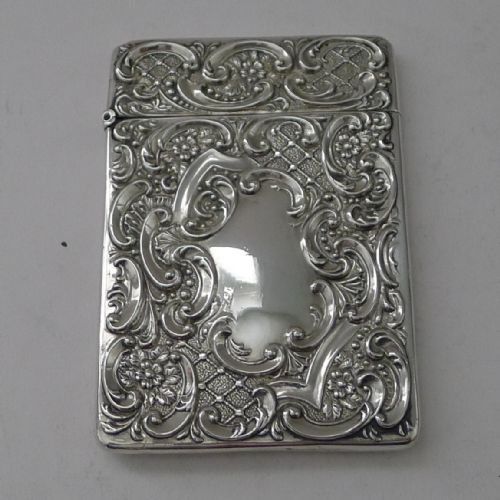
Decoration relied heavily on manual skill, with artisans employing chased, engraved, and repoussé techniques to render intricate floral scrolls, geometric patterns, and architectural landmarks. Castle top examples required exceptional precision to miniature-engrave specific buildings like Windsor Castle or St Paul's Cathedral onto the lid.
Engraved Silver Calling Card Box Retail Price Guide 2026
Typical asking prices for engraved silver calling card box among the pieces listed under this phrase on Sellingantiques today, from the lower quarter to the upper quarter. They describe what is for sale here now, not the wider market.
Some nineteenth-century card cases double as aide-mémoires, proving that forgetting your social obligations was an ancient hazard.
What varies in quality
The distinction in an engraved silver calling card box rests upon the crispness of the hand-engraving and the depth of the relief work. Superficial machine scratching differs entirely from deep, confident hand-chased foliage or detailed architectural rendering.
Maker attribution also dictates standing, with documented silversmiths commanding greater interest for their mastery. Furthermore, the structural integrity of the hinge and the snug closure of the lid determine the overall grade of the survival.
Nathaniel Mills·George Unite·Foxall and Co
The Engraved Silver Calling Card Box Glossary
- Castle top
- A term for a card case or box featuring a detailed pictorial engraving of a specific building or landmark on the lid. Nathaniel Mills produced some of the most celebrated examples of this style.
- Sterling silver
- An alloy comprising ninety-two point five percent silver and seven point five percent other metals, chiefly copper. This standard composition ensured durability for items subjected to frequent handling.
- Silver gilt
- Silver that has been coated with a thin layer of gold on its interior surfaces. This technique protected the metal from tarnishing when exposed to organic materials.
- Aide-mémoire
- A pocket notebook or card case fitted with internal leaves for writing notes. These dual-purpose objects often incorporated a small pencil alongside the card compartment.
- Repoussé
- A metalworking technique where the artisan hammers the silver from the reverse side to form a raised design in relief. The front details are then refined with chasing tools.
Engraved Silver Calling Card Box: Frequently Asked Questions
What is a calling card box?
A calling card box is a small rigid container designed to protect paper visiting cards in the pocket or reticule. They were essential accessories for nineteenth-century social exchange.
Victorian and Edwardian hosts and guests used them to ensure cards arrived crisp and uncreased when presented to a butler or left on a silver tray.
How do I date a silver card case?
Dating relies primarily on the assay office hallmarks stamped directly into the silver. These marks typically include a date letter, a city mark, and a standard purity symbol.
Stylistic cues such as Art Deco geometry or Victorian floral repoussé provide further confirmation of the period of manufacture.
What are castle top boxes?
Castle top boxes feature high-relief or engraved depictions of notable British landmarks on the lid. Famous subjects include Windsor Castle and St Paul's Cathedral.
Silversmiths such as Nathaniel Mills specialised in these pictorial designs, making them highly sought-after by collectors today.
How should I clean antique silver?
Antique silver requires gentle maintenance using a non-abrasive cloth and mild silver polish formulated for heritage items. Avoid harsh dips that strip the natural age and patina.
Regular handling helps maintain a soft lustre, while proper storage in dry conditions prevents excessive tarnishing.