




Stepped Medallion Wool Rug
Stepped medallion wool rug examples bring regional tribal geometry and hand-knotted pile into domestic interiors.
Stepped Medallion Wool Rug
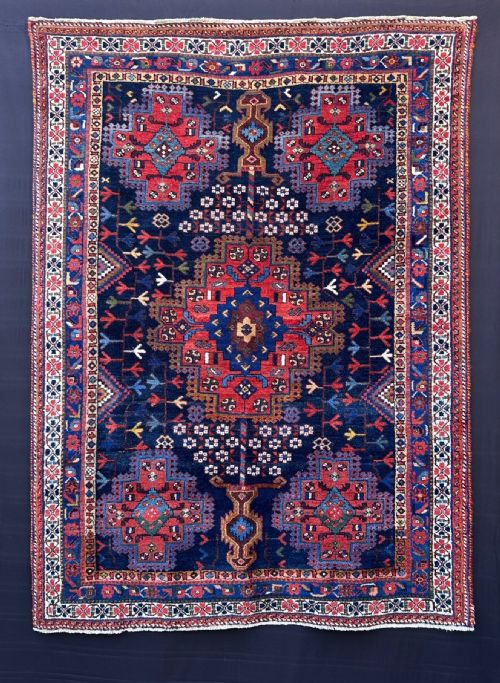
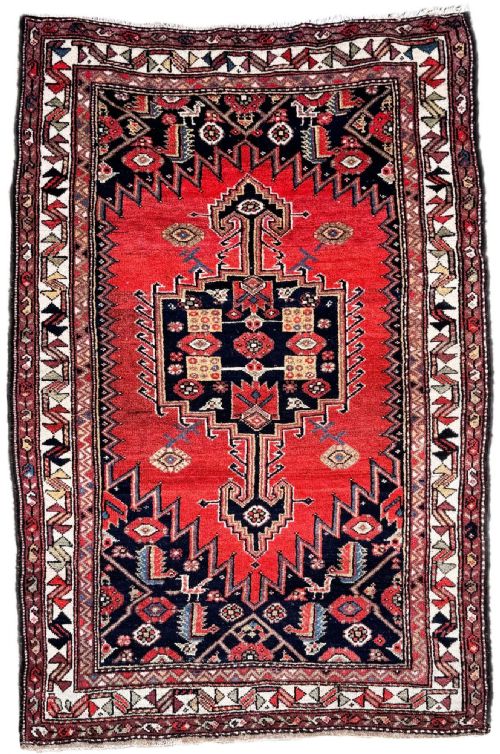
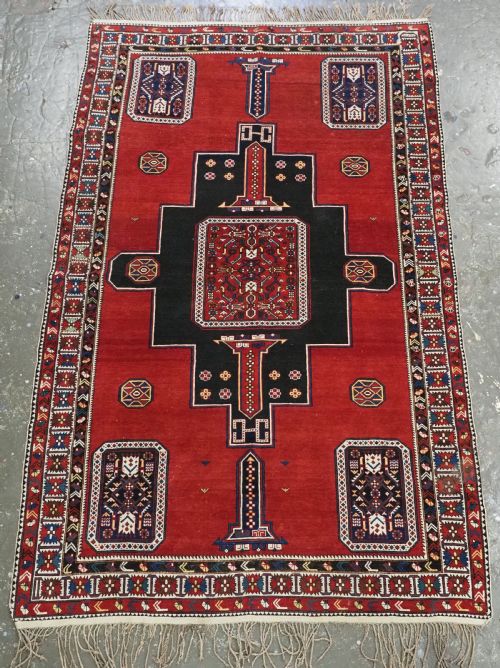
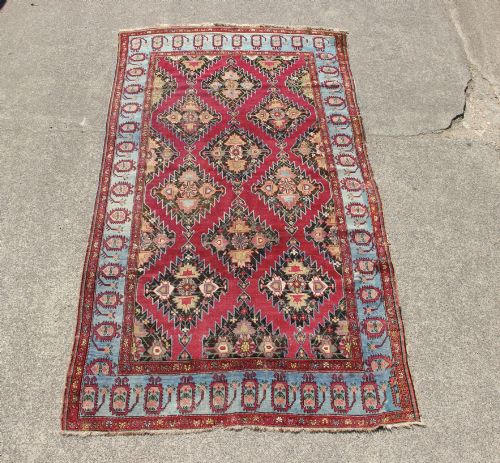
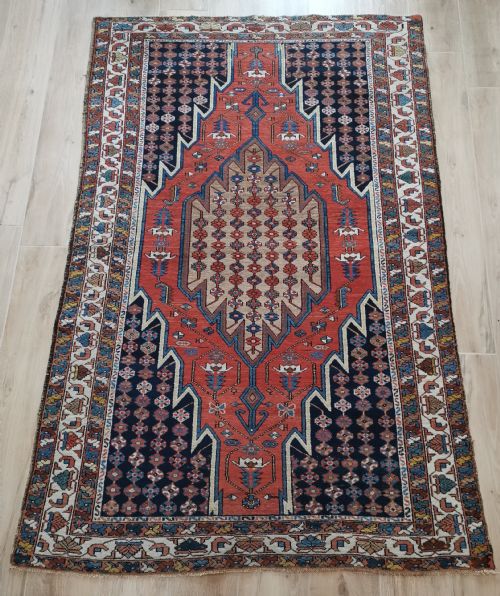
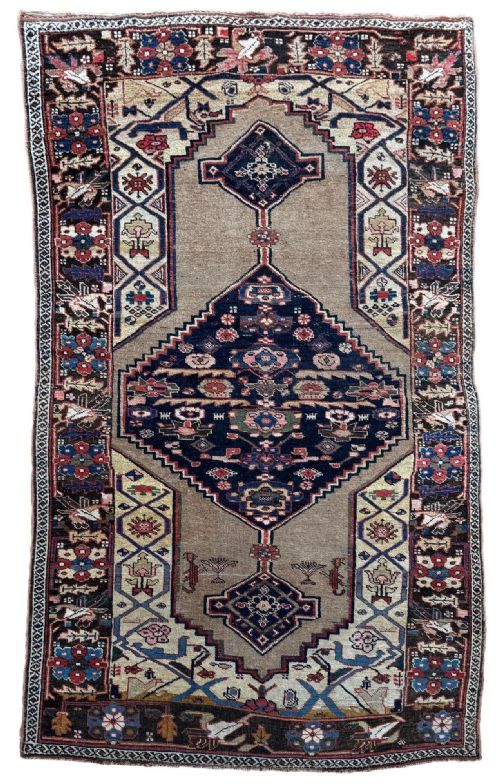
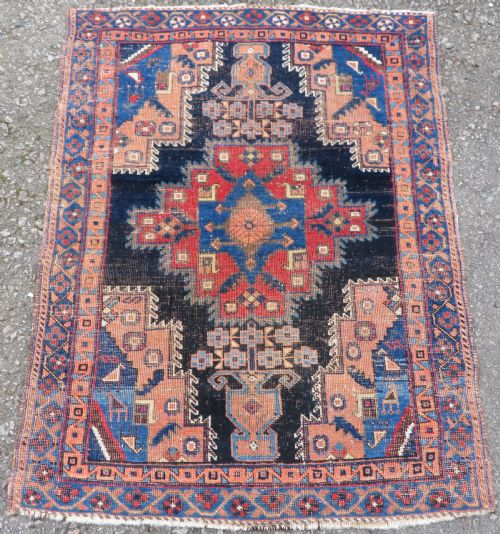
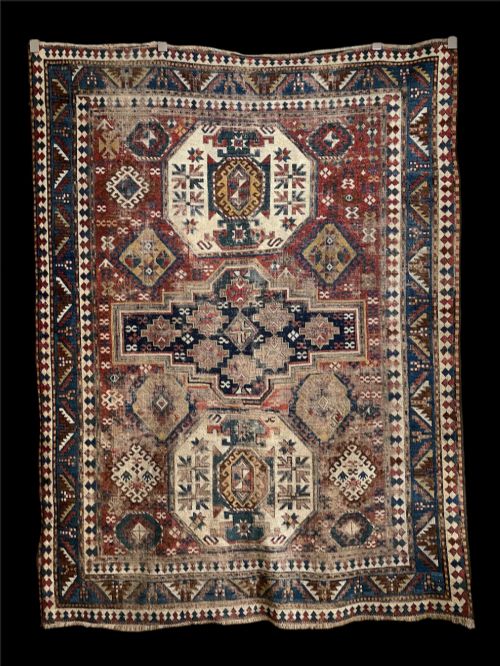
A stepped medallion wool rug unites village and tribal weaving traditions from Persian, Anatolian, and Caucasian origins. These pieces display distinct geometric centrepieces enclosed within fields of traditional motifs.
The selection on this page spans productions from the nineteenth century through to the 1930s. Buyers frequently encounter regional formats including Afshar, Bidjar, Heriz, and various Turkish village types.
Makers utilised durable local materials to produce functional floor coverings that double as textile art. Each piece carries the distinct palette and knotting structure of its specific weaving district.
Materials and construction
Weavers constructed these rugs predominantly using wool for both the pile and the foundational structure, often supplemented with cotton for warps and wefts. The natural fibre combination provides both structural stability and a rich texture underfoot.
Dyers employed traditional natural and early aniline sources to colour the wool yarns, creating deep shades that mature gracefully over time. Hand-knotting techniques varied by region, resulting in differing pile densities and handling weights.
Several nomadic weavers cleverly incorporated tiny wandering birds perched on trees directly into the narrow runner borders.
Assessing quality in regional carpets
Quality rests in the precision of the geometric drawing and the saturation of the dye lots. Stronger examples exhibit crisp delineation around the central motifs and harmonious colour balance across the field.
Structural integrity also separates standard utility weaving from finer workshop output. Tighter knot counts and resilient wool foundations ensure longevity without compromising the suppleness of the textile.
The Stepped Medallion Wool Rug Glossary
- Medallion
- A central ornamental design motif placed in the middle of the rug field. This geometric feature often dictates the symmetry of the surrounding patterns.
- Pile
- The upright yarn loop surface of the rug that forms the tactile layer. Pile density directly affects how the textile handles foot traffic.
- Warp
- The stationary lengthwise threads stretched on the loom before knotting begins. These structural elements support the entire tension of the woven textile.
- Weft
- The horizontal threads passed alternately over and under the warp threads to bind the knots in place. Weft tension influences the overall stiffness of the rug.
- Kilim
- A flat-woven carpet style produced without a pile by tightly interweaving warp and weft strands. These pieces offer a lighter alternative to piled carpets.
Stepped Medallion Wool Rug: Frequently Asked Questions
How do I clean an old wool rug?
Regular gentle vacuuming without a beater bar removes surface dust and protects the delicate wool pile.
Professional specialist washing remains essential for deep cleaning to prevent dye migration or structural damage.
Where were these tribal rugs made?
Production centres span traditional weaving regions across Persia, Anatolia, and the Caucasus.
Specific districts like Heriz, Bidjar, and various Kurdish or Afshar communities developed distinct local styles.
How do I date an antique rug?
Dating relies on examining material wear, dye characteristics, and regional structural traits recorded in the weaving.
Comparing knot styles and design motifs against known historical examples helps narrow the period of origin.
Can I place these rugs in high traffic areas?
Durable wool construction allows these textiles to withstand normal domestic foot traffic in living spaces.
Placing a quality underlay beneath the rug prevents slipping and reduces friction against the floorboards.