














Stemmed Wine Glass
These stemmed wine glass selections range from Georgian balusters to Victorian etched flutes, offering tactile history for the modern table.
Stemmed Wine Glass
A stemmed wine glass brings tactile history to the table, spanning centuries of craftsmanship from the Georgian era through the Victorian period and into the twentieth century. These drinking vessels serve multiple functions, encompassing heavy rummers, tall flutes, and delicate sweetmeat glasses designed for dining and toasts.
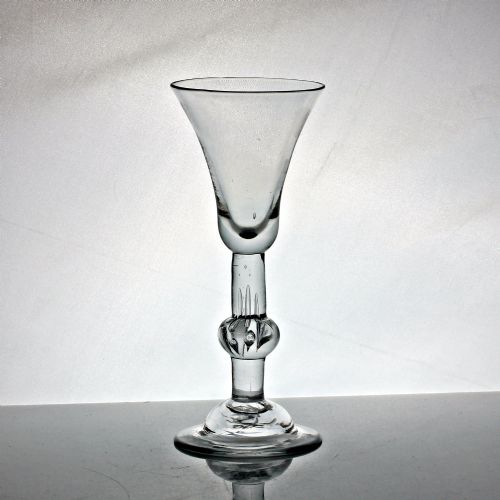
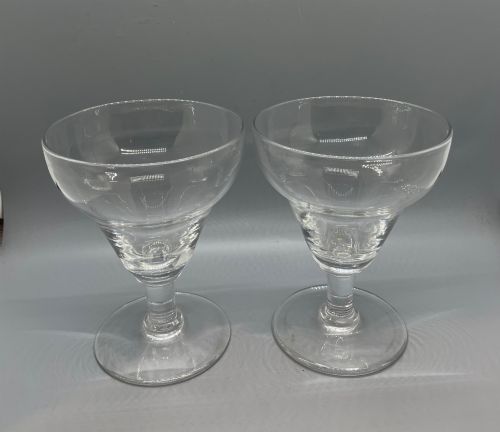
The most common examples encountered on this page originate in the eighteenth century, featuring quintessential English lead glass forms with distinct stem formations. Collectors meet everything from simple plain stems to intricate air twists and opaque twists, each bearing specific bowl shapes such as bell, trumpet, ogee, or rounded funnel.
Later nineteenth and early twentieth century expressions introduce coloured glass, star-etching, and elaborate floral enamelling from continental houses. These varied forms demonstrate how drinking vessels evolved from utilitarian tavern and dining equipment into decorative objects of refinement.
How They Were Made
The primary material underpinning these pieces is lead glass or flint glass, prized for its high refractive index, weight, and clarity. Artisans manipulated this molten medium by hand, blowing bowls and applying separate stems and folded or domed feet to ensure stability.
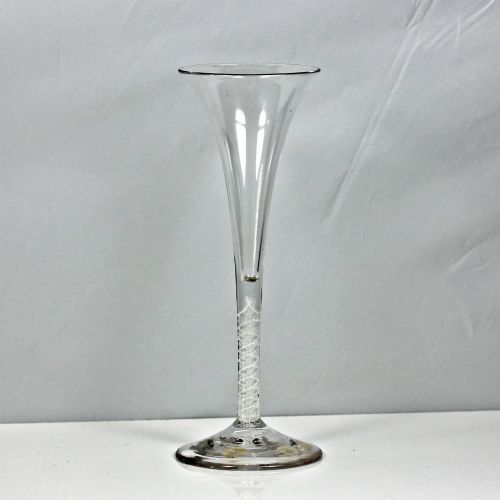
Specialised decorative techniques distinguish the manufacture of eighteenth-century stems, utilising trapped air bubbles, drawn threads of white enamel, or mixed twist rods embedded within the clear glass. Later Victorian and continental examples incorporate surface interventions such as wheel engraving, gilding, and polychrome enamel painting.
Stemmed Wine Glass Retail Price Guide 2026
Typical asking prices for stemmed wine glass among the pieces listed under this phrase on Sellingantiques today, from the lower quarter to the upper quarter. They describe what is for sale here now, not the wider market.
Object forms span from champagne flutes and rummers to delicate ratafia glasses.
What Varies in Quality
Quality rests upon the proportion and balance of the vessel, where the visual weight of the bowl harmonises precisely with the diameter of the foot and the thickness of the stem. Master glassblowers achieved symmetry and grace that elevate utilitarian items into sculptures of light.
The execution of interior optical effects determines desirability, seen in the regularity of white enamel twist threads or the crispness of wheel-cut engraving and gilding. Superior examples maintain clarity within the metal and crisp detail across decorative motifs without excessive surface wear.
Moser Bohemian·Theresienthal
The Stemmed Wine Glass Glossary
- Baluster
- A heavy, robust stem form featuring swelling nodes or knops derived from architectural columns. These appeared frequently on eighteenth-century drinking vessels.
- Opaque Twist
- A stem containing internal threads of white or coloured enamel drawn into spirals during manufacture. This technique flourished in eighteenth-century English glasshouses.
- Ogee
- An S-curve bowl profile curving inward at the rim and outward below. This shape helped concentrate aromas for the drinker.
- Folded Foot
- A base edge turned underneath during hot-working to create a smooth, reinforced rim. This method added necessary weight and durability to early drinking glasses.
- Rummer
- A heavy, capacious drinking glass popular during the Georgian and Victorian periods. They typically featured short stems and substantial bowls for ale or wine.
Stemmed Wine Glass: Frequently Asked Questions
What periods do these glasses cover?
The selection spans from the eighteenth century through the Victorian era into the early twentieth century.
Pieces range from Georgian lead glass vessels to later decorated continental crystal.
How do air twists and opaque twists differ?
Air twists contain elongated bubbles drawn into spiral patterns within the clear stem metal.
Opaque twists incorporate solid white or coloured glass threads running through the interior of the stem.
Were these glasses used daily?
Many examples served utilitarian functions at dining tables, taverns, and social gatherings across Britain and Europe.
Robust forms like rummers and heavy balusters were built for regular use during meals and toasts.