














Stemmed Drinking Glass
These stemmed drinking glass examples bring tactile history to the table, offering drinking vessels shaped by centuries of glassmaking skill.
Stemmed Drinking Glass
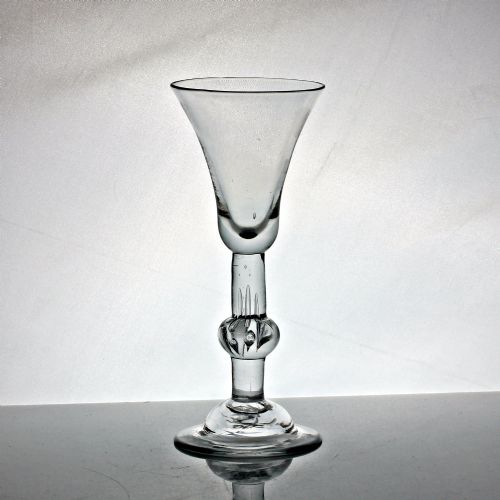
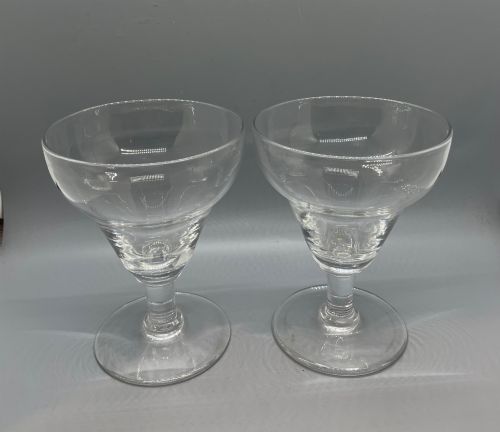
A stemmed drinking glass is a vessel designed for holding wine, ale, spirits, or drams, elevated on a distinct stem and foot. Buyers searching this phrase encounter predominantly 18th-century Georgian forms alongside occasional 20th-century revivals.
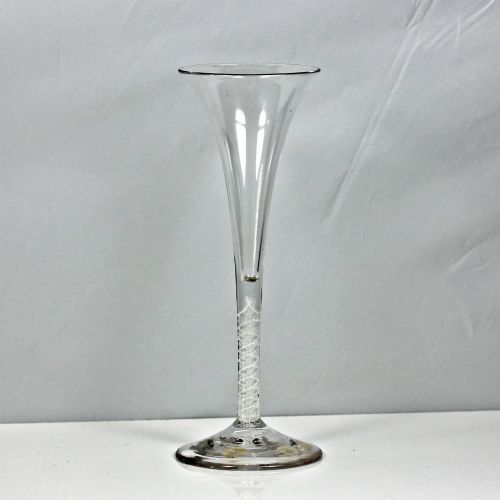
The selection ranges widely across specific forms including wine glasses, rummers, ale glasses, goblets, and dram glasses. Bowls vary from ogee and bell shapes to trumpet and flared bucket profiles, resting upon plain, baluster, balustroid, or twisted stems.
How they were made
These items are fashioned from lead glass, flint glass, and clear glass, utilising traditional glassblowing and mould-blowing techniques. Molten metal is gathered, blown into shape, and married to separately formed stems and folded or domed feet.
Intricate internal stem patterns are achieved by manipulating air bubbles or white enamel threads within the glass before drawing and twisting the stem. Surface decoration is frequently applied through wheel engraving, rococo cutting, or enamel painting.
Stemmed Drinking Glass Retail Price Guide 2026
Typical asking prices for stemmed drinking glass among the pieces listed under this phrase on Sellingantiques today, from the lower quarter to the upper quarter. They describe what is for sale here now, not the wider market.
The listings span multiple centuries, concentrating heavily on 18th-century Georgian lead glass forms alongside 20th-century Edwardian and 1930s revivals.
What varies in quality
Differentiation across the range rests on the complexity of the stem formation and the finesse of any surface engraving. Multi-spiral air twists, complex opaque twists, and well-executed hop and barley wheel engravings represent higher degrees of artisan skill.
Proportion and weight also dictate quality, where heavy baluster or balustroid forms with balanced domed or folded feet display superior handling of the material compared to standard plain stems.
The Stemmed Drinking Glass Glossary
- Air twist
- A stem containing elongated internal spiral air bubbles formed by drawing out twisted glass rods.
- Opaque twist
- A stem featuring internal threads of white enamel glass drawn into spiral patterns.
- Baluster
- A heavy, thick stem shape characterised by knops reminiscent of architectural supports.
- Folded foot
- A glass base where the outer rim is turned under to create a thicker, more durable edge.
- Ogee bowl
- A drinking vessel bowl with an S-curve profile, curving outward at the rim and inward at the base.
Stemmed Drinking Glass: Frequently Asked Questions
What is a rummer?
A rummer is a sturdy type of stemmed drinking glass developed for consuming heavier wines or spirits during the Georgian period. These pieces typically feature capacious bowls and stout stems.
Their robust construction made them practical for everyday tavern or household use, distinguishing them from delicate wine flutes.
How do air twist and opaque twist stems differ?
Air twist stems contain trapped spiral ribbons of air inside the clear glass column, created through skillful manipulation while hot. Opaque twist stems incorporate solid white enamel rods to achieve a similar internal helix effect.
Both techniques represent distinct milestones in 18th-century glass decoration.
What is a folded foot on a glass?
A folded foot is a circular glass base where the outer rim is doubled back underneath itself during manufacture. This technique adds structural weight and strength to the base of the drinking vessel.
Folded feet appear frequently on Georgian drinking vessels to prevent chipping.
How were 18th-century glass bowls decorated?
Glassmakers used wheel engraving, rococo cutting, and enamel painting to adorn the bowls of drinking vessels. Common motifs included floral sprays, Jacobite symbols, or hop and barley patterns.
These surface details help identify the intended contents or the historical context of the piece.