

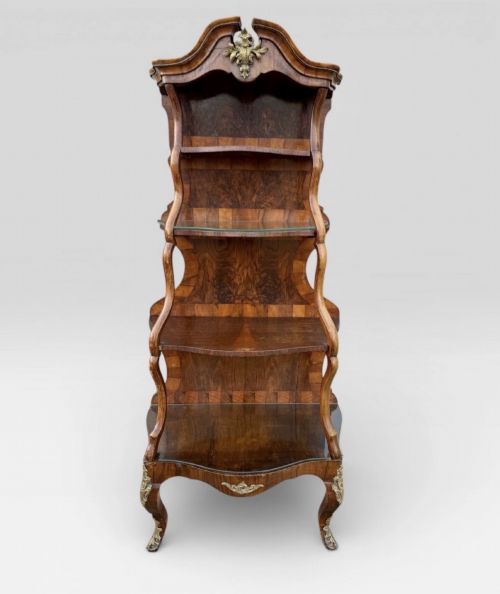


Standing Corner Etagere
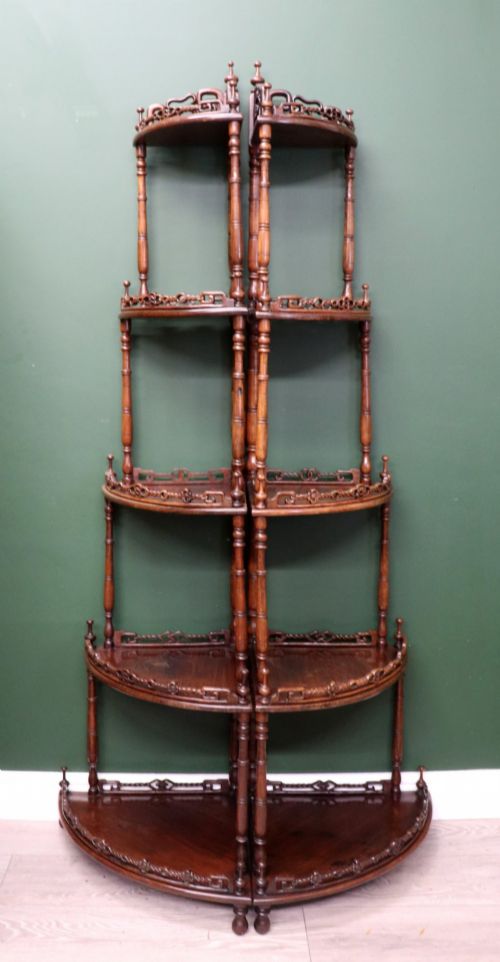
A standing corner etagere is a tiered shelving unit designed to occupy room corners, offering display space in mahogany, walnut and rosewood.
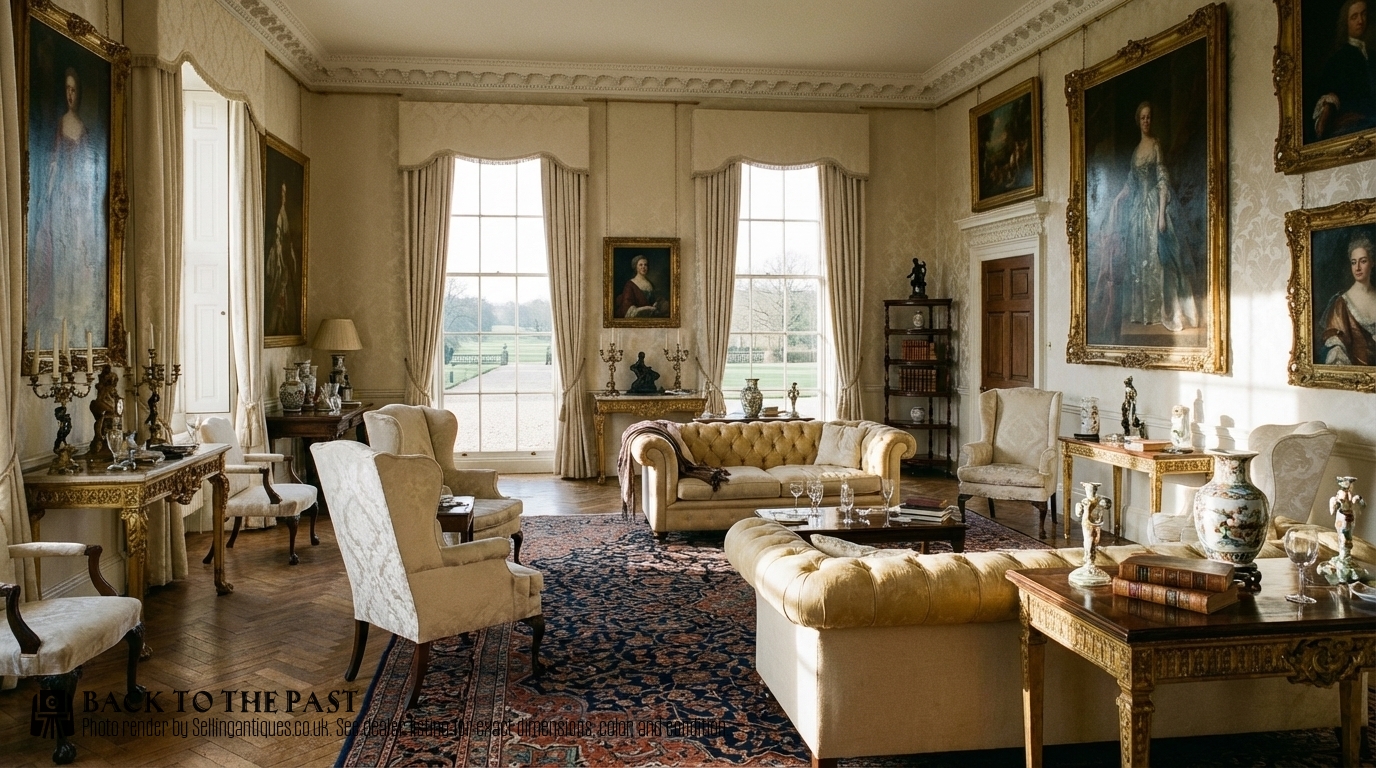
Standing Corner Etagere
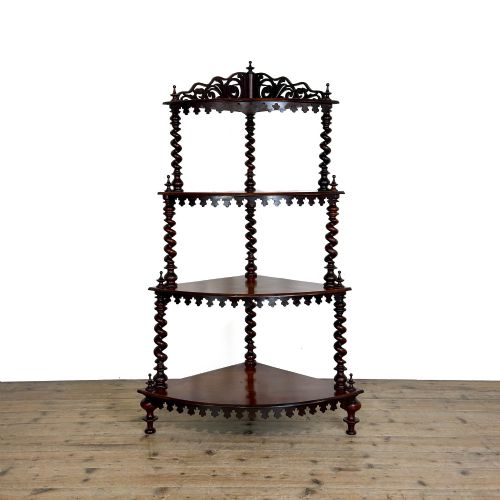
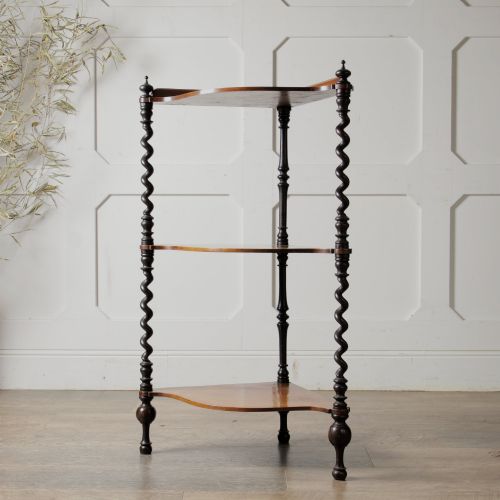
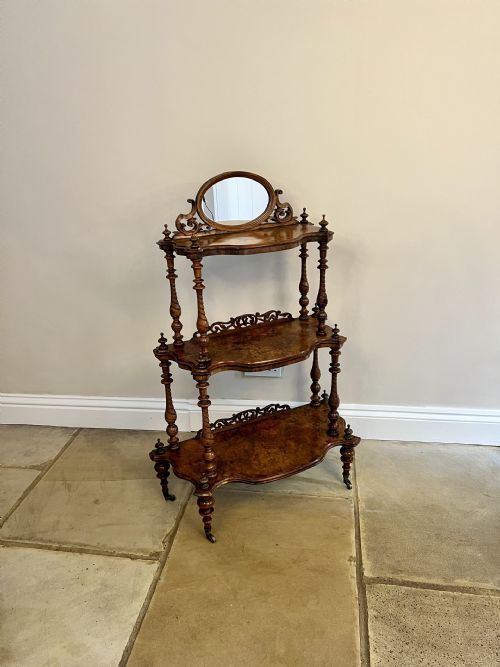
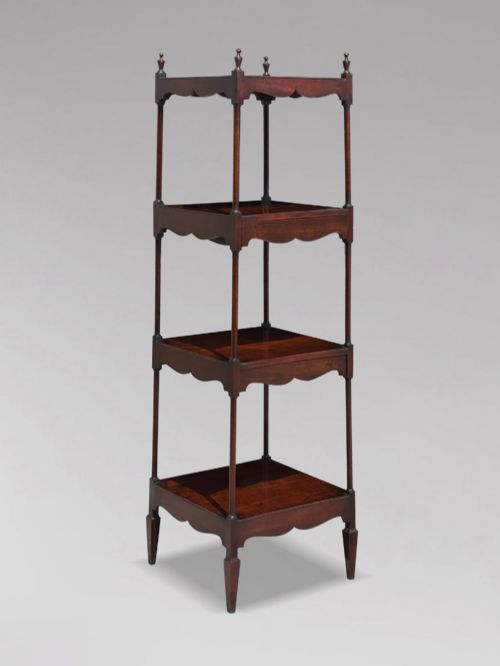
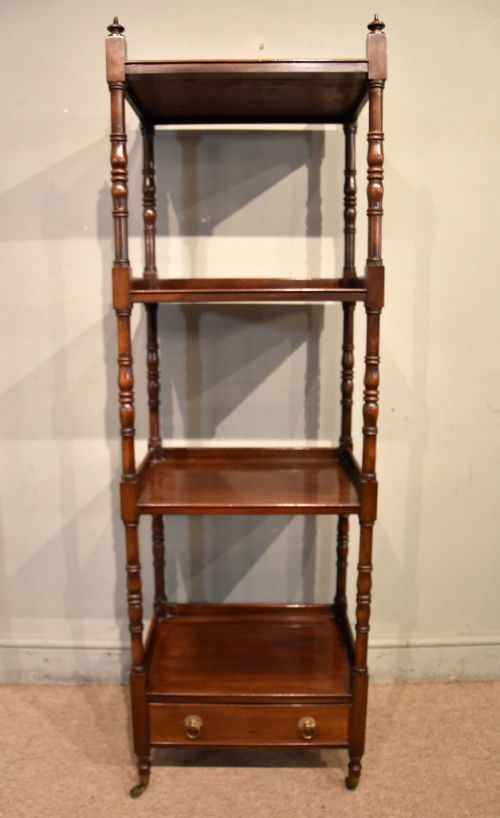
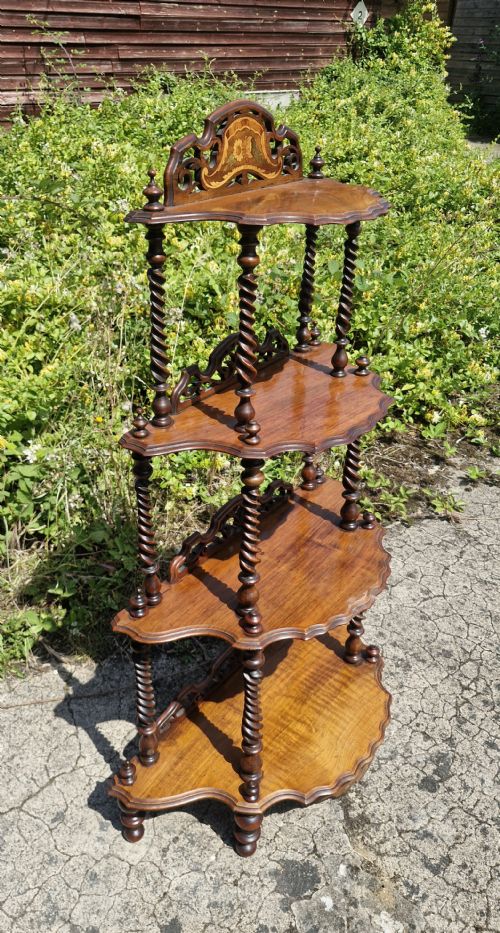
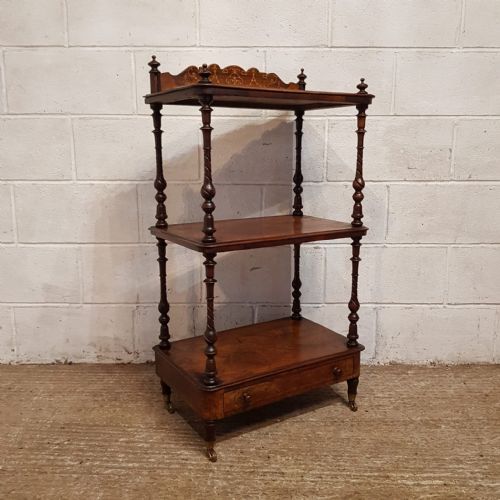
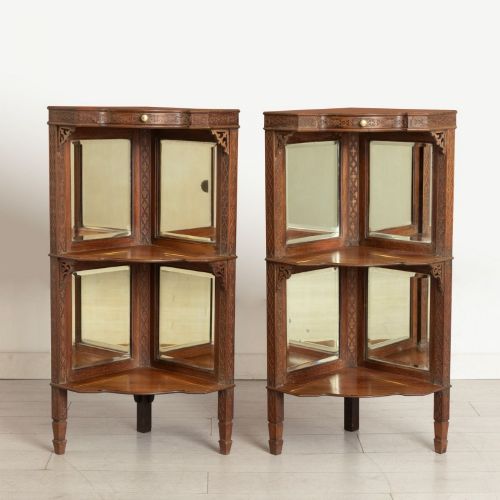
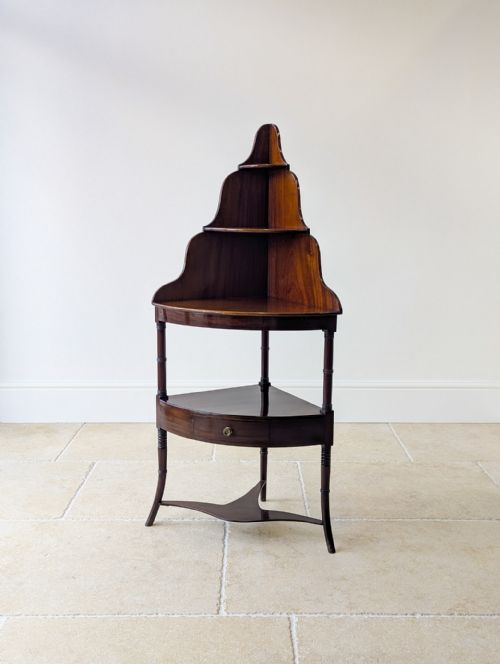
A standing corner etagere sits neatly into room angles, providing multiple tiers for display without consuming central floor space. These pieces appear in forms such as corner whatnots, shelving units and display stands.
The materials span mahogany, walnut, burr walnut and rosewood, with examples originating across the Victorian, Regency and Georgian periods.
How they were made
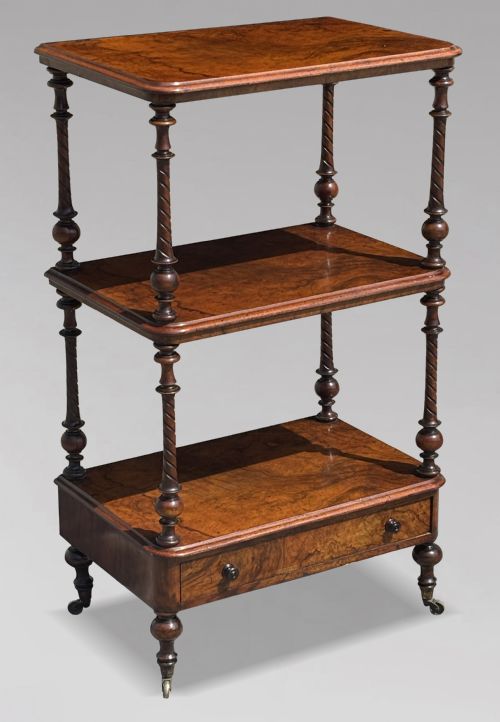
Cabinet makers utilised timber veneers including burr walnut and mahogany over solid frames, often incorporating turned supports or barley twists. Joinery relies on traditional techniques to support multiple tiers of open shelving.
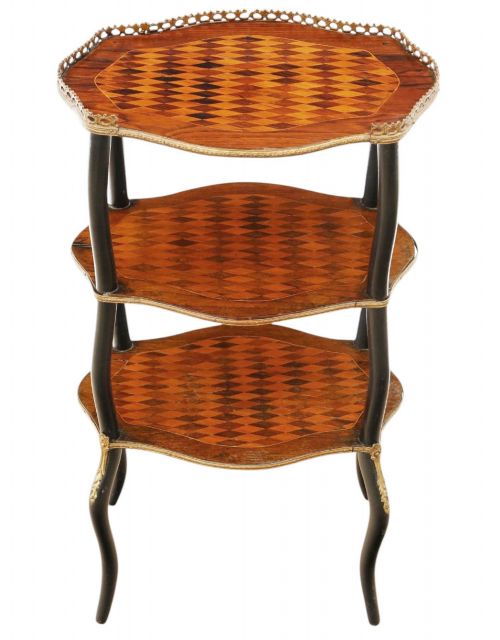
Detailing includes ebonised finishes, brass mounts, gilt metal accents and inlaid parquetry, while iron variants employ riveted slats and painted surfaces.
The listings feature tiered shelving in mahogany, walnut, burr walnut, rosewood, bamboo and iron across Georgian, Regency and Victorian periods.
What varies in quality
The selection of timber veneer dictates visual depth, with figured burr walnut and rich mahogany representing the upper tier of construction. Finer examples display meticulous marquetry, crisp carving on supports and substantial brass or gilt hardware.
Proportion and structural rigidity separate standard utility items from exhibition pieces, where timber thickness and refined turning elevate the presence of the tiered shelving.
Edwards & Roberts·Gillows
The Standing Corner Etagere Glossary
- Etagere
- A piece of furniture consisting of a set of open shelves for displaying small objects or ornaments. It originated in France and gained popularity during the 19th century.
- Whatnot
- A multi-tiered shelving unit used for displaying ornaments and bric-a-brac. This term is frequently used interchangeably with etagere in British furniture records.
- Burr walnut
- A prized wood veneer obtained from the Burl growth on walnut trees, showing swirling patterns. It was heavily utilised during the Victorian period for high-status cabinetry.
- Parquetry
- Geometric wood mosaic work used for decorative flooring or furniture surfaces. On these pieces, it forms intricate patterns within the shelf borders.
- Barley twist
- A type of furniture turning resembling the shape of a twisted rope or barley stalk. It appears frequently as upright supports on Victorian tiers.
Standing Corner Etagere: Frequently Asked Questions
What is a standing corner etagere used for?
These tiered units were originally designed for displaying ornaments, ceramics and small decorative objects in domestic drawing rooms.
They utilise neglected room angles to provide vertical storage space without crowding the main living area.
How do I identify a Victorian whatnot?
Victorian examples typically feature dark timbers such as walnut, mahogany or rosewood, often constructed with three or four open tiers.
Turned supports, carved details and occasional brass galleries help distinguish pieces manufactured during this period.
What is the difference between an etagere and a whatnot?
In historical terminology, both refer to multi-shelved open furniture used for display, with regional preferences often dictating the name.
Listings group them together as tiered shelving units designed for freestanding corner placement.