
Stamped Desk
When you search for stamped antique desk, you enter a field where maker's marks verify the origin of cedar, mahogany, and rosewood writing furniture.
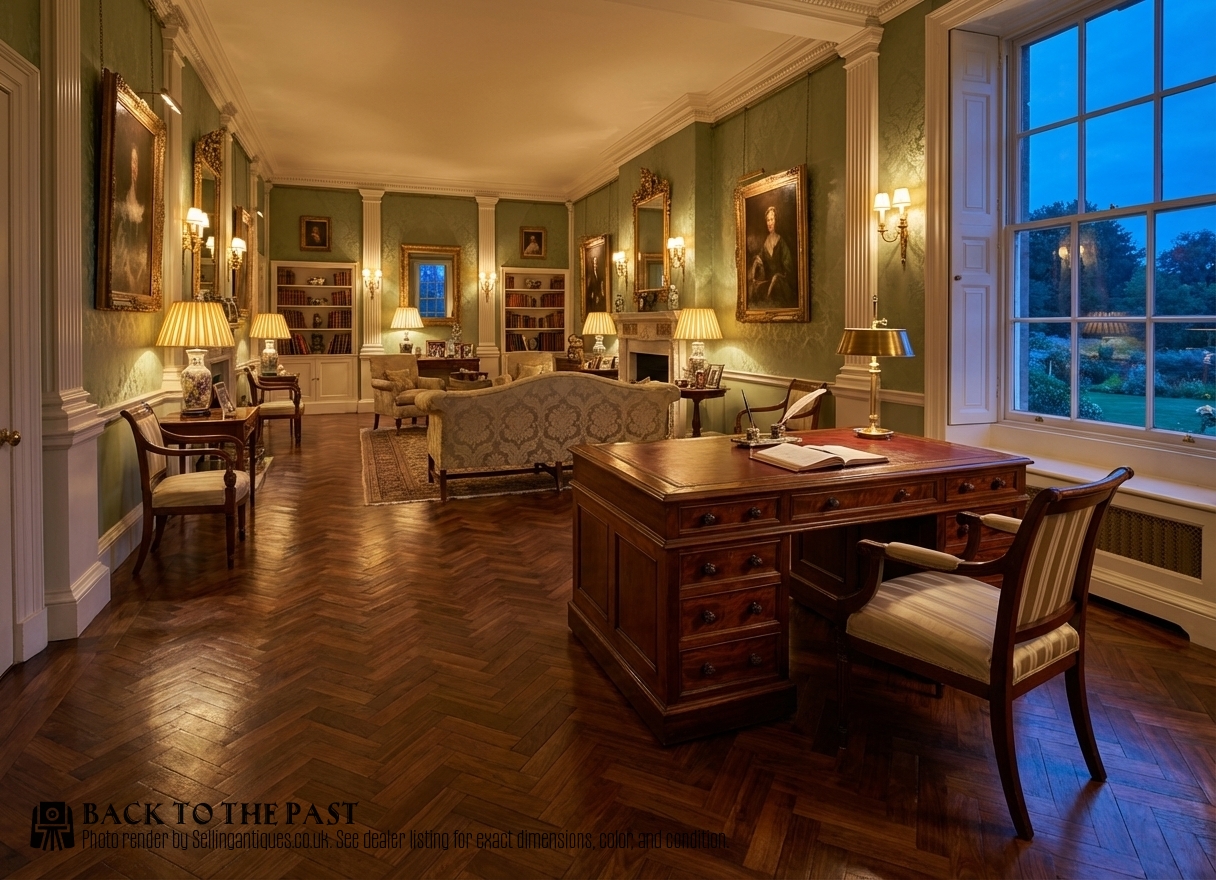
Stamped Desk
A stamped antique desk encompasses writing tables, bureau plats, and partners library tables bearing maker's stamps or workshop signatures.
You will encounter mahogany pedestal desks, partners tables, and writing tables originating from Georgian, Regency, Victorian, and Edwardian periods.
These pieces range from modest mahogany writing desks to substantial library tables and bureau plats built for institutional or domestic studies.
Materials and Construction
Cabinet makers utilised dense hardwoods like mahogany and rosewood, frequently incorporating inlaid satinwood or leather writing surfaces.
Drawer linings utilise secondary timbers, whilst structural joints rely on traditional hand-cut dovetails executed by skilled joiners.
Listings feature mahogany, rosewood, and oak across Georgian, Victorian, and Edwardian periods.
Quality Variations
The clarity and placement of the maker's stamp on the drawer edge or frame establish authenticity and workshop attribution.
Superior examples display precise timber selection, symmetrical grain matching, and original brass or ormolu hardware.
Gillows·Edward Barnsley·W Priest·Gillington of Dublin·John Gregory London·Hobbs and Co·Maples and Co·W Fry and Co
The Stamped Desk Glossary
- Maker's mark
- A stamp, brand, or signature pressed or burned into the timber by the cabinet maker or retailer to identify origin.
- Bureau plat
- A freestanding writing desk with a rectangular top, typically fitted with drawers, originating in France.
- Partners desk
- A large double-sided pedestal desk designed for two people to work opposite one another.
- Ormolu
- Gilded bronze mounts applied to furniture, common on finer nineteenth-century writing tables.
Stamped Desk: Frequently Asked Questions
Where is the maker stamp usually located?
Maker marks on writing furniture typically appear along the top edge of a primary drawer, inside the framework, or on the backboards.
Inspectors and collectors check these concealed locations where cabinet makers recorded their attribution without disrupting the polished exterior surfaces.
How do I distinguish Georgian from Victorian desks?
Georgian writing furniture relies on restrained architectural proportions, solid mahogany construction, and understated bracket feet.
Victorian pieces frequently incorporate heavier pedestals, carved mouldings, inset leather surfaces, and more elaborate commercial hardware.
Are these desks suitable for daily computer use?
Antique writing tables provide generous surface areas and sturdy platforms for modern writing tasks and laptop computers.
Ensure that kneehole clearances and drawer depths match your ergonomic requirements before placing them into daily service.
What maintenance do leather writing surfaces require?
Leather inserts benefit from occasional cleaning with specialised neutral wax to prevent cracking and preserve the supple texture.
Avoid applying harsh chemical solvents or excessive moisture directly onto the leather or the surrounding polished mahogany.