


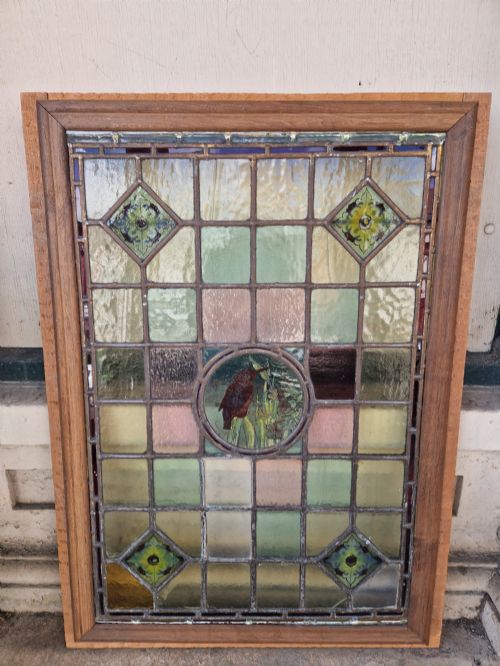


Stained Glass Suncatcher Panel
These stained glass suncatcher panel examples catch the morning light and bring rich colour and historic character directly into any room.
Stained Glass Suncatcher Panel
When you search for a stained glass suncatcher panel, you find architectural salvage and decorative windows originating from the Victorian, Edwardian, and early twentieth century periods, spanning from 1890 to 1920. These pieces take the form of stained glass panels and windows framed in wood or pine, designed to hang in windows and catch the daylight.
The styles represented across these listings include Victorian, Gothic Revival, Edwardian, Arts and Crafts, Art Nouveau, and Neo-Renaissance designs. You will most frequently encounter panels featuring hand painted pictorial scenes such as knights in armour, countryside views, birds on branches, flowers with amber bullseyes, and religious subjects.
How they were made
The construction of these pieces relies on traditional techniques combining coloured glass and lead came to hold the compositions together. Artisans incorporated hand painted details directly onto the glass surface to render intricate subjects like birds, foliage, and figures.
Many of these panels are set within original wooden frames, often constructed from pine, which provide the structural rigidity needed for architectural installation and hanging. The integration of specialty elements such as amber bullseyes adds distinct texture and depth to the assembled glass work.
Stained Glass Suncatcher Panel Retail Price Guide 2026
Typical asking prices for stained glass suncatcher panel among the pieces listed under this phrase on Sellingantiques today, from the lower quarter to the upper quarter. They describe what is for sale here now, not the wider market.
A solitary bird perched on a painted branch waits patiently behind leaded lines to catch the morning sun.
What varies in quality
The sophistication of the hand painted detail work separates the standard decorative window from an exceptional pictorial panel. Pieces depicting complex subjects like knights in armour or detailed countryside scenes demonstrate a higher level of artistic ambition than simpler geometric arrangements.
The integrity of the leaded glass assembly and the character of the surrounding wooden frame also dictate the overall standard of a piece. Original wooden surrounds and intact bullseye glass accents contribute significantly to the visual and material substance of the panel.
The Stained Glass Suncatcher Panel Glossary
- Leaded glass
- Glass pieces joined together strips of lead known as came. This method allows artisans to create detailed pictorial and decorative windows.
- Architectural salvage
- Building elements rescued from older structures for reuse. These panels often originate from period homes and buildings.
- Bullseye
- A round piece of glass featuring a central raised knob formed during the blowing process. These add texture and catch the light in specific ways.
- Gothic Revival
- A design style drawing inspiration from medieval architecture. This aesthetic appears in religious windows and pointed arch compositions.
- Arts and Crafts
- A movement prioritising traditional craftsmanship and hand made materials. Pieces in this style focus on natural motifs like birds and flowers.
Stained Glass Suncatcher Panel: Frequently Asked Questions
How do I hang a stained glass suncatcher panel?
These panels require secure fixings attached to the window frame rather than the glass itself due to their substantial weight. Utilising strong chain or wire anchored into surrounding woodwork ensures the piece safely bears the load.
Positioning the panel where direct sunlight strikes the glass allows the painted details and coloured sections to project their full visual effect into the interior space.
How do I date a stained glass panel?
Dating relies on stylistic clues found within the painted imagery, such as Victorian knight motifs or Edwardian bird designs. The framing materials and construction techniques also offer indicators of the period.
Examining the type of lead came and the style of the hand painting helps place the panel within eras spanning from the late nineteenth century to the 1920s.
What is architectural salvage?
Architectural salvage refers to building components removed from older properties prior to demolition or renovation. This practice preserves decorative windows and panels for contemporary interior display.
These pieces retain their original character and material history, offering a direct link to Victorian and Edwardian building traditions.
Are these panels painted on the glass?
Many examples feature hand painted details applied directly to the glass surface. Artisans used specialised pigments fired onto the glass to create figures, foliage, and scenic backgrounds.
This technique allows for fine linework that complements the segmented sections of coloured glass held within the lead framework.