


Arts and Crafts Stained Glass
Arts and crafts stained glass brings rich colour and linear design into rooms through leaded windows, hanging lanterns and firescreens.
Arts and Crafts Stained Glass
When you search for arts and crafts stained glass, you encounter architectural windows, hanging lanterns, and firescreens spanning the Victorian, Edwardian, and early twentieth century periods. The most frequent forms on this page are leaded glass windows featuring hand-painted natural scenes, alongside brass and bronze pendant lights.
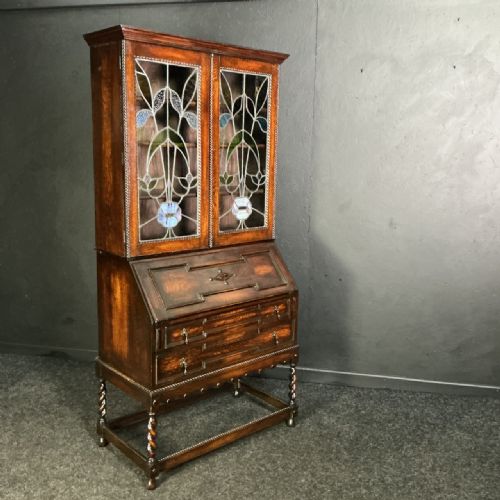
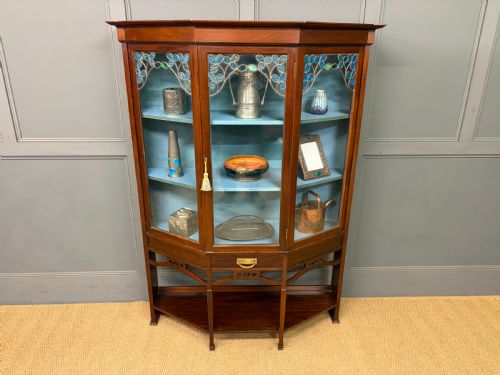
The selection ranges from nineteenth century Pre-Raphaelite inspired panels to 1920s oak bureau bookcases incorporating leaded glass doors. Makers applied the philosophy of the movement to domestic lighting and glazing, integrating utility with handcrafted decorative panels. These pieces connect nineteenth century design ideals directly to interior architecture.
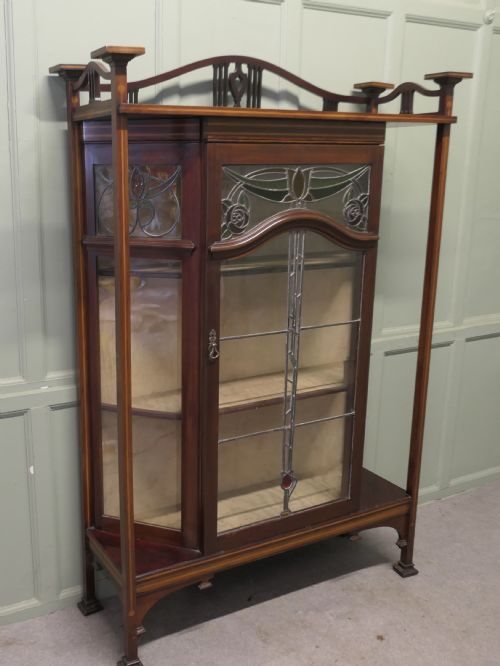
Objects appear in various styles including Art Nouveau and Edwardian variations, utilising oak, mahogany, and ash alongside traditional metalwork. Windows frequently display birds, floral motifs, and countryside scenes rendered in painted glass and amber bullseyes. Buyers select these items to introduce period character and coloured light into residential spaces.
Materials and Techniques
Glaziers and metalworkers combined lead, coloured glass, and brass or bronze to build lanterns and windows. Artisans joined individual pieces of tinted and painted glass within flexible lead cames, soldering the joints to form rigid panels. Hand-painted details depicting birds and foliage were fired onto the glass before assembly.
Lantern frames and firescreen stands utilise brass, copper, iron, and hardwoods such as oak and mahogany. Metal components often retain original finishes, while hanging lights integrate electrical fittings alongside the historic leaded glass shades. Cabinetmakers housed panels within bureau bookcases and display furniture using traditional joinery.
Arts and Crafts Stained Glass Retail Price Guide 2026
Typical asking prices for arts and crafts stained glass among the pieces listed under this phrase on Sellingantiques today, from the lower quarter to the upper quarter. They describe what is for sale here now, not the wider market.
Several windows feature birds mid-flight, bringing a permanent flash of feathered movement straight through the glass.
Evaluating Quality
Quality rests upon the artistic execution of the painted glass and the complexity of the leading. Hand-painted pictorial scenes featuring birds or landscapes demand superior draughtsmanship compared to plain geometric glazing. The weight and finish of the surrounding metalwork, whether cast brass or beaten copper, further distinguish standard production from finer workshop output.
The integration between the glass panel and its structural housing determines the integrity of lanterns and windows. Original lead cames that remain rigid and secure indicate careful preservation, while balanced proportions in furniture and light fixtures reflect thoughtful design. Superior pieces maintain harmonious relationships between the materials and the decorative motifs.
Shapland and Petter·Sir Edward Burne-Jones·Tiffany
The Arts and Crafts Stained Glass Glossary
- Came
- A slender grooved strip of lead used to hold pieces of glass together in a window or panel. These flexible strips form the structural grid of leaded glazing.
- Bullseye
- A small, rounded disc of glass featuring a central pontil mark, often incorporated into windows for texture and variation. Amber bullseyes frequently accent avian and floral designs.
- Pendant Light
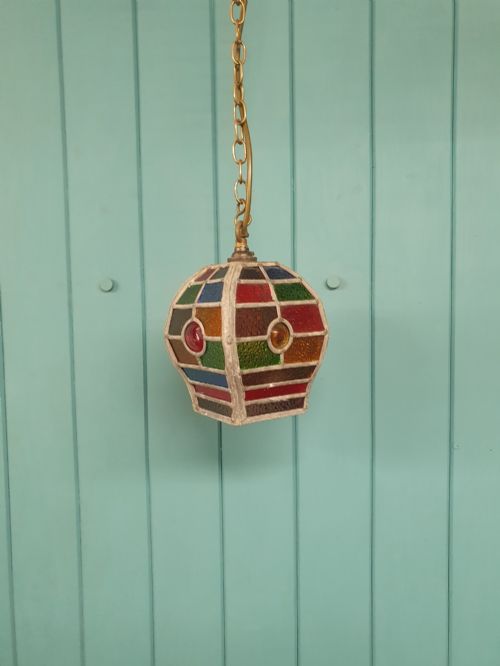
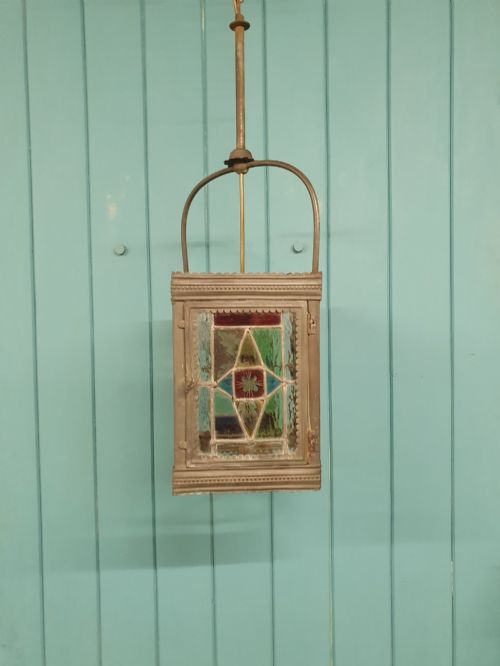
- A fixture suspended from the ceiling by a chain or cord, housing a light source within a decorative shade. In this context, shades utilise leaded and stained glass.
- Firescreen
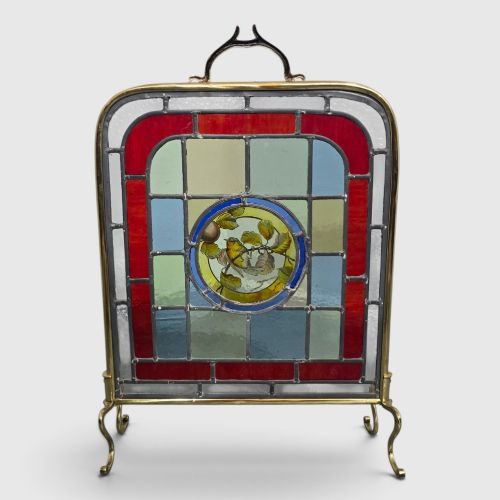
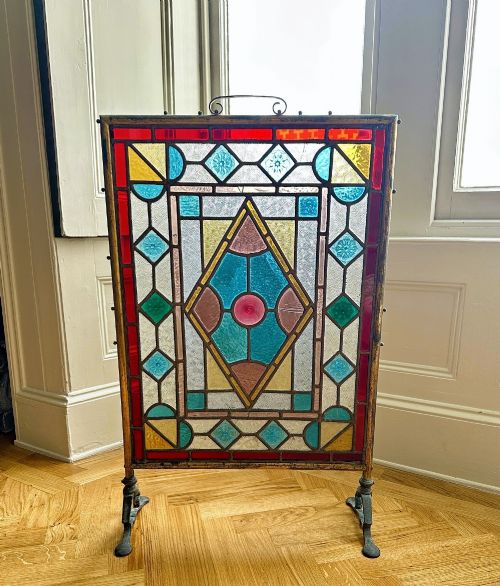
- A portable screen placed before a fireplace when not in use, often featuring decorative panels. Examples in this category employ stained glass held within iron or wooden frames.
- Bureau Bookcase
- A piece of furniture combining a sloping desk compartment with upper shelving enclosed by doors. Glazed doors frequently incorporate leaded glass panels.
Arts and Crafts Stained Glass: Frequently Asked Questions
How do I hang a stained glass lantern?
Pendant lanterns suspend from ceilings using integrated chains or brackets that connect to the metal frame. Ensure the ceiling fixing supports the combined weight of the metalwork and leaded glass.
Position the fixture at a height that protects the hanging shade from accidental impact while allowing adequate clearance below.
Can I install antique windows into modern walls?
Historic windows fit into interior partition walls, or hang safely in front of existing double-glazed panes using brackets. This method preserves the original lead cames and hand-painted glass without exposing them to exterior weather.
Consult a specialist joiner to create a rebated wooden frame that secures the panel safely.
How do I clean leaded glass panels?
Dust the surface gently with a soft, dry cloth to remove loose particles without disturbing the lead cames. Avoid harsh chemical cleaners that might damage painted details or dry out the historic lead.
Use a damp microfiber cloth with plain water for stubborn marks, drying the glass immediately afterwards.
What is the difference between stained and leaded glass?
Stained glass refers specifically to glass that has been coloured during manufacture or painted and fired in a kiln. Leaded glass describes individual pieces held together by a network of lead cames, which may be clear or coloured.
Many arts and crafts pieces combine both techniques by using painted stained glass within a leaded matrix.