



Painted Bird Stained Glass
These painted bird stained glass pieces bring avian subjects into domestic interiors through colour and light.
Painted Bird Stained Glass
When you search for painted bird stained glass, you encounter decorative panels and windows dominated by avian motifs set in domestic settings. These objects emerge primarily from the Victorian, Edwardian, and Arts and Crafts periods, reflecting the naturalism popular in nineteenth and early twentieth century design.
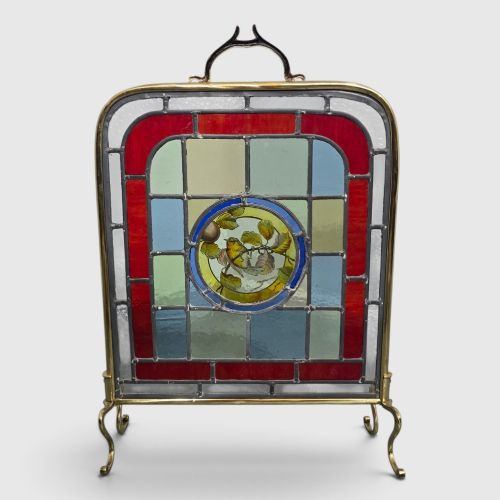
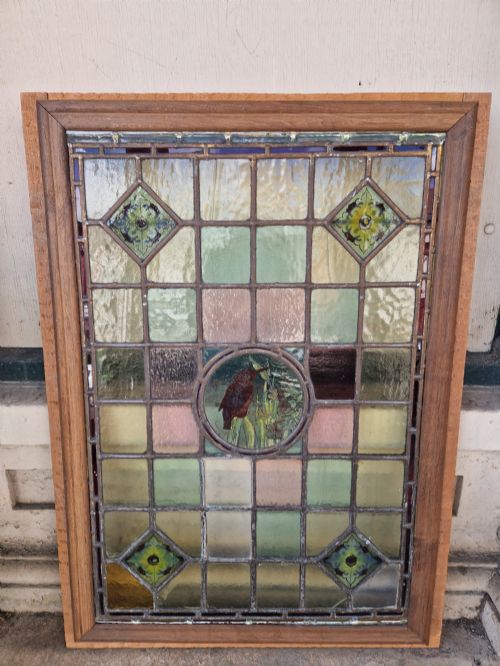
The inventory on this page consists chiefly of stained glass panels and windows, alongside architectural salvage and fire screens incorporating glazed sections. You meet designs featuring birds in flight or perched on branches, sometimes accented by amber bullseyes.
Many examples function as standalone architectural elements or door inserts, while others are mounted in brass or pine frames. Their primary purpose is to filter natural light while displaying hand painted ornithological scenes.
What varies in quality
Quality in painted bird stained glass depends on the skill of the enamel work and the complexity of the avian depiction. Finer pieces demonstrate careful brushwork in rendering plumage and natural posture, whereas simpler versions rely on standard outlines.
The integrity of the lead matrix and the choice of glass types also distinguish the range. Panels incorporating specialised components like amber bullseyes or varied glass textures generally reflect higher ambition in design and execution.
Painted Bird Stained Glass Retail Price Guide 2026
Typical asking prices for painted bird stained glass among the pieces listed under this phrase on Sellingantiques today, from the lower quarter to the upper quarter. They describe what is for sale here now, not the wider market.
Materials recorded in these listings include lead, glass, wood, stained glass, brass, pine wood, pine, and softwood.
The Painted Bird Stained Glass Glossary
- Stained glass
- Glass that has been coloured by the addition of metallic salts during its manufacture, or painted and fired subsequently.
- Lead cording
- H-shaped lead strips, known as came, used to hold individual pieces of glass together in a window.
- Bullseye
- A circular patch of glass with a thick centre, formed at the end of a blowpipe during handmade production.
- Architectural salvage
- Building materials rescued from structures slated for demolition, intended for reuse in conservation or interior design.
- Fire screen
- A decorative barrier placed in front of a fireplace when not in use, frequently incorporating glazed panels.
Painted Bird Stained Glass: Frequently Asked Questions
Where were these windows originally placed?
These windows typically occupied prominent positions in domestic halls, front doors, or principal reception rooms. They provided privacy while permitting daylight to filter through the coloured and painted glass.
Some examples also served functional roles within domestic interiors, such as glazed panels integrated into fire screens or architectural partitions.
How do I date a stained glass panel?
Dating relies upon stylistic indicators, such as the naturalistic motifs favoured by Arts and Crafts makers versus the heavier ornamentation of the Victorian era. The surrounding woodwork, including pine or softwood framing, provides additional chronological context.
Construction methods also assist with dating, as the gauge of the lead cording and the composition of the glass evolve between the nineteenth and early twentieth centuries.
Can these panels be hung as wall art?
Many panels adapt readily to interior display when suspended safely before a light source or window. Adequate support is essential to distribute the weight of the glass and lead matrix evenly.
Framed examples, including those set in brass or pine, often include integrated hanging hardware suitable for domestic walls.
What maintenance do old windows need?
Historic glass requires gentle cleaning with non-abrasive solutions to protect both the surface enamel and the surrounding leadwork. Regular inspection helps detect any movement or weakening within the lead matrix.
Professional re-leading may become necessary for larger panels that have lost their rigidity over decades of exposure to temperature changes.